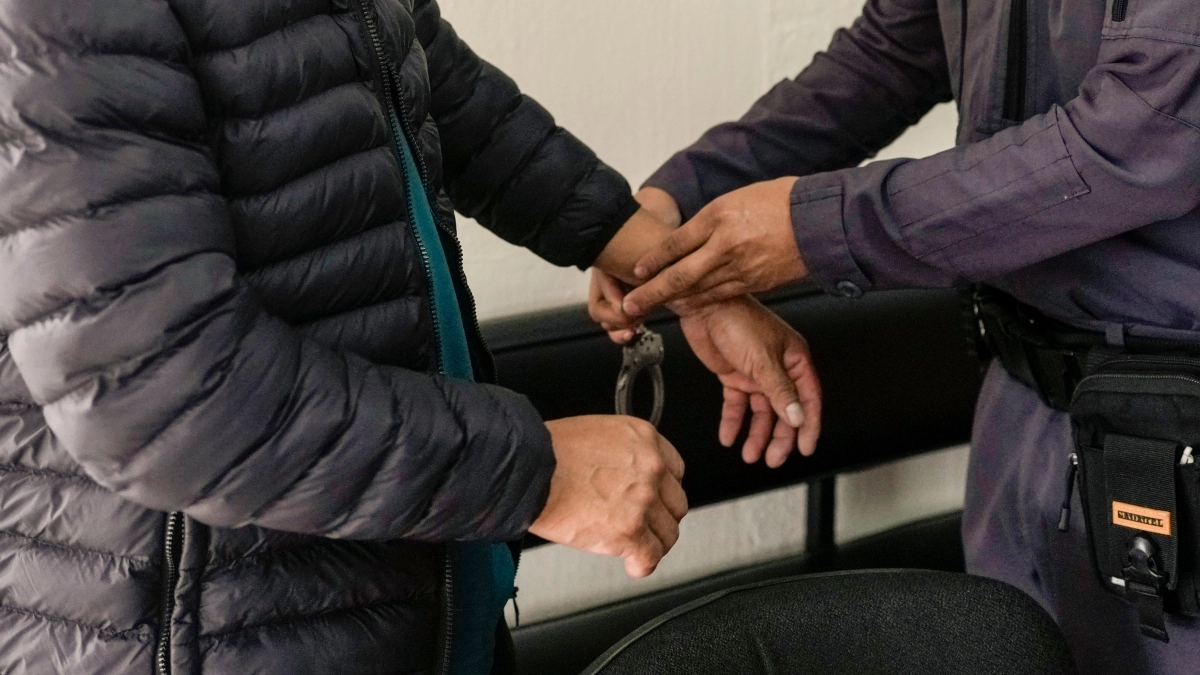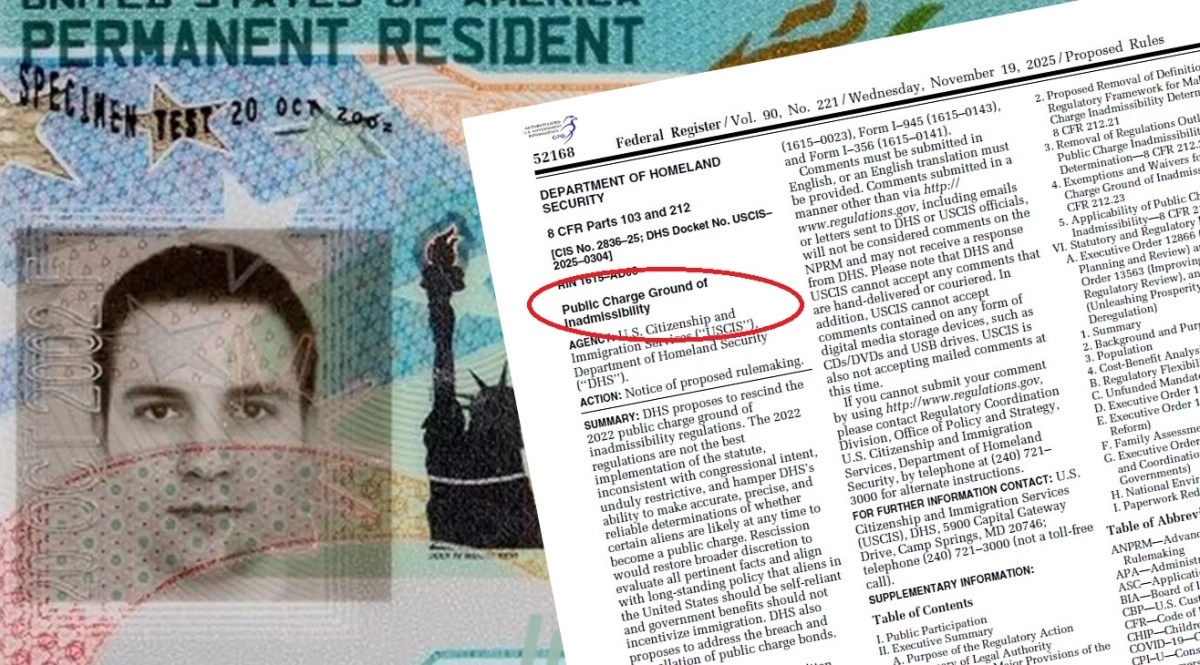

The US Citizenship and Immigration Services (USCIS) published the new public charge rule in the Public Register, which will seek to punish immigrants who apply for Green Card and other immigration benefits.
The goal of the new rule, which is open for public comment for 30 days, is to eliminate the public charge guidelines. implemented by President Joe Biden's administration that prevented penalizing immigrants for applying for social assistance, such as food stamps or housing assistance.
The Department of Homeland Security (DHS) indicates that the current rule, initiated in 2022, regarding the public charge inadmissibility of an immigrant for a Green Card or other benefits, is inconsistent with decisions of Congress.
“This regulation does not constitute the best implementation of the law, it is inconsistent with the intent of Congress, it is generally restrictive, and hinders DHS's ability to accurately and reliably determine whether certain aliens could become a public charge at any time,” the new proposal states.
It adds that the goal is for immigrants applying for a change of status (Green Card petition) to be self-sufficient.
“Repeal would restore greater discretion to evaluate all pertinent facts and would align with the current policy that aliens in the United States should be self-sufficient and that government benefits should not “To incentivize immigration,” the Trump administration justifies. “DHS also proposes to address noncompliance and the cancellation of public charge bonds.”
Changes for Mixed Families
The new rule is expected to impact migrant or mixed families, that is, those where there is at least one undocumented member, since the Trump Administration anticipates a reduction in federal transfers for social assistance.
Knowing that the public charge rule penalizes immigrants who apply for social assistance, DHS assumes that this will mean a reduction in federal resources.
“The proposed rule would also result in a reduction of federal government transfers to individuals who choose to opt out of or waive enrollment in a public benefits program,” the document states. “Those who could opt out of or waive future enrollment in a public benefits program include both foreign nationals and US citizens who are part of mixed-status households.”
It remains unclear whether the penalty for immigrants would also apply if families apply for any assistance for US citizen children of immigrants.
A recent report by the Migration Policy Institute revealed that there are 5.3 million American children who have at least one parent without legal status. The DHS even estimated the reduction in transfers from federal and state governments, which could be approximately $8.97 billion annually “due to the deregistration or withdrawal from public benefit programs by household members that include foreign nationals who may be receiving public benefits,” the document states. The 10-year funding reduction could be approximately $76.48 billion. What will immigration officials evaluate? The official publication occurred this Wednesday, from which date comments from the public or civil organizations will be received. The new rule seeks to require USCIS officials responsible for approving change of status petitions to apply the “public charge test.” These officials could consult the sub-regulatory guidelines in effect since 1999, which the 2022 Rule largely codified. These 1999 guidelines were based on more than 100 years of policy and sought to clarify what 'public charge' means for immigration purposes and what benefits are relevant in determining the existence of such a charge," the DHS states. This new guideline overturns the Biden administration's 2022 rule. “This Notice of Proposed Rulemaking (NPRM) explicitly seeks to repeal the 2022 Rule," it adds. of public benefits' (which only includes benefits received by the person applying for adjustment of status), it does not explicitly address whether the use of benefits by family members would be considered in the public charge determination in the future.
“The DOS cable provides operational guidelines for visa applicants abroad and should not modify USCIS policies or rules for green card applicants within the United States,” explained the National Immigration Law Center.
However, it is common for immigration and provisional visa extension policies to be unified,something the authorities have not confirmed they will do.
Once the 30-day public comment period ends, DHS and USCIS will have to integrate them into a new rule, which could take several weeks or months before implementation.