

Ukraine presented its own gliding bomb “Equalizer” capable of destroying Russian bunkers kilometers away
The Vyrivniuvach allows Ukrainian pilots to attack without entering high-risk areas, protecting a fleet of aircraft that kyiv cannot afford to lose.
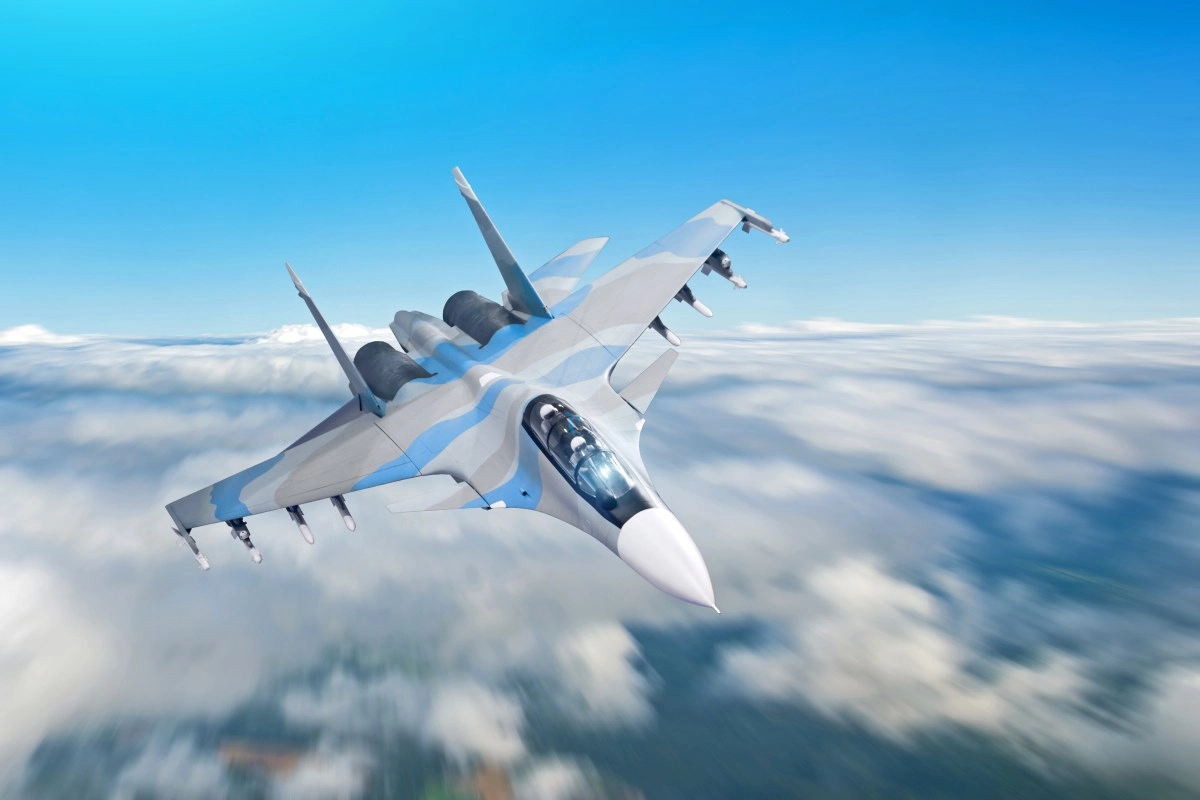

Just a few days ago, Ukraine announced that its first domestically manufactured gliding bomb is now combat-ready. It is called Vyrivniuvach — which in Ukrainian means “Equalizer” or “Equalizer” in English — and what makes it especially relevant is not only what it can destroy, but what it represents for a country that has been receiving the punishment of an identical weapon manufactured by the enemy for years.
The Russian nightmare that inspired the Ukrainian response
To understand why this bomb matters so much, you have to go back a couple of years. Russia discovered relatively early that it could transform its old Soviet FAB bombs into devastating long-range munitions simply by adding cheap wings and guidance modules, the so-called UMPK kit. The result was catastrophic for Ukraine: huge bombs of 250, 500 or even 3,000 kilos falling from dozens of kilometers away, beyond the reach of many anti-aircraft defenses, capable of devastating neighborhoods, military positions or entire logistics centers.
The shock wave from a FAB-3000 launched over Kharkov was so brutal that several local seismic sensors recorded it as a small earthquake. For kyiv, stopping this flow of bombs was almost impossible: intercepting each one was extremely difficult, and directly attacking the planes that dropped them forced Ukrainian pilots to get dangerously close to the front, exposing themselves to one of the densest air defenses in the world.
It was exactly that trap that pushed Ukrainian engineers to look for their own solution. Development of the Vyrivniuvach began in December 2024 and took 17 months to produce a viable model, capable of passing all the technical tests required by the Ministry of Defense. No Western or Soviet designs were copied; It was built from scratch, adapted to the real conditions of this war.
What the Equalizer pump can do that other systems couldn't
The Vyrivniuvach carries a 250-kilogram warhead, powerful to neutralize fortifications, command posts and logistics centers located dozens of kilometers behind Russian lines. But beyond the damage it can inflict, what sets it apart is the way it protects those who use it.
Ukrainian planes will be able to launch it without entering the most dangerous areas of airspace, exactly as Russia has done for months with its own gliding bombs. That ability to attack from a safe distance is especially critical for an air force that has a limited number of aircraft and cannot afford to lose them on direct attack missions. The bomb is compatible with the Su-24, MiG-29, Su-27 and also with the F-16 and Mirage 2000 of Western origin that already operate in the Ukrainian arsenal.
Another detail that is not minor: the Vyrivniuvach can be ready for use in less than 30 minutes and works in any weather condition, day or night. This makes it a tactically flexible weapon, not reserved for special missions but routinely deployable.
Why Ukraine no longer wants to depend on Washington or Paris
Here is perhaps the most important dimension of this whole matter. Until now, to convert its conventional bombs into long-range guided munitions, Ukraine mainly relied on two external systems: American JDAM-ER kits and French Hammer bombs. Both are effective, but they arrive in limited quantities, are subject to political decisions that change over time, and, in many cases, are accompanied by restrictions on the targets that can be attacked.
Vyrivniuvach breaks that dependency in a very concrete way. It was developed by the company DG Industry under the umbrella of Brave1, the Ukrainian government defense innovation platform, and its cost is approximately three times lower than that of a JDAM-ER. This means that kyiv can produce it in volume, without asking anyone for permission and without waiting for approvals that sometimes take months to arrive or do not arrive at all.
What Ukraine has built with this bomb is not just another weapon. It is a demonstration that the country has taken an enormous step in its transformation from a passive recipient of Western weaponry to a power of military innovation in its own right. In just two years of war, Ukrainian engineers have developed kamikaze drones, unmanned vessels and now a gliding bomb of their own, all designed to save time, reduce costs and reduce dependence on external arsenals.
Russia turned gliding bombs into one of the darkest symbols of Ukrainian vulnerability. Seventeen months later, Ukraine seems to have hit back exactly the same blow, with its own logic, its own design and, above all, with the ability to manufacture it at home without anyone being able to cut off its supply.