

They treat us like dogs in cages, say detainees in Adelanto
A report by Disability Rights California reveals the terrible conditions in which immigrants with disabilities are found

Ding, a 32-year-old immigrant from China, was arrested on June 26 in the halls of the Los Angeles Immigration Court, immediately after Her case was dismissed.
At the Adelanto Detention Center, I have never had an MRI or CT scan, and no doctor has told me if my tumor has worsened. There is no medication for my condition, said Dig, who suffers from a pituitary tumor that requires continuous MRIs to monitor her health.
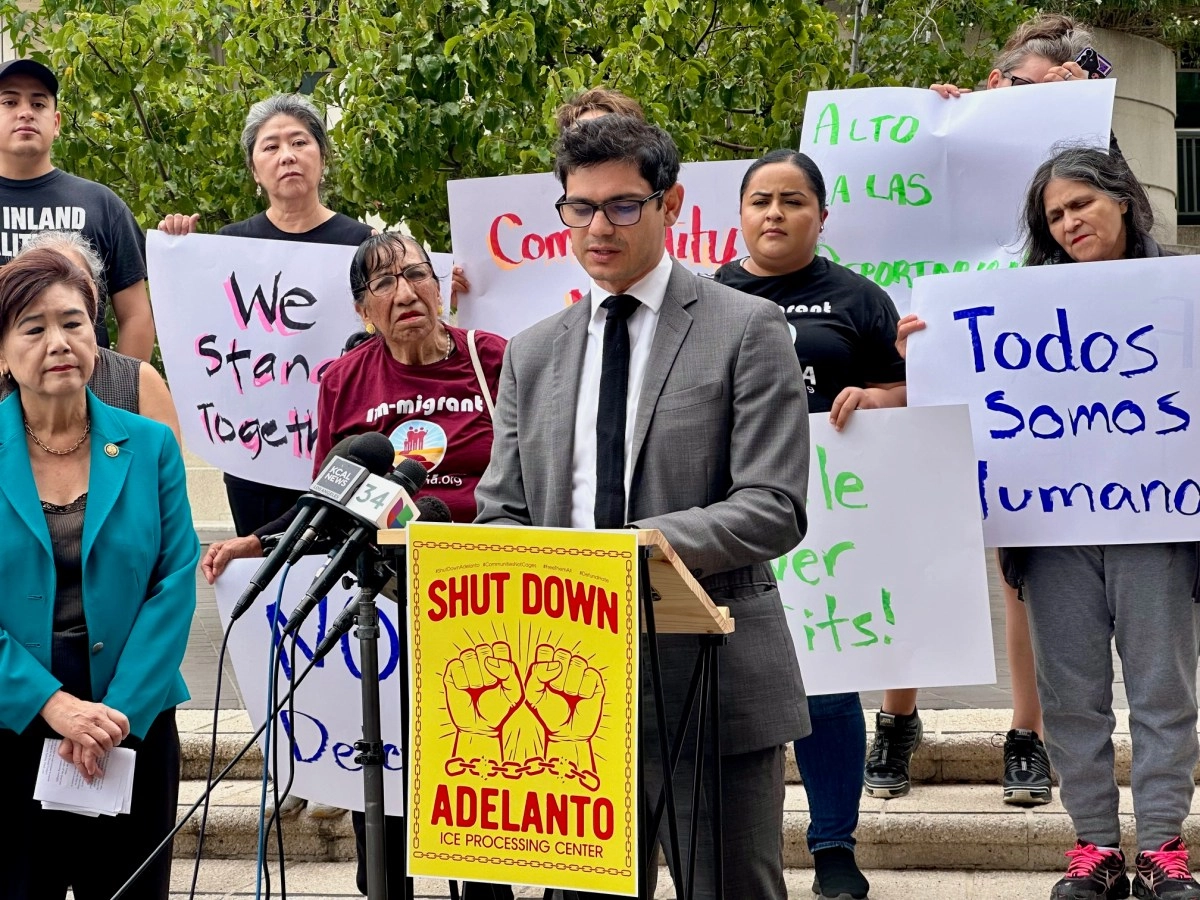
I suffer from continuous headaches, some so severe that I can't sleep, my vision goes dark, and I feel nauseous. "I'm terrified that things will get worse to the point where there's no cure," Ding said in a statement read at a press conference where the findings of the report, "They Treat Us Like Dogs in Cages," were released. The report revealed troubling conditions for immigrant detainees with disabilities or health conditions. Following a visit on June 25, Disability Rights California (DRC), an agency designated by federal law to protect and defend the rights of Californians with disabilities, issued a report on the conditions for immigrants at the Adelanto Detention Center, operated by GEO Group, a private prison corporation. "We conducted this monitoring visit," Ding said. after receiving alarming reports that the Department of Homeland Security, through Immigration and Customs Enforcement (ICE), was detaining individuals with disabilities in unsafe and unsanitary conditions at Adelanto, said DRC Senior Attorney Richard Diaz. Based on the conditions we observed and interviews we conducted with Detention Center leadership and detained immigrants, we found that ICE and GEO Group are subjecting individuals with disabilities to abusive neglect. He said they discovered inadequate access to medical and mental health care, as well as a lack of accommodations for people with disabilities.
“Several of the detainees told us about a lack of access to medication for basic needs, such as diabetes, and other specific conditions.”
They also encountered inadequate access to food, water, and clothing; and significant shortages, specifically of water.
“They told us that they filled jerry cans in the morning and at night, but by midday, they ran out of water. They felt dehydrated.”
He mentioned that due to the different meal serving times, people with diabetes are affected because they need to regulate their blood sugar levels while injecting insulin.
We spoke to people whose clothes were visibly dirty and some informed us that they had not received a change in more than 10 days, sometimes in two weeks. We are seriously concerned that the recent increase in detention at Adelanto puts people with disabilities at even greater risk of abusive neglect and serious harm.
She emphasized that the conditions in which people with disabilities are held make it clear that the current immigration detention system is dangerous and inadequate for all people, but especially for those with disabilities.
The demands made of GEO Group, ICE, and the Department of Homeland Security based on this report are: appropriate access to medical and mental health care; addressing disability needs; access to water, food and clothing, and family.
Congresswoman Judy Chu said that it sickens her to know that immigrants are treated like dogs, especially for not receiving their medications.
After receiving calls from advocates concerned about the fate of those arrested, as their families and attorneys were unable to contact them, I went directly to Adelanto with two other members of Congress to exercise my constitutional oversight authority. .
But she said that when they arrived, ICE slammed the door in their faces and refused to let them in, defying the law that Congress has the right to oversight any facility at any time.
On a second attempt, she and four other members of Congress were allowed in, only to witness horrific conditions.
Detainees lacked basic supplies, were not given underwear or pads for days, and were denied communication with loved ones and legal services. .
While That's what happens, he said, because President Trump and his loyalists want them to believe that conditions inside Adelanto are impeccable, and that detainees are treated humanely and their rights are respected.
Thanks to this report, we have evidence of the true conditions at Adelanto and it corroborates exactly what we have been warning about for years: that detainees are denied adequate medical and mental health care.
She reiterated that detained immigrants are treated like dogs in a cage, and recalled the case of Raul Ernesto Ramos, who at 44 years old died from a tumor that grew disproportionately due to the lack of care at Adelanto.
Despite his pleading with Adelanto officials for a doctor, they repeatedly refused to see him.
That's why she said they've asked for Adelanto to close, because every day its doors remain open, the rights of detainees continue to be violated and their lives are in danger.
Lizbeth Abeln, deputy director of the Inland Coalition for Immigrant Justice, said they've been organizing to close Adelanto, the largest detention center on the West Coast.
"It opened in 2011, and since then, we've been raising concerns about the terrible conditions and inadequate medical care inside the facility."
She said they have a legal team that visits people inside the detention center weekly.
What we're hearing is that people can't get their basic needs met. They don't have access to medication for diabetes, asthma. They're only given Tylenol for each illness they have, and only occasionally, they're given more medication.
She said that none of the deficiencies found are new, and that's why they've supported various initiatives to release people from that detention center and have participated in different litigation cases, including the 2019 lawsuit against ICE to support people with disabilities and request their release.
She added that they have resources available and can call from Adelanto at the number 909-361-4588 available 24 hours a day, 7 days a week.