

How Scotland went from being the murder capital of Europe to one of the safest places in the world
For Scotland, treating violence as a public health problem has brought a reduction in the number of homicides
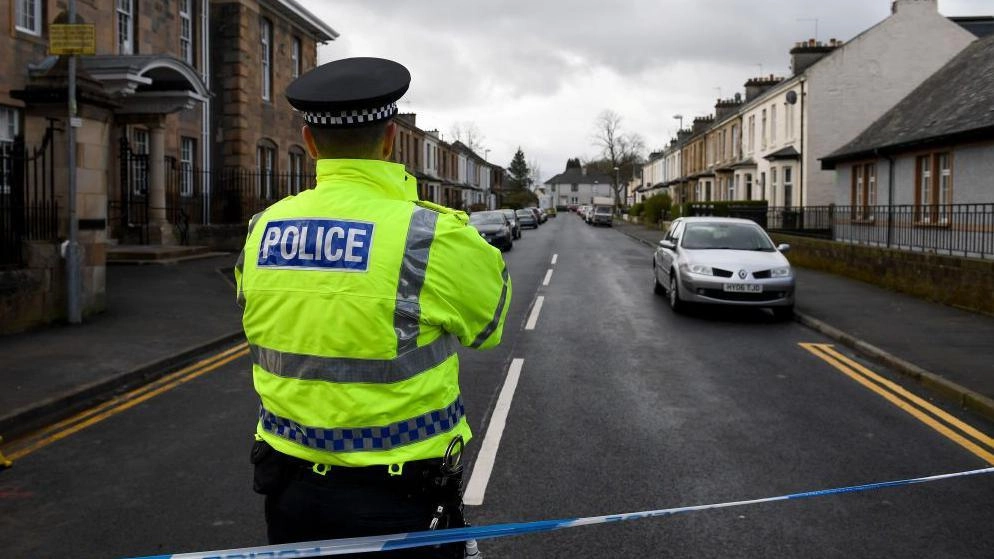

In the early 2000s, the likelihood of being assaulted in Scotland was more than three times greater than in the United States. However, when Scottish authorities began to address violent crime as a public health problem, numbers plummeted and the nation is now among the safest in the world.
It was not just any judicial day.
On 24 October 2008, at Glasgow Sheriff Court (the main local judicial body in Scotland for civil and criminal cases) there was no jury, no witnesses, and no defendants in the dock.
Instead, in front of the judge – who was dressed in full official regalia – were 85 members of rival gangs from the East End of Glasgow, Scotland's largest city.
For decades, the area was plagued by youth gangs fighting for territory, organized crime and confrontations over drugs and weapons, which made knife attacks almost daily.
Despite their constant quarrels, the gang members remained silent as they listened, one after another, to various speakers.
A mother recounted how she saw her son's unrecognizable face after suffering a machete attack linked to gangs at the age of 13.
An American basketball player recalled how he lost his brother to gun violence. Doctors and surgeons described brutal lacerations and permanent deformities.
The message was clear: the violence had to stop.
Stopping violence
“If I had been chief constable [of Strathclyde Police], I probably wouldn't have allowed us to do that,” reflects Karyn McCluskey, co-founder and former director of the Scottish Violence Reduction Unit (SVRU).
This specialized group created by the police in 2005 and expanded to a national initiative the following year by the Scottish Government was responsible for the unusual scene that day.
“He must have thought we were crazy,” he says. "We had police horses in court that day and boats sailing up and down the River Clyde, because it was a really risky undertaking. But there was a certain amount of permissiveness in trying to do something."
Something that seemed to work. Gang members present were given a phone number they could call later for support if they wanted to stop violence; After ten similar sessions attended by 473 young people, almost 400 of them made the call.
The court intervention was the first of Scotland's so-called "voluntary diversion sessions", part of the country's efforts to curb the record levels of violence gripping the nation, and especially Glasgow.
Between 2003 and 2005, the city recorded the highest homicide rate in Europe.
The United Nations declared Scotland the most violent country in the developed world: Scots were almost three times more likely to be attacked than Americans.
The newspapers constantly reported on macabre murders and bloody gang fights.
In the following decade, the homicide rate fell by 56% in Glasgow and 38% in Scotland as a whole.
Overall violent crime decreased by nearly a third nationwide between 2006 and 2015.
Today, the number of homicides in Scotland is at its lowest level for more than 20 years.
The numbers of serious assaults and attempted murders have seen a similar decline.
While statistics obscure the individual stories of tragedy and horror that come with any violent crime, this is a radical and remarkable change.
Scotland currently occupies an intermediate position among European countries in terms of homicides, with per capita rates lower than those of countries such as Sweden, France or England and Wales.
How did a nation, once plagued by the use of knives, gangs and murders, achieve such decisive change?
In short, he changed the way he perceived violence as a problem: he stopped considering it exclusively a criminal justice issue and also approached it from a public health perspective.
Public health approach
“Scotland had [in the early 2000s] the image of the hard-drinking hard man, as well as a specific reputation for gang activity and knife crime that went back generations, to the knife-wielding gangs of the 18th century,” explains Will Linden, deputy director of the SVRU and one of its first employees.
In 2003, Linden was working as a police analyst under McCluskey – then head of Intelligence Analysis at Strathclyde Police – when her department was asked to produce a report on how to reduce homicide numbers.
“As we analyzed the data, we realized that most homicides occurred almost by chance,” says Linden.
“They weren't planned or linked to organized crime, they were usually just a couple of people getting into a fight where one would pull out a knife and stab the other.
“We began to see that a strategy could not be designed to address homicides without analyzing the violence as a whole, going beyond mere police action.”
The crisis in Glasgow was of such magnitude that the chief constable at the time, William Rae, gave McCluskey and his colleague John Carnochan – deputy head of the Criminal Investigation Department – practically free rein to try to solve the problem.
Rae created the team that would eventually become the Violence Reduction Unit (SVRU) within the police force, although operating on its margins; This allowed the police to take credit for successes and, at the same time, disassociate themselves from failures.
“We had some leeway and we were allowed to fail,” McCluskey says.
“There was a conviction that, in the face of such a terrible situation, it is necessary to reinvent everything.”
From its inception, the SVRU took a public health approach to violence, characterizing it more as a disease than a crime.
They chose to focus on prevention and intervention rather than simply reacting after the event occurred.
McCluskey compares this approach to addressing measles: treating those already infected, vaccinating the highest-risk groups, and working to prevent infection in the community as a whole.
It was a key decision for subsequent success.
In its simplest form, a public health approach to addressing violence begins with collecting data to identify and understand the problem, before examining the factors that put people at risk and those that protect them.
Almost two thirds of all violent acts affect just 1% of Scotland's population.
Risk factors include being a young man living in a socially disadvantaged area, as well as unemployment, poverty and growing up in an unstable family environment.
On the other hand, factors that seem to protect against violence include continuity in studies and maintaining solid relationships with parents.
Interventions – ranging from initiatives such as Glasgow Sheriff Court to peer support groups, educational programs and partnerships with social workers, doctors and teachers – are then developed to reduce risk and increase protection.
These measures are tested, implemented, and expanded when successful; and then the cycle begins again.
However, many of the ideas implemented by the SVRU were taken from other parts of the world.
The idea of addressing violence as a public health problem emerged in the United States in the 1970s.
Subsequently, it was adopted by the World Health Organization in 1996, when it declared violence as a serious global public health problem.
A key aspect of the SVRU's approach was to take what was learned elsewhere and adapt it to Scotland's particular situation.
Their voluntary referral sessions—mentioned at the beginning of this article—were inspired by a gang violence program in Cincinnati, Ohio, which, in turn, grew out of the Chicago Violence Prevention Project.
The latter also took a public health approach to violence in a city that had seen a dramatic increase in homicides, more than half of which were related to gang activity.
Expanding the strategy
“What we really became experts at was implementing other ideas within the specific context of Scotland,” says Linden.
"You can't just take something that works in Chicago or Finland and apply it as is in Glasgow, or something that works in Glasgow and move it to Edinburgh. You have to understand the scale and nature of the problem itself to make it work."
For the SVRU, this meant leaving police stations and entering hospitals, schools, social services departments, youth care programs and communities.
Dentists were trained to intervene: they learned to recognize injuries resulting from violence, to document them as such and to direct patients to help resources without them even having to get out of the chair.
Likewise, educational leaders were convinced to stop expelling students: in the 2022-2023 academic year, fewer than 12,000 expulsions were recorded in Scotland, compared to the maximum of almost 45,000 reached in 2006-2007.
As the initiative gained popularity, other people joined it.
In 2008, oral surgeon Christine Goodall and two colleagues founded the charity Doctors Against Violence.
When Goodall began her career in maxillofacial surgery in Glasgow in the late 1990s, health services were overwhelmed with patients suffering facial trauma caused by violence.
Decades ago, the city had even given a name to one of these injuries: the “Glasgow smile,” a wound caused by slitting the victim's mouth up to the level of the ear.
In the early 2000s, the NHS collaborated with the SVRU on initiatives such as providing alcohol support in trauma units.
These measures worked well, says Goodall, “but I started to think we could probably do something more.”
“If you only target patients who already have injuries, it's like trying to close the stable when the horse has already escaped,” he says.
Doctors Against Violence launched an educational project in schools and the Hospital Counselors program, in which qualified support personnel intervene when patients with injuries derived from violence go to emergency services.
Both programs are still in effect today.
There was also a broader cultural shift as the SVRU's work refocused the debate on violence towards a discussion focused on public health, says Alistair Fraser, professor of criminology at the University of Glasgow.
Growing support for this approach emerged with the involvement of health officials, educators, community organizations and the initial SNP government.
“I think what you saw was the SVRU changing the terms of the debate and getting everyone to start acting on it,” Fraser says.
The evolution of the discourse on violence reduction aligned favorably with other emerging frameworks related to children's rights and well-being, notes Fraser.
It also connected with Scotland's deep-rooted self-image—reinforced by the creation of the Scottish Parliament in 1999—as a uniquely supportive, egalitarian, and welfare-oriented country.
Scotland's success in reducing violence has become an example admired around the world. His closest neighbors also followed this experience closely.
Export model
Since 2019, and with the support of the SVRU, violence reduction units (VRUs) have been established in 20 police areas in England and Wales.
These include London, a city that accounted for almost a third of all knife crimes in England and Wales last year.
The first evaluations have confirmed a decrease in the most serious forms of violence in the areas where these units operate.
Today, the SVRU remains part of Police Scotland and receives $1.45 million in funding annually from the Scottish Government.
When Kelly, 30, became a mother, she struggled with her physical and mental health.
He had grown up in a complicated family environment and had difficulty managing stress and regulating his own emotions; all of them risk factors for violence.
The BBC has changed Kelly's name at her request to protect her identity.
In 2024, aware of the need for a calmer environment in her home, Kelly joined a peer support group for parents with nursery-aged children, organized by the SVRU as part of its early intervention work, designed to reduce intergenerational cycles of violence.
“I felt very isolated before I joined the group,” she says.
"I often felt overwhelmed. I had low self-confidence and spent a lot of time at home, which began to affect my relationships with my partner, my children and the people around me."
But over time, things began to change. “The group helped me understand how my past experiences affected me and my family,” she recalls.
“I started to process things I hadn't addressed before… Now I see how breaking those patterns can help create a more positive environment for my children.”
According to her, the group has improved Kelly's relationships with her partner and with her own mother.
She feels that there is more support at home and feels less isolated after having established connections with other parents.
Now he hopes to resume his working life and wants to help support other people in his community.
There is still work to be done: a 2024 study found that the reduction in serious violence had slowed in recent years, partly due to a lack of “safe spaces” for young people.
Jimmy Paul, director of the SVRU since 2023, also highlights the dangers of social media, the lasting effects of the Covid-19 pandemic and the fact that almost one in four children in Scotland are growing up in poverty.
“We can do more; we believe that violence is preventable and not inevitable, so we must focus on that as we face these new challenges,” says Paul.
It points to continued long-term work in schools, collaborations with homelessness charities and SVRU's efforts to use data to identify critical areas to intervene.
“We continue to play a role as catalysts for this ‘growing chorus of voices,’ helping others see what role they can play in reducing violence.”
McCluskey is currently chief executive of Community Justice Scotland, an independent public body – funded by the Scottish Government but self-governing and evidence-based – dealing with community justice.
She agrees with this view and highlights that, today, the majority of people accused of murder in Scotland are between 30 and 40 years old, unlike before, when teenagers and young adults predominated.
It is a trend that could require new interventions. However, he also wants to acknowledge how much things have changed.
Furthermore, he says that while he will always remember the names of many people affected by violence in various ways, he has lost count of how many lives have been changed by the Scottish violence reduction movement.
Sometimes, McCluskey says, he walks the streets of Glasgow and recognizes someone he met years ago, when that person was immersed in violence.
“Our eyes may meet, but we don't interact at that moment,” he explains.
"Then they send me a message at night saying, 'Look, I have a different life now: I have a new partner, a child and a job.'"
And he adds: "So we don't say anything at that moment. We just look at each other and recognize that we were part of something together."
This is a Spanish adaptation of a story originally published in English by BBC Future. To read that version, click here.