

What is the origin of the growing tensions between Pope Leo Trump
The Catholic Church and the United States government disagree on the treatment of immigrants by the Trump administration.

Romero is angry about the criticism from the American-born Pope and The bishops of the United States to the president's policy of mass deportations.
Since one in five Americans identifies as Catholic, the Church plays an important role in American life and politics.
Catholics such as Vice President JD Vance and influential legal activist Leonard Leo were an important part of Donald Trump's electoral success. Catholics are also at the heart of Trump's cabinet, with Secretary of State Marco Rubio and Secretary of Education Linda McMahon in key positions.
However, the issue of immigration has become a fault line between Church leadership and the government, as well as among the faithful themselves.
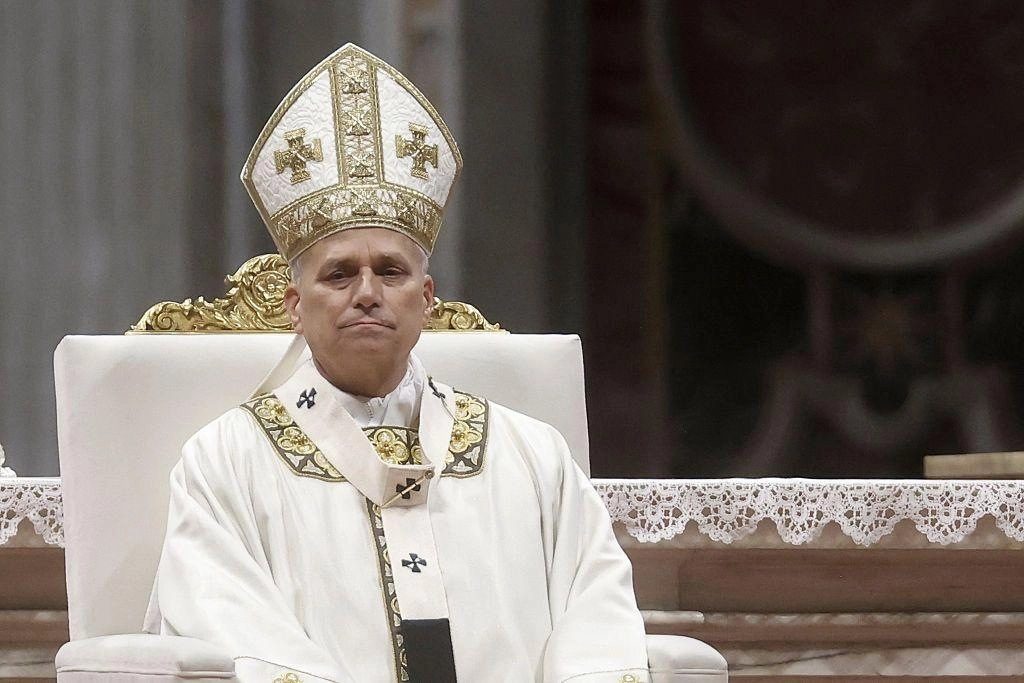
When the cardinals gathered for the papal conclave in May, Romero expected a “Trump-style Pope,” with a perspective similar to the president's. Instead, Pope Leo XIV has repeatedly expressed concern about the treatment of migrants in the US, and in November he called for “deep reflection” on the matter. The pontiff invoked the Gospel of Matthew: “Jesus says very clearly that, at the end of the world, we will be asked: 'How did you receive the stranger?'” A week later, the United States Conference of Catholic Bishops (USCCB) issued an unusual “Special Message” expressing its “concern about the evolving situation affecting immigrants in the United States.” The bishops said they were “troubled” by what they called “a climate of fear and anxiety.” They added that they “oppose the mass and indiscriminate deportation of people” and “pray for an end to dehumanizing rhetoric and violence.” It was a significant intervention, the first time the USCCB had issued such a statement in twelve years. It had the backing of the Pope,who called the declaration “very important” and urged all Catholics and “people of good will to listen to it carefully.” “Looking for a fight” with the Pope. “I think the relationship is quite strained,” says David Gibson, director of the Center for Religion and Culture at Fordham University. According to Gibson, conservatives had hoped Pope Leo would bring a change from his predecessor Pope Francis's approach to social justice and immigration issues. "Many of them are angry. They want to tell the Church to shut up" and to stick to issues like abortion," Gibson says. The White House border czar, Tom Homan—himself a Catholic—has said the Church “is wrong” and that its leaders “need to spend time fixing the Catholic Church.” And in October, White House press secretary Karoline Leavitt rejected comments by the Chicago-born Pope that appeared to suggest the US treatment of immigrants was “inhumane” and not in line with “pro-life” beliefs. Gibson believes the administration's calculation “is that there are enough American Catholics, especially white Catholics, who support the Republican Party and Donald Trump that it ultimately proves politically advantageous to pick a fight with the Pope.” That's an unprecedented estimate. political views. While he has argued that current policy does not contradict Church teachings, he has also said there is a responsibility to remember the humanity of those who are in the country illegally.
However, some Catholics say that's not what's happening now. Jeanne Rattenbury is a parishioner at St. Gertrude Catholic Church in Chicago. The city has been one of the focal points of the Trump administration's immigration enforcement measures.
Rattenbury participated in November in a mass that brought together 2,000 people in front of an ICE detention center in the Broadview neighborhood of Chicago. The “People's Mass” was one of a series of actions by the Coalition for Spiritual and Public Leadership (CSPL). The goal, she says, “was to bring communion to the people within, to provide them with spiritual assistance, which is something that was previously allowed and is now prohibited.” The CSPL has now filed a federal lawsuit alleging that it was prevented from providing religious ministry. "I am proud to be Catholic when the Catholic Church, from the Pope to the bishops, says that immigrants have the right to be treated with respect. They have the right to have their inherent human dignity respected," Rattenbury states.Such is the strength of this sentiment that a church near Boston has used its nativity scene to emphasize the point that Jesus was a refugee. The parish of St. Susanna in Dedham, Massachusetts, replaced the figure of the baby Jesus with a hand-painted sign that read: “ICE was here.” Some members of the community have complained, and the Archdiocese of Boston ordered the display removed, arguing that it was divisive and violated rules on sacred objects. So far, the church has not complied. While many US Catholics hold conservative positions on issues such as abortion, in line with the Church, they are also more likely to consider themselves progressive compared with white evangelical Christians, who voted overwhelmingly for Republicans in the last three elections. On the other hand, about a third of white Catholics have repeatedly voted for the Democratic Party. And nearly a third of Catholics in the US were born in other countries. “This is a Church that was built on immigration,” says David Gibson. “The Catholic identity in the United States is that of a church of immigrants.”
“Contrary to the gospel”
Bishop Joseph Tyson of Yakima, Washington, was one of 216 who endorsed the USCCB's “Special Message.” Only five bishops voted against it, and three abstained.
“There is a fundamental disagreement between how the Church views immigrants in our parishes and how the current government views immigrants.”
“We see many more positive aspects in these immigrants.”
He states that he is not advocating for open borders, something the Pope has also indicated, but rather that he is against “indiscriminate deportation.”
“The deportations of our parishioners and our people that we are seeing in the United States are not surgical, nor are they targeting criminals,” the bishop states.
He estimates that about half of the families in his diocese, predominantly Hispanic,They have someone in their home who is facing some kind of problem with their immigration status. Priests are also often immigrants, which puts the Church in an increasingly precarious position.
Bishop Tyson says that more than a third of the clergy he has ordained to have at some point held a temporary visa before obtaining a green card, a process that in the current climate can feel uncertain.
“I have a seminarian in the Chicago area. He has a T visa, but ICE showed up and he was afraid they would detain him,” he said. “Anyone can have their papers revoked, so we make our men carry their papers with them at all times.”
Bishop Tyson maintains that current US policy goes against Catholic teaching.
“It should weigh heavily on the conscience of Catholics in public office who support indiscriminate deportation. It is inconsistent with the Gospel of Life.”
For Jesse Romero, however,it is the US bishops and the Pope who are going against Catholic doctrine. He maintains that the Catechism is clear that immigrants must obey all laws, including those regarding their legal status in the country.
“We have a large number of bishops in the Catholic Church in the United States who have a more modern, liberal, and progressive view of Scripture and theology.”
Romero says he prays for his conversion. Although he accepts the Pope and the bishops as leaders of the faith, he adds: "That doesn't mean they'll always be right in their private opinions. They're human."
“The only person without sin is Jesus. He is perfect. All the rest of us have to pray for each other.”