

Is there Chinese interest? The Future of the Former Nissan Plant
The closure of Nissan historic CIVAC plant in Morelos opens a new chapter for the industry in Mexico. Chinese manufacturers could enter there
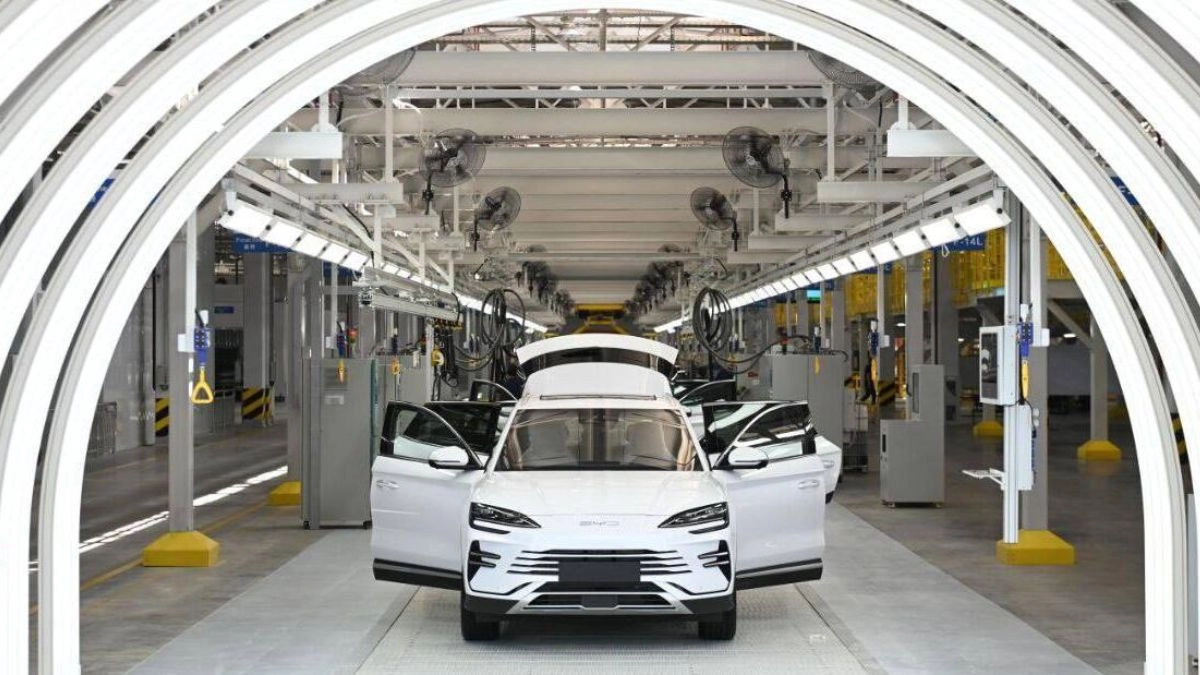

The news of the closure of the CIVAC plant in Morelos not only marked the end of an era for Nissan in Mexico, but also opened a range of speculation about the future of those facilities.
What for many represents a hard blow to employment and the economy in the region, for others could become an unprecedented opportunity: the arrival of Chinese manufacturers willing to occupy that space.
The CIVAC plant, which for decades was a symbol of Japanese production in Mexico, is now added to the list of industrial facilities that become available after a global corporate decision.
The transfer of production to Aguascalientes ensures the continuity of Nissan in the country, but leaves open the question about the fate of a complex that still has infrastructure of great strategic value.
An opportunity that sparks interest
In the current context of Chinese expansion, the availability of CIVAC comes at an ideal time. Having a factory in Mexico represents the opportunity for any Asian brand to consolidate its entry into the Latin American market and, at the same time, approach the US market under the protection of the USMCA.
The benefits are clear: reduced logistics costs, access to an established supplier network, and the ability to assemble vehicles within a key territory for the industry.
Although there are no confirmed negotiations, the interest is not unreasonable. BYD and Chery, two of the most active Chinese automakers in their international strategy, have explored similar projects in the region.
The European precedent: the purchase in Barcelona
The case of Chery is especially relevant. In 2023, the Chinese automaker acquired a Nissan plant in Barcelona through an agreement with Ebro-EV Motors.
That facility is expected to resume production by the end of 2025,focused on models from the Omoda and Jaecoo brands, which Chery is strongly promoting in Europe.
This operation demonstrated that Chinese companies are not only interested in expanding, but can also take advantage of the factory closures of traditional giants to quickly establish themselves in new territories. If it happened in Spain, it would not be surprising if a similar path were forged in Mexico.
Mexico, gateway to Latin America
The presence of Chinese manufacturers in the region is nothing new. Chery, BYD, MG, and other brands already have operations in various Latin American countries, offering everything from combustion to electric vehicles. Mexico, however, represents a bigger step.
The attraction lies not only in its domestic market, but also in the possibility of using it as an export platform to all of Latin America.
In fact, some analysts believe that CIVAC could become a hub for the shipment of electric SUVs, one of the categories that Chinese manufacturers have focused the most on in recent years.
Political and regulatory challenges
However, not everything is that simple. The possibility of a Chinese manufacturer acquiring or leasing the plant faces multiple obstacles.
First, there is the political dimension: the perception that a foreign company takes over a factory that for years represented Mexican jobs can generate debates about economic sovereignty and working conditions.
Second, the United States plays a key role. Trade tensions between Washington and Beijing have put Chinese brands under scrutiny.
A facility in Mexico, although strategic, could raise suspicions that the company is seeking indirect access to the US market, something that could generate diplomatic friction.
Nissan footprint in Morelos
CIVAC is not just any plant. It has been a benchmark for Mexican industry since its inauguration, generating thousands of direct and indirect jobs in Morelos.
The closure announced in July 2025 was part of a global plan by Nissan to optimize operations and concentrate its production in Aguascalientes.
The impact on the region was immediate: hundreds of workers were left waiting and local authorities began to explore alternatives to reactivate the economy around the complex. In this scenario, the arrival of a new automotive investor would be seen as a lifeline.
Who is emerging as a candidate?
Although the names that resonate the most are BYD and Chery, they are not the only Chinese brands with the capacity to take this step.
Companies such as SAIC Motor—responsible for the MG brand—and Great Wall Motors have also shown interest in expanding outside of Asia and could see CIVAC as an ideal base.
The move does not necessarily imply an immediate purchase. Another option would be leasing part of the facilities or forming an alliance with local suppliers to gradually begin production.
Chery has been particularly aggressive in Latin America. Its Omoda and Jaecoo brands are already present in markets such as Brazil, Chile, and Colombia, while the iCAR line of electric SUVs has had recent regional launches.
Its interest in CIVAC is also explained by its previous relationship with Nissan in Barcelona. This experience could facilitate the negotiation process, replicating a model that has already proven successful in Europe.
BYD, for its part, is a global leader in electric mobility. Its arrival in Mexico would make sense within its consolidation strategy in emerging markets and in its direct competition with Tesla.
The possibility of assembling electric cars in Morelos would allow the brand to offer more competitive prices and more easily access Latin American consumers.
BYD vehicles have been characterized by their cost-benefit ratio, with electric models whose price range usually starts at $20,000 dollars, positioning themselves as affordable options compared to the competition.