

Volkswagen takes the lead: more EVs sold than Tesla
During the first half of 2025, the German consortium delivered 347,900 EVs (+89% year-on-year), compared to Tesla 76,400
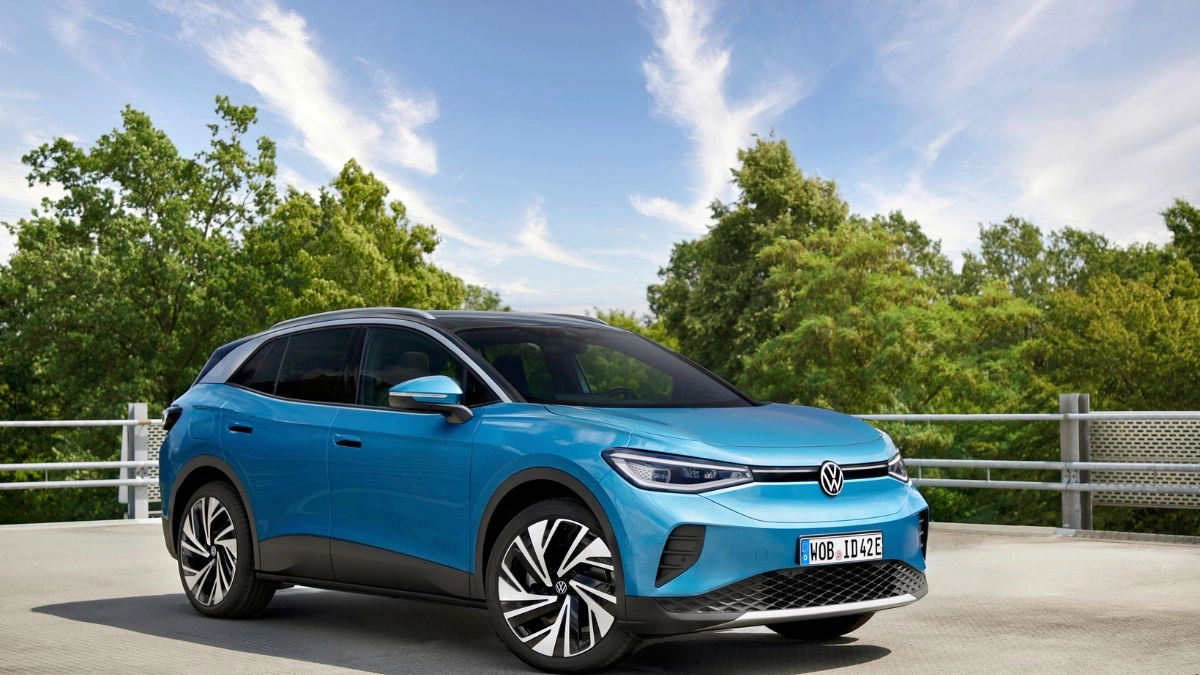

Electric mobility in Europe is experiencing a historic moment. The Volkswagen Group, far from being content with just being in the fight, has managed to overtake its most iconic competitor: Tesla.
During the first half of 2025, the results leave no room for doubt: Volkswagen has become the largest seller of electric vehicles (EV) on the entire continent.
This achievement marks a before and after in the industry. For years, Tesla dominated the registration lists. Today, however, its leadership is in question.
While the EV market grows, Volkswagen has managed to position itself better thanks to a strategy focused on more affordable prices, improvements in quality, and a wider range of models adapted to different user profiles.
A forceful rise over Tesla
In its half-yearly report —from January to June 2025— the Volkswagen Group delivered 4.41 million vehicles, including all engine types, which represents a growth of 1.3% compared to the same period in 2024.
What is truly significant, however, is the spectacular increase in electric sales: 465,000 units worldwide, an increase of 47%. And in Europe, that growth climbs to 89%, with 347,900 cars sold. Tesla, meanwhile, although it doesn't frequently publish detailed figures, reported a 14% drop in overall shipments, with an estimated total of 384,000 registrations. Furthermore, its sales in Europe stood at 76,400 units during the same period, according to information from Dataforce. The data not only show leadership, but also a clear surpassing: Volkswagen rivaled and even surpassed Tesla in March, and in April tripled the number of units delivered. The dominance that began with the launch of the ID.3 almost seven years ago is finally materializing in the European market.
Successful models and more affordable prices
The key to Volkswagen's success has been its combination of proven technology, volume production, and competitive prices. According to official figures, in Spain, the prices without subsidies or discounts for compact models are:
These prices contrast markedly with those of the first generations, which were around €40,000. The production chain upgrade, reduced battery costs, and economies of scale have led to a decisive improvement in affordability.
Furthermore, the Volkswagen Group has implemented a smart strategy by supporting the group's brands (Skoda, CUPRA, Audi, Porsche) to strengthen its EV offering:
Thanks to this synergy and segmentation, the group combines volume, presence in various segments, and better geographical adaptation.
Understanding the global strategy
The evolution of the market is no coincidence: Volkswagen opted early on for a modular and scalable platform (the MEB battery family), which allowed it to introduce models of different sizes and approaches on the same technical basis. This translates into lower costs and greater optimization.
It has also invested in local factories in Europe, reducing delivery times and avoiding tariff overcharges. A local approach is key in a market as competitive as Europe's, where prices make all the difference.
In contrast, Tesla continues to rely on its strategic model: giant factories, cutting-edge technology, differentiated software... but with price margins that, in some cases, are already under pressure from more affordable alternatives.
The impact on the market
The fact that Volkswagen currently leads Europe is not an isolated event: it is the first time that a European automotive group has surpassed Tesla on its own turf: the electric car industry. For the industry, this step represents a significant change: the Tesla legend is no longer invulnerable.
It is also a message to consumers: electrification is increasingly affordable, and with it, EVs are no longer a luxury but an everyday option. Meanwhile, Tesla must rethink its strategy to respond to the unstoppable advance of traditional manufacturers.
Volkswagen must maintain its production pace, manage its supply chain, and improve quality to maintain its momentum. The energy transition demands continuity, not just volume.
And Tesla, for its part, will have to lower costs or strengthen its value proposition (range, software, performance) to retain its market share in Europe. Competition is no longer a future threat: it's here and it's tangible.