

Is it worth buying a refurbished iPhone 16 Pro Max in 2026?
Buying a refurbished iPhone from a previous generation can be a good idea if your goal is to save money
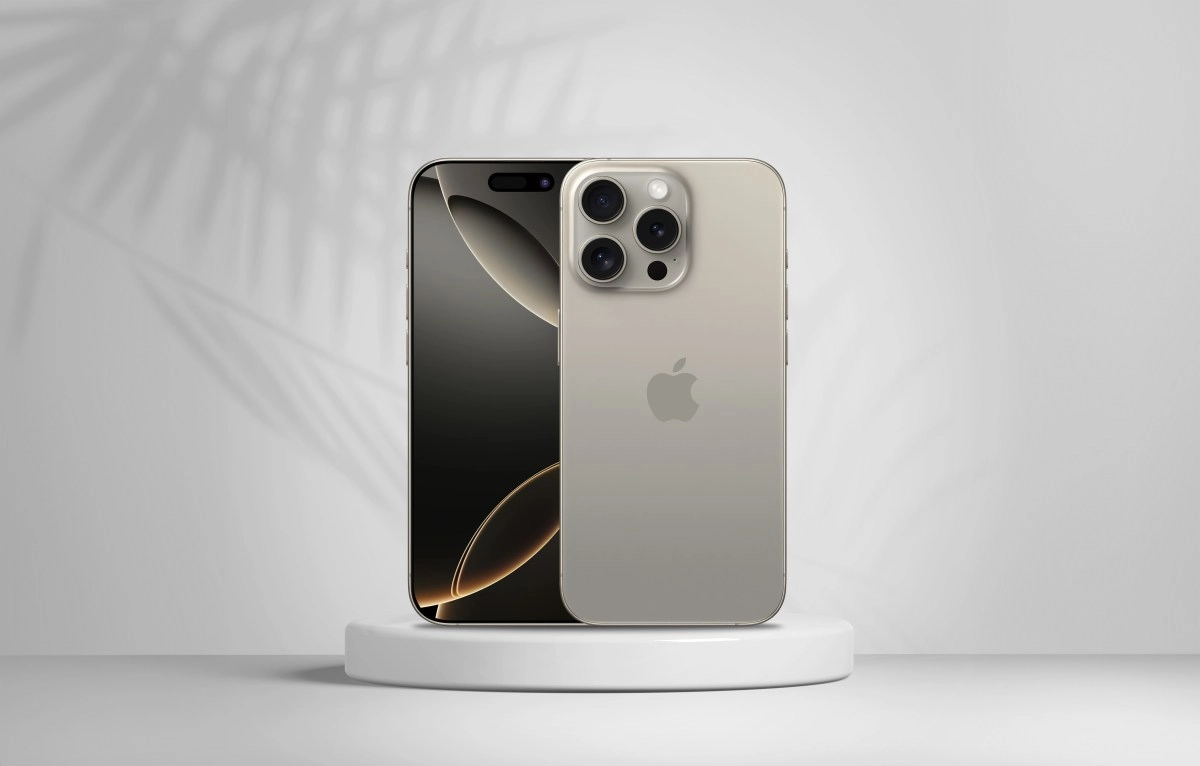

If you're thinking about switching to the Apple ecosystem or making the leap to a high-end iPhone without emptying your bank account, you've probably already come across a question many are asking themselves in 2026: Does it make sense to buy a refurbished iPhone 16 Pro Max or is it better to pay a little more for the iPhone 17 Pro Max?
The A18 Pro Processor: Power That Still Has No Limits
One of the strongest arguments in favor of the iPhone 16 Pro Max in 2026 is its chip. The device features the Apple A18 Pro, manufactured using a 3-nanometer process, with a hexa-core CPU that reaches 4.05 GHz on its performance cores and is accompanied by 8 GB of LPDDR5X RAM. In practical terms, this means that this phone won't give you any trouble with absolutely anything you demand of it today: heavy multitasking, AAA gaming, 4K video editing, artificial intelligence—nothing will hold it back.
And what does the iPhone 17 Pro Max offer that the 16 doesn't? The new model is equipped with the Apple A19 Pro, also 3 nm but with 12 GB of RAM, giving it a slight advantage in intensive use scenarios and future compatibility with more advanced Apple Intelligence features. However, in everyday use, that performance difference between the A18 Pro and the A19 Pro won't be noticeable to 95% of users. The generational leap exists, but it's not dramatic.
If you're not a heavy user or a developer who needs the latest chip for testing, the A18 Pro in the iPhone 16 Pro Max has more than enough power to easily last at least another three or four years.
The 16 Pro Max's cameras: still among the best on the market
The iPhone 16 Pro Max's camera system is still a beast in 2026. It features a 48MP main sensor with an f/1.78 aperture and a Sony IMX903 sensor, a 12MP ultra-wide lens (f/2.2), and a 12MP telephoto lens with 5x optical zoom.
Furthermore, it was the first iPhone to record 4K video at 120 frames per second, a capability that few Android smartphones dare to match even today.
The iPhone 17 Pro Max, for its part, raises the bar with a triple-lens 48MP system—main,Ultra-wide and telephoto lenses—all at the same resolution, which is a real improvement in photographic versatility, especially in low light with the wide-angle lens. It also brings improvements to video modes and compatibility with Apple Intelligence for smart editing.
But let's be honest, if you're not a professional photographer or a demanding travel YouTuber, the 16 Pro Max's camera system will more than satisfy you. Image quality in normal conditions remains exceptional, and the difference with the 17 Pro Max is only noticeable in side-by-side comparison tests under very specific conditions.
The price difference: $500 that actually matters
Here's the crux of the debate. A refurbished iPhone 16 Pro Max goes for around $800 on platforms like Amazon or at certified pre-owned stores, while the iPhone 17 Pro Max starts at $1,199 for the 256GB version. That's a difference of at least $400 to $500, depending on the configuration you choose.
What can you do with that $500 you save? Buy AirPods Pro, an Apple Watch Series 10, or simply save it for the next upgrade cycle. The financial equation clearly favors the refurbished 16 Pro Max, as long as you buy from a reliable platform that offers a minimum 90-day warranty and certification of the device's condition.
However, there's one factor you shouldn't ignore: software support. Apple guarantees iOS updates for its devices for at least 5 to 6 years. The iPhone 16 Pro Max, released in September 2024, should receive official support until approximately 2029 or 2030, giving it a still very comfortable lifespan.