

Lancia in check: sales slump worries Stellantis
The historic Italian manufacturer is going through its most fragile moment in decades: record low sales, a relaunch that isn't taking off, and a review of its present
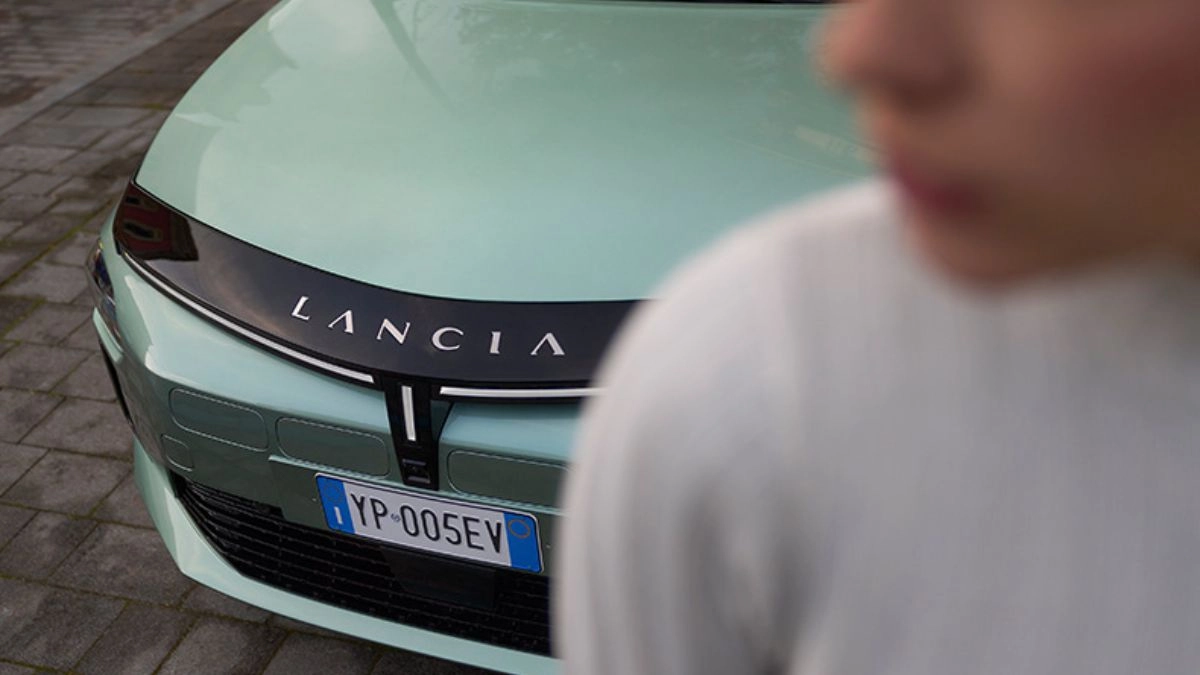

Lancia is once again a topic of conversation in the European industry, but not for a sporting victory or a disruptive launch, but for an uncomfortable question: Is it worth continuing to invest in it? Recent figures do little to dispel the doubt, and within Stellantis, the analysis is no longer sentimental but strictly strategic.
Read also: Delicate: the invisible error that jeopardized Genesis
The Italian brand, a symbol of technical elegance and mechanical creativity in the last century, faces a completely different reality today. Its return to the market with new products, after more than a decade of industrial silence, failed to translate into the expected rebound.
You can read: Annoyed: Jaguar stands firm and wants nothing to do with hybrids
On the contrary: sales contracted sharply and placed Lancia at the center of a debate that mixes nostalgia, profitability, and business survival.
A relaunch that found no market
When Stellantis decided to formally reactivate Lancia, expectations were considerable. It wasn't just about selling cars again, but about rebuilding an identity that had been confined almost exclusively to Italy since the middle of the last decade. The plan materialized in 2024 with the arrival of the new Ypsilon, the brand's first completely redesigned model in 13 years. With a modern aesthetic, electrified versions, and an urban focus, the vehicle sought to position itself as the starting point of a new era. However, the market responded coldly. According to official data from the European Automobile Manufacturers' Association (ACEA), Lancia registered a year-on-year drop of 64%, with only 11,754 units registered in Europe. This is the worst sales result in the brand's modern history. The figure not only reflects a temporary setback. It also demonstrates that the Lancia name, on its own, no longer guarantees visibility or preference among young buyers.especially in a segment saturated with hybrid and electric alternatives.
The Weight of History vs. Current Reality
Comparisons with the past are inevitable. Between 2015 and 2025, Lancia's best performance was in 2016, when it reached 67,225 vehicles sold in Europe. Even then, its presence was geographically limited, but it still easily surpassed current figures.
For decades, the brand built prestige in rallying, innovated with technical solutions ahead of their time, and became a benchmark of Italian sophistication. Today, that legacy functions more as an emotional argument than a concrete commercial advantage.
The new Ypsilon represents a clear leap forward from its predecessor in technology, connectivity, and safety, but it also arrived with a more ambitious positioning. This placed it in direct competition with models from the Stellantis group itself, such as the Peugeot 208 and the Opel Corsa, which have wider distribution networks and a fresher image in several markets. For many buyers, the decision is simple: opt for a familiar model with better after-sales support rather than risk a brand whose future is uncertain. Prices, competition, and customer perception: Although the Ypsilon's design and mechanical offering have received positive feedback, its market positioning is challenging. The urban compact segment is one of the most competitive in Europe, with electric and hybrid options from established manufacturers and new Asian players. In this context, any mismatch between price, equipment, and perceived value is magnified. For Lancia, this has meant losing potential customers who value the model's aesthetics but don't find sufficient economic justification to choose it over more established alternatives. Furthermore, the brand's limited international presence reduces its ability to generate volume, something key to recouping investments in platforms, electrification, and marketing. Stellantis reviews all its assets. Lancia's delicate situation coincides with a period of internal evaluation at Stellantis. The company, which comprises 14 brands, faces the challenge of maintaining profitable, highly diverse structures in an environment of transition to electric mobility and increasing global competition. Reuters recently reported that Antonio Filosa, the group's current CEO, is reviewing the long-term viability of each of the brands. His predecessor, Carlos Tavares, had promised to preserve them all, but the economic and technological landscape has become much more demanding. Despite this,Lancia's plans haven't been canceled yet. A second, mid-size model, reviving the historic Gamma name, is slated for launch in 2025. Later, before the end of the decade, the legendary Delta is expected to return—a move clearly aimed at enthusiasts and the brand's symbolic value. The big question is whether these moves will be made in time. The investments required to develop new electric vehicles are substantial, and the margin for error is increasingly smaller.