

Los Angeles stops the $30 minimum wage: who are the affected workers?
The Los Angeles Council moved forward with a delay of the $30 minimum wage for hotel and airport workers until 2030. The debate
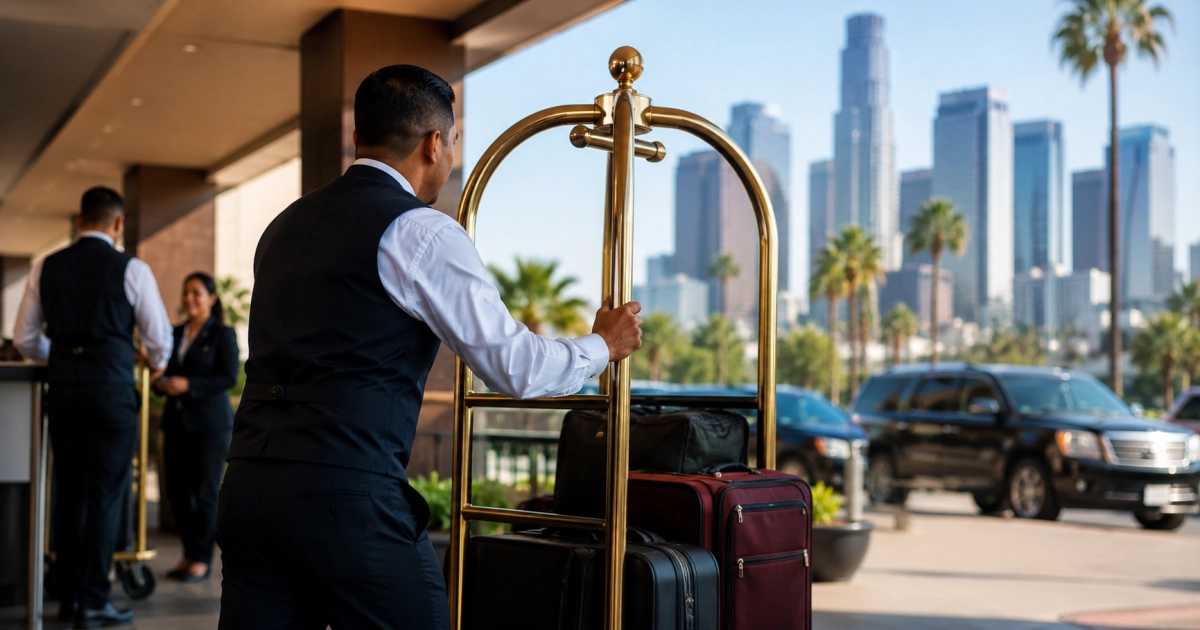

Hotel and airport workers in Los Angeles will have to wait longer than expected to reach a minimum wage of $30 an hour if the new schedule initially approved by the City Council moves forward.
The measure, which had been presented as a way to improve the income of thousands of employees in the tourism sector before the major sporting events that the city will host, was now in the middle of a strong political and economic struggle between unions, hotels, airlines and local officials.
The Council voted 9 to 6 in favor of modifying the original plan, which brought the minimum wage to $30 an hour in 2028. Under the new scheme, the increase would reach $25 in 2027, $27.50 in 2028 and finally to $30 in 2030, according to Councilman Curren Price's office.
The decision still does not close the issue. The Los Angeles Times reported that the vote was an initial approval and that another vote will be needed to formalize the delay. Council President Marqueece Harris-Dawson described the measure as a kind of “temporary marker” to allow negotiations between the city, businesses and unions to continue.
You can see: Salaries in the US are below inflation: what does this mean?
Who is affected by the delay of the $30 minimum wage?
The change mainly affects workers in hotels and companies linked to the airport, two sectors directly related to tourism, travel and the large events that Los Angeles hopes to host in the coming years.
The original ordinance had been promoted with a clear argument: if the city prepares to receive millions of visitors for the 2026 World Cup and the 2028 Olympic Games, the employees who support tourism activity should also benefit from that economic movement.
The plan approved in 2025 established a progressive increase: $22.50 per hour in July 2025, $25 in July 2026 and $30 in July 2028, in addition to incorporating a health credit for hotel workers from July 2026.
With the modification that the Council is now discussing, the jump to $30 would be extended for two more years, until 2030. For workers, this implies a concrete loss of salary expectations in a period in which the cost of living in Los Angeles continues to be one of the highest in the country.
Why Los Angeles wants to stop the increase
The delay does not arise only because of a work discussion. The decision appears tied to a much broader fiscal threat.
A coalition of airlines and hotel groups gathered enough signatures to put a measure that would eliminate the local corporate gross receipts tax on the November ballot. According to the Los Angeles Times, that elimination could take away from the city about $740 million in the first year and an average of $860 million annually over five years.
That information changed the conversation. For the local government, the risk is no longer just how much hotels and companies linked to the airport should pay, but what would happen to the city's finances if a tax elimination of that size is successful.
City Manager Matthew Szabo warned that a revenue loss of that magnitude could force a fiscal emergency to be declared, impact public services and put Los Angeles' preparation for the Olympics under pressure.
Unions talk about business pressure
On the union side, the reading is very different. Workers and their representatives maintain that the delay weakens a promise made to employees who face high rents, accumulated inflation and demanding hours in key tourism sectors.
The Los Angeles Times reported that Unite Here Local 11, a union that represents hotel workers, called the business move linked to the tax an “unethical” scheme and a form of corporate pressure.
The underlying argument is that Los Angeles cannot present itself to the world as a venue for global events while postponing salary improvements for those who clean rooms, attend services, prepare food, transport luggage or work in airport operations.
That point may carry political weight in a city where inequality, expensive housing and low-wage employment are ongoing topics of public debate.
Hotels and airlines warn about costs and jobs
Companies, on the other hand, say that the increase to $30 per hour comes too quickly and could hit sectors that still face high costs, lower competitiveness and uneven recovery after the pandemic.
Law firms and business groups have noted that employers fear the increase will raise prices, reduce staff, slow investments and accelerate the use of automation in hotels and airport-related services.
The hotel industry also warns that Los Angeles could become less competitive with other tourist destinations, just when the city needs to expand its capacity and sustain the quality of services for international events.
What is the current minimum wage in Los Angeles
The city of Los Angeles' overall minimum wage will rise to $18.42 per hour on July 1, 2026, according to the city's Office of Wage Standards. That general rate is updated annually based on the consumer price index for urban and white-collar workers in the Los Angeles metropolitan area.
But hotel workers have specific rules. The city itself reports that the minimum wage for hotel workers will also increase on July 1, 2026 and that, in addition, certain hotel employers will be required to pay a health benefit of $8.15 per hour or cover the difference as additional wages if they do not provide sufficient benefits.
This explains why the discussion is so sensitive: it is not just about the base salary, but about the entire package of labor costs and benefits in a labor-intensive industry.
What is missing for the delay to be definitive?
For now, the $30 minimum wage delay is not completely over. The Council took an initial step, but needs new approval for the change to be formalized.
Meanwhile, negotiations continue. City seeks to avoid election war over gross receipts tax; companies push to alleviate costs; and unions are trying to protect the originally approved wage schedule.
The result will be key not only for thousands of workers, but also for the economic model with which Los Angeles will reach its next major events.
A decision with impact beyond Los Angeles
The wage dispute in Los Angeles can become a reference for other cities with strong tourist activity. The dilemma is known: how to distribute the benefits of global events between companies, workers and local governments.
For workers, the $30 wage represents a promise of relief in an increasingly expensive city. For hotels and airlines, it is a cost that can modify prices, contracts and investments. For the city, the immediate problem is to avoid a fiscal crisis without completely breaking with the unions.