

Unknown: Elon Musk and his risky plan with the Cybertruck
Sales are far from the initial goals and, faced with yards full of units without buyers, Musk would have devised an internal move to move inventory
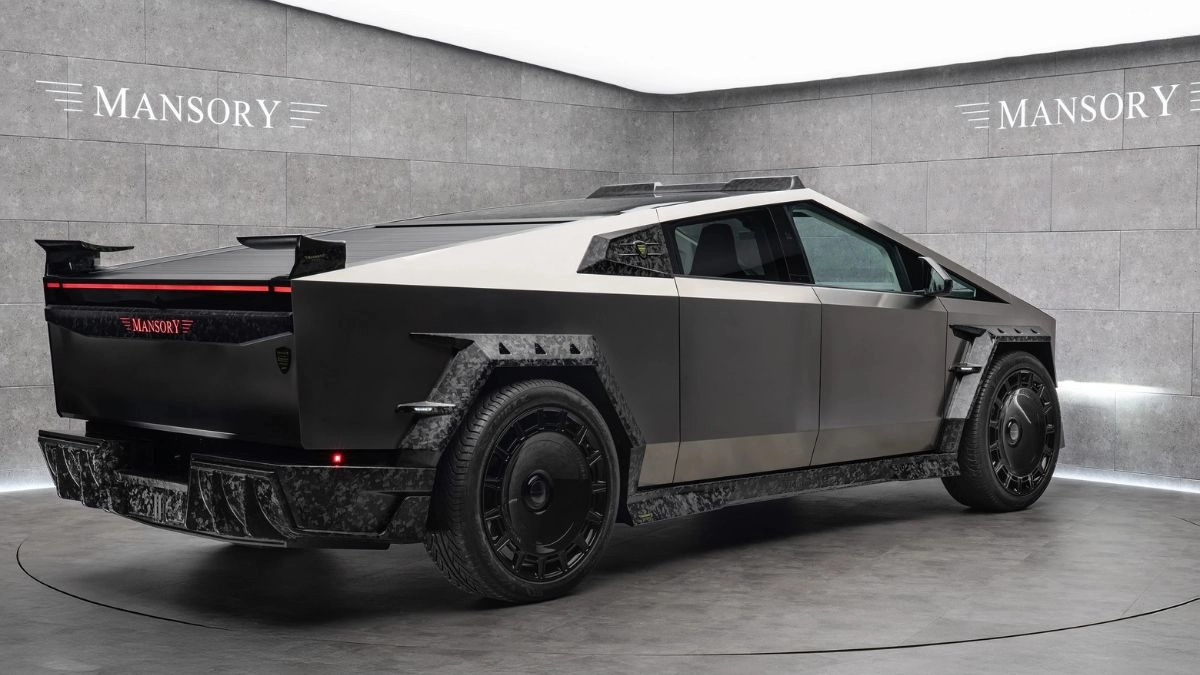

When Tesla presented the Cybertruck, it promised a revolution. The futuristic pickup truck, made of stainless steel and with an angular design, was supposed to mark the beginning of a new era for electric work vehicles.
However, three years after its launch, the outlook is very different: Elon Musk's flagship model has become a heavy burden for the brand.
Dealers have more units than they can handle, and sales figures confirm what seemed unthinkable: the Cybertruck could be the first major commercial setback in Tesla's history. Faced with this situation, Musk reportedly opted for an unconventional maneuver: redirecting hundreds of vehicles to his own companies, such as SpaceX and xAI, to alleviate the inventory buildup.
An icon that did not convince the public
The Cybertruck was born surrounded by expectation. Musk spoke of an “indestructible” vehicle, with off-road capabilities and an aesthetic that seemed like something out of a science fiction movie. But the initial enthusiasm did not translate into sustained sales.
According to European media reports, Tesla barely managed to sell about 16,000 units of the Cybertruck during 2025, well below the 250,000 that Musk himself had projected. The plant, which was supposed to operate at full capacity, is barely using 10% of its production potential, a figure that sums up the scope of the problem.
The decline is also reflected in quarterly performance: in the second quarter of the year, sales were 4,306 units, a 50.8% reduction compared to the same period in 2024.
Although there was a slight rebound in the third quarter to 5,385 units, the increase is explained more by the urgency of some buyers before the elimination of the $7,500 federal tax credit than by a real resurgence of interest.
This performance leaves the Cybertruck relegated to third place among the best-selling electric pickup trucks in the United States, behind the Ford F-150 Lightning and the GMC Hummer EV. For a brand accustomed to leading all electric segments, the blow is significant.
Musk's plan: sell himself
Faced with the stockpile, Musk reportedly opted for a strategy as bold as it is controversial. In recent months, an unusual number of Cybertrucks have been seen being delivered to the facilities of SpaceX and xAI, two of the magnate's companies.
Witnesses claim that full trucks containing the futuristic pick-ups were unloaded at xAI's headquarters over a recent weekend, while dozens of new units also appeared at SpaceX's space base in Texas.
The move has raised suspicions among analysts, who interpret the operation as an attempt to artificially inflate sales figures, showing an apparent improvement in registrations while discreetly emptying crowded parking lots.
Beyond the accounting impact, the maneuver could serve to buy Musk time: relieve pressure from investors and prevent the media from openly talking about a resounding commercial failure. However, the strategy doesn't solve the structural problems facing the Cybertruck.
Controversial design and exorbitant price
Tesla's pickup truck was designed to break the mold, but it ended up dividing the public. Its unpainted stainless steel body, with sharp edges and a minimalist appearance, generates both admiration and rejection.
In a market where traditional pickup trucks dominate due to their robustness and practicality, the Cybertruck seems more like an eccentricity than a work tool.
The price doesn't help either. With a base price of around $80,000 and versions that exceed $100,000, Tesla's pickup truck is positioned in a field dominated by high-net-worth customers, more interested in exclusivity than functionality. This has limited its reach to a very small niche, far removed from the average American consumer, who prefers more conventional and affordable options such as the Ford F-150 Lightning or the Chevrolet Silverado EV. Technical flaws are compounded by perception issues. Since its first deliveries, users have reported body rust, software glitches, suspension noises, and problems with the steering system. Tesla has attempted to respond with remote updates and technical recalls, but the reputational damage has already been done. Owner forums are full of disappointed testimonials.Many highlight the gap between what was promised and what was delivered, a pattern that is beginning to repeat itself with worrying frequency in some Tesla products.