

US cancels Mexican airline routes from AIFA, less than a year from the World Cup
This news would be a major blow to Mexico, given that AIFA established itself as the country's main cargo airport
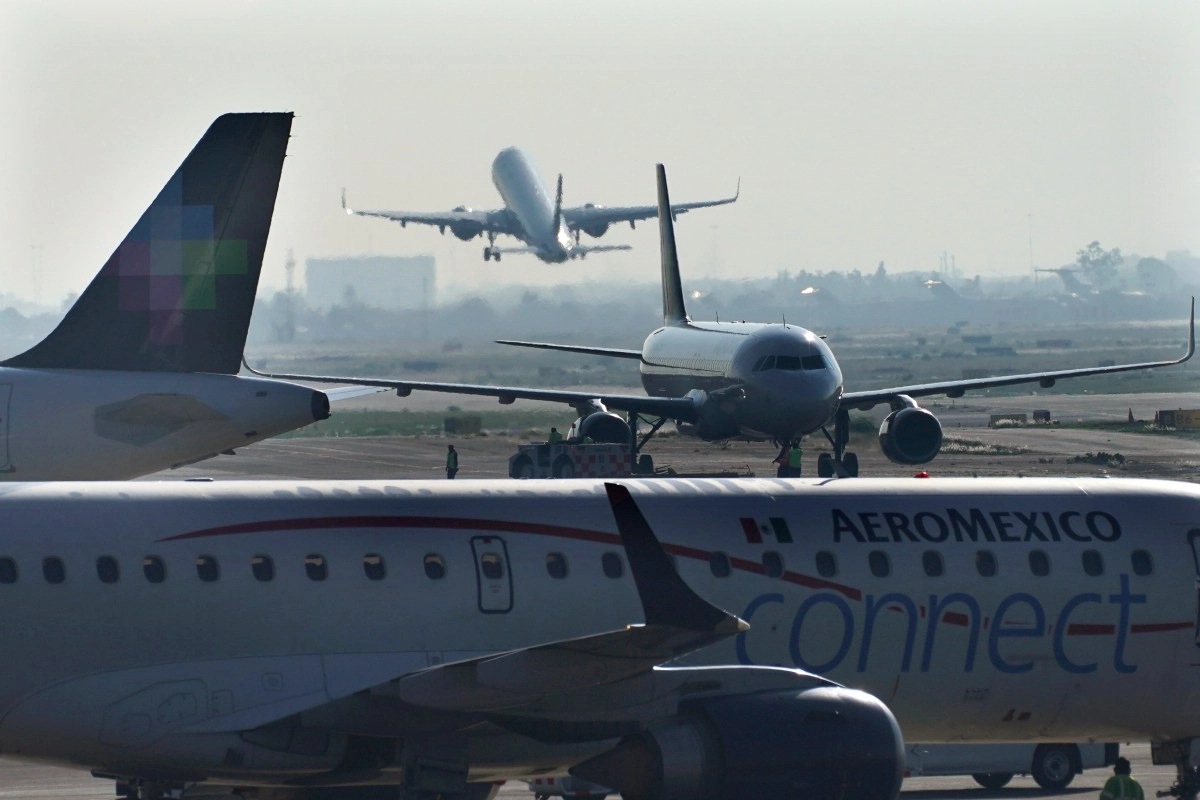

The newly built Felipe Angeles International Airport (AIFA) and Mexican airlines in general received a major blow Tuesday night when the US government canceled all combined passenger and cargo flights, 227 days before the World Cup, which both countries are co-hosting.
The announcement, released by the Department of Transportation, stated that it responds to what US authorities consider a series of restrictive actions by Mexico that affect competition and access for US airlines to the Mexican market.
Transportation Secretary Sean Duffy justified the order by stating that Mexico “illegally canceled and froze flights by US airlines for three years without consequence.”
According to the Trump administration, the 2015 air transport agreement between Mexico and the United States is currently in effect. This established the framework for regulating commercial flights between the two countries, seeking to promote fair competition and mutual benefit in the aviation sector, and the administration alleges that it has not been fulfilled.
In this regard, the Department of Transportation stated that Mexico has violated a bilateral aviation agreement by rescinding slots for US passenger airlines and forcing US cargo airlines to relocate their agreement.
The news was reported by Reuters, where Duffy emphasized that the US response seeks to restore balance to the sector and warned: "Until Mexico stops playing games and fulfills its commitments, we will continue to hold them accountable. No country should be able to take advantage of our airlines, our market, and our passengers without repercussions." The order issued by the Department of Transportation not only affects current and scheduled flights of Aeromexico, Volaris, and Viva Aerobus, but also freezes the growth of combined passenger and cargo services, known as “belly cargo.” between the United States and Benito Juarez International Airport, the main air terminal of the neighboring country.
AIFA, a symbol of the previous administration in Mexico, now faces one of its biggest challenges since its inauguration.The loss of 13 routes to the United States represents a significant setback for an airport that has sought to establish itself as a viable alternative to the overcrowded Benito Juarez International Airport. This news comes on top of the announcement made in September by the Department of Transportation, which ordered Delta Air Lines and Aeromexico to dissolve a joint venture that allows them to coordinate the scheduling, pricing, and capacity of flights between the United States and Mexico, citing competition concerns. According to analysts, the end of the alliance between Delta and Aeromexico is part of a series of threats issued by the US government against Mexico last July, when the Department of Transportation had already announced several restrictions against Mexican airlines in retaliation for the reduction of operations at Mexico City International Airport (AICM), a measure imposed in 2022 during the administration of Andres Manuel Lopez Obrador.