

Volvo makes Gemini a much more useful co-pilot
Volvo and Google test a feature that allows Gemini to analyze the vehicle's cameras and better understand what is happening on the road
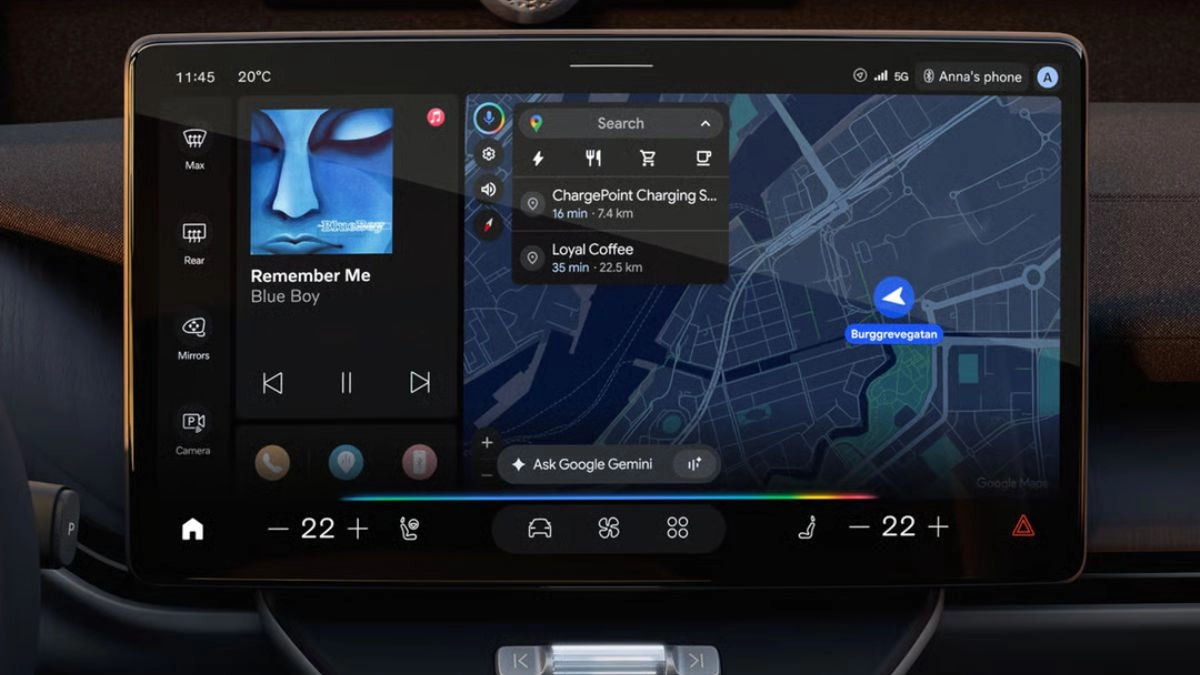

Talking to the car attendant to ask for directions or find a restaurant is now commonplace. However, until now artificial intelligence worked with an obvious limitation.
Read also: The large SUVs that cause the least problems in the United States
He could answer questions, consult information on the Internet and use navigation data, but he was unable to directly interpret what was happening in front of the vehicle.
You can read: A great date: the battle of guarantees between three luxury brands
That is precisely what Volvo wants to change with a new technology demonstration carried out together with Google. The Swedish brand showed how Gemini can access the exterior cameras of one of its future models to understand the environment in real time and offer much more advanced assistance.
An assistant who understands what he sees
The test was presented during the Google I/O conference and used a prototype of the new Volvo EX60. The novelty consists of allowing Gemini to analyze the information captured by the cameras surrounding the vehicle.
It may seem like a small evolution, but it represents a major shift for the role artificial intelligence will play inside cars.
Until now, virtual assistants mainly relied on stored information, online services and location data. With access to cameras, Gemini can recognize elements of the environment such as traffic signs, lanes, intersections, streets or different landmarks.
Closer to a real co-pilot
The ability to interpret images opens the door to new functions for drivers. For example, while following a route, AI could help identify the correct lane to take an exit or warn about parking restrictions that are not obvious to the naked eye.
It could also provide additional context about specific places, buildings or situations that appear in the tour.
The difference is that you would no longer be limited to answering questions based on general information. You would now have the possibility to analyze exactly what is happening around the vehicle at that moment.
The driver will still have control
Despite the progress, Volvo makes it clear that these functions will not replace human decisions. The company maintains that it will be the driver who decides when to ask the assistant for help and how to use the information provided by artificial intelligence.
For now, technology functions as a support tool and not as a system that acts autonomously or makes decisions on its own.