

Comando Vermelho: what is the origin of the criminal group designated as terrorist by the US?
Considered the oldest and most feared criminal group in Brazil, the Red Command emerged in the 1970s inside a prison in Rio de Janeiro
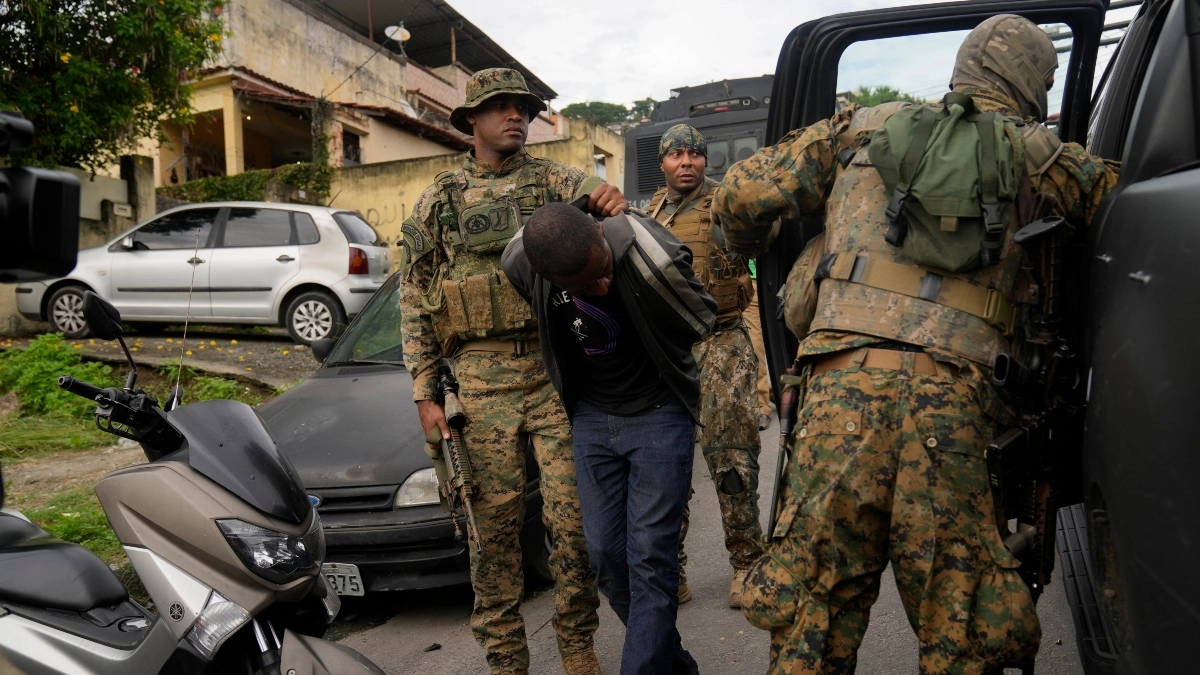

The Red Command is one of two criminal groups recently designated by the United States government as terrorist organizations, opening the door for sanctions to be issued and military force to be used to dismantle it.
Considered the oldest and most feared criminal group in Brazil, it emerged in the 1970s inside a prison in Rio de Janeiro.
The group went from being a self-protection organization among prisoners to becoming one of the main drug trafficking structures in Latin America, according to CNN.
The organization originally emerged under the name “Falange Vermelha”, during the Brazilian military dictatorship, when common prisoners coexisted with leftist militants in the Ilha Grande prison.
Over time, the group abandoned any ideological traits and focused on criminal activities such as drug trafficking, bank robbery, extortion and territorial control in the favelas of Rio de Janeiro.
Currently, the Red Command operates through a decentralized structure, composed of cells that maintain loyalty to the group, but operate autonomously.
This modality allowed it to expand into strategic regions of Brazil, especially Amazonas and Mato Grosso, in addition to extending operations to Paraguay, Peru and Colombia.
The influence of the Vermelho Command was also strengthened through alliances with Colombian drug trafficking organizations since the 1980s, which facilitated international cocaine trafficking and access to strategic corridors in the Amazon.
Recent investigations indicate that the organization maintains a presence on the triple border between Brazil, Colombia and Peru, where it disputes illegal territories and routes with other criminal structures.
The growth of the group led Brazilian authorities to classify it as a “narcoterrorism” threat. In October 2025, Rio de Janeiro carried out the largest police operation in its history against the Red Command, mobilizing more than 2,500 agents in the Alemão and Penha favela complexes.
Governor Cláudio Castro then assured that the organization already operates as a “parallel state” within several regions of Brazil.
In addition to drug trafficking, the Red Command exercises social and economic control in marginalized territories, offering illegal jobs, security and services where the State has little presence.
That combination of violence, financial power and territorial control allowed the organization to survive for more than five decades and maintain influence even with several of its leaders imprisoned.