

Marina in Mexico deals blow to drug traffickers; seizes cocaine valued at more than 15 million
The seizure joins other recent operations led by the Navy on the Pacific coast, where several criminal organizations operate.
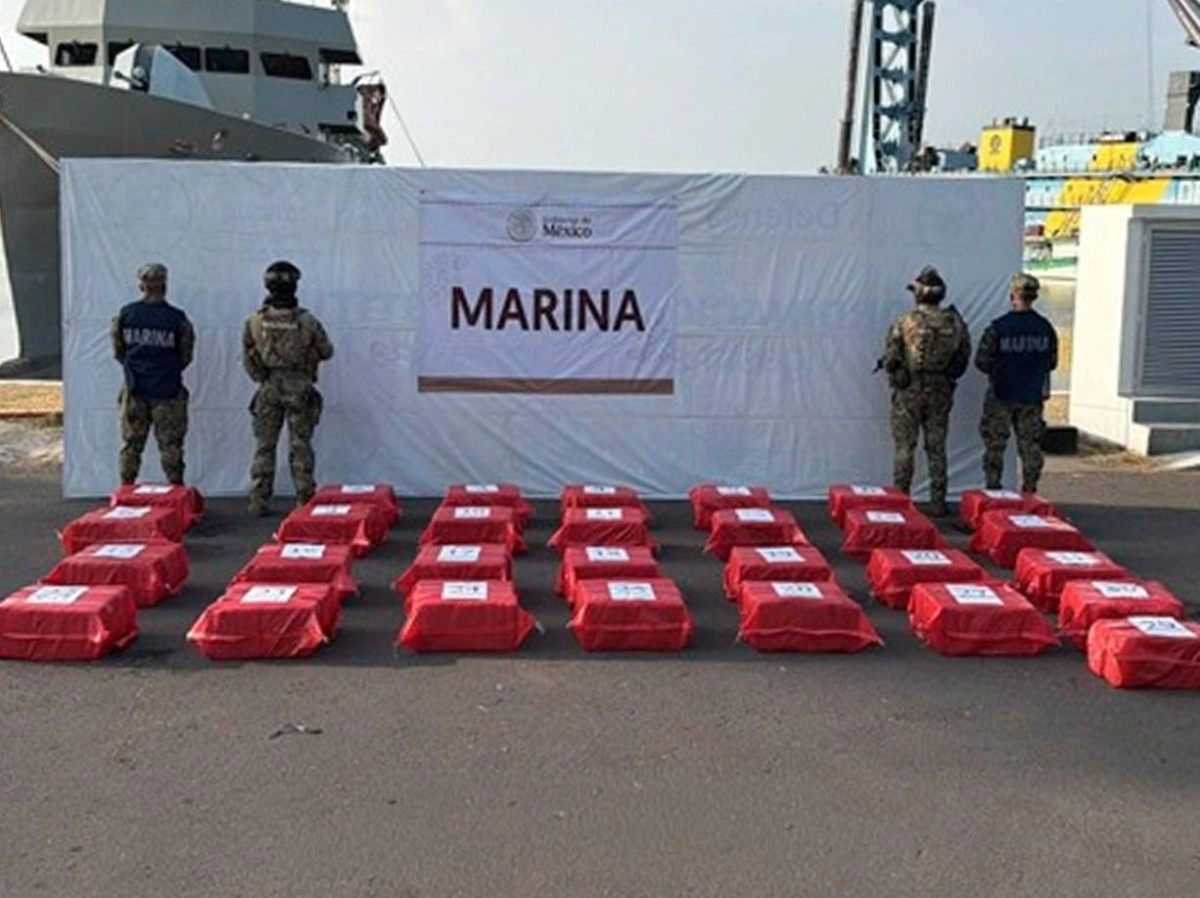

The Secretary of the Navy in Mexico seized approximately 1.2 tons of suspected cocaine and detained eight people during two operations carried out in the waters of the Pacific Ocean, off the coast of Chiapas, in a new blow against maritime drug trafficking networks that operate between South America and Mexico.
According to the agency, the actions were carried out by personnel of the Mexican Navy in Coast Guard functions as part of maritime and air patrols. The seizure includes 1,244 kilograms of alleged cocaine hydrochloride, 860 kilos in a first operation and 384 kilos in a second, distributed in 42 packages containing a total of 1,244 packages with the drug.
According to the agency, the shipment represents an economic impact estimated at around 15 million dollars, in addition to preventing nearly 2.4 million doses from reaching the illicit market.
The operations resulted in eight people being arrested, who will face charges for possible crimes against health and organized crime.
With this seizure, the Secretary of the Navy reported that maritime seizures of cocaine total close to 74 tons during the current federal administration, the result of permanent surveillance operations in national waters.
The institution noted that these operations seek to "inhibit illicit activities in national waters, weaken the operational capabilities of criminal groups and strengthen the rule of law in Mexican marine areas," according to the official statement.
Security specialists agree that the Mexican Pacific continues to be one of the main routes for international cocaine trafficking from South America.
The United Nations Office on Drugs and Crime (UNODC) has documented that much of the cocaine produced in Colombia, Peru and Bolivia is transported by sea using fast vessels or semi-submersibles to Central America and the Mexican coast, from where it is subsequently sent to the United States and other international markets.
The coasts of Chiapas have become a recurring point for seizures due to their proximity to maritime routes used by criminal organizations.