

One year after Glass House Farms raid, fear and trauma persist
Community Members Say July 10, 2025 Ventura Operation Left Permanent Scars

A year ago, this same month, Javier's life changed radically. The 41-year-old was working at Glass House Farms on California's central coast when federal immigration agents carried out what was then the largest immigration enforcement operation in the state's history.
Five days after his arrest, Javier was deported to Mexico.
“I don't wish on anyone what we experienced that day,” said Javier, who asked that we only use his first name. He spoke from his home in Chiapas, southern Mexico. “I’m still dealing with the psychological damage.”
On July 10, hundreds of masked agents from Immigration and Customs Enforcement (ICE) and Customs and Border Protection (CBP) conducted a militarized search of the marijuana plantation, which covers the communities of Carpinteria and Camarillo.
The operation, which involved armored vehicles, helicopters and drones, resulted in the arrest of more than 360 farm workers, including 14 minors and four US citizens.
'We remain concerned'
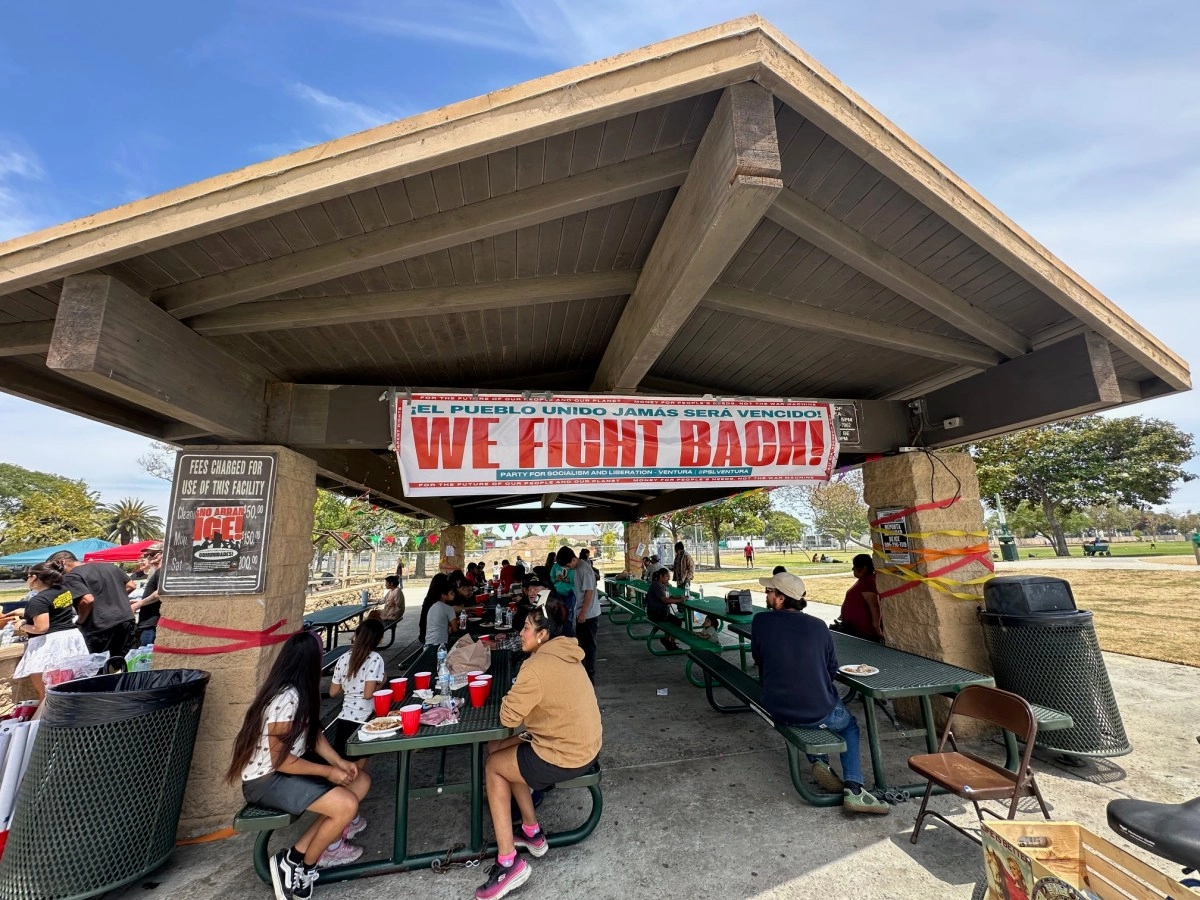
Last Saturday, July 11, immigrant rights activists and advocates in Oxnard, about 40 kilometers south of Los Angeles, held a vigil in memory of the victims of the raids and Jaime Alanis García, the 57-year-old farm worker who died while trying to avoid arrest.
“July 10 was very traumatic for us,” said Leo Martínez, of the rapid response network VC Defensa, which organized the vigil.
He spoke as residents lit candles at a nearby makeshift altar with images of Lorenzo Salgado Araujo, the Texas construction worker killed on July 7 of this year by an ICE agent in Houston. A similar shooting, in which ICE participated, on July 13, cost the life of Joan Sebastián Guerrero, 26 years old and originally from Colombia.
Martínez added that after the raids, the community was transformed “in a way I had never seen before.”
Neighbors joined WhatsApp groups to stay informed about the presence of immigration agents. They formed networks of volunteers to patrol neighborhoods. According to him, the agents no longer have space to operate here.
Still, he added, the fear persists.
“There are children who no longer go to school, parents who do not work,” Martínez said. “The terror is still present.”
Luis, 52, is originally from the southern Mexican state of Oaxaca and has worked in the fields in and around Ventura County for more than 30 years. He said he is still afraid of that day and is worried that something similar could happen again.
“We remain concerned,” said Luis, who also asked that we only use his first name. He added: “We take care of each other, and if we see something unusual… we let us know.”
Other attendees at the vigil expressed similar concerns.
“My wife and I go to work every day not knowing if we will be able to return home to our children,” said Pedro, 48, adding that his four children were born in the United States.
Aggression and malice
On the day of the raid, Javier remembers parking the company van he was driving in front of one of the farm's warehouses when he first saw a large group of immigration agents.
“I got out of the truck and hid in a dark room in the warehouse,” he said. "I covered myself with plants so they wouldn't see me. We were about 20 workers hiding there. We were hidden for about 40 minutes until they found us."
When they discovered him, they pointed a taser at him. Frightened, Javier surrendered.
"That's it! That's it! Don't hurt me! I told them."
When the immigrants were taken out, they were forced to kneel as if they were criminals.
“People were crying and screaming,” he recalled. “There were couples who worked together and whose children had been left in the care of a nanny.” The agents, he said, acted with extreme aggressiveness and “malice.”
Finally, that day, agents loaded Javier into a van with other detainees, including men and women with open asylum applications and work permits, or workers who had spent more than 30 years in the country “without a single traffic violation.”
The detainees were taken to the ICE detention center in downtown Los Angeles. Javier was crammed into a small, dimly lit room with 50 other people. He spent the next five days eating half-frozen burritos and taking turns sleeping on the floor.
“I didn't eat so I wouldn't have to go to the bathroom,” Javier said. “We only had a toilet visible to everyone, without any privacy.”
ICE agents gave detainees two options: defend themselves in the detention center, which would mean months of confinement; or deportation.
"They told me that if I signed my voluntary exit, when I returned to Mexico they would send me a check for $1,000. I signed the exit," Javier said. “The $1,000 never came.”
The worker agreed with Martínez when emphasizing the importance of community mobilization in response to the difficult and anguished moments they experienced during the raid a year ago. He highlighted the work of VC Defensa and 805 UndocuFund, another rapid response network, and described how “friends and acquaintances organized car washes, food sales and raffles” to raise funds in their support.
After the raid, he stated that the community “was more united than ever.”
This report was produced as part of “Aqui Somos/Here We Stand,” a collaborative reporting project of American Community Media and community media outlets across the state.