

PM Modi Convenes High-Level Security Meeting Amid Rising Strategic Concerns
Prime Minister Narendra Modi holds a pivotal meeting with India’s top defense and strategic officials, including EAM S. Jaishankar, Defence Minister Rajnath Singh, and NSA Ajit Doval, signaling an assertive approach to national security planning.
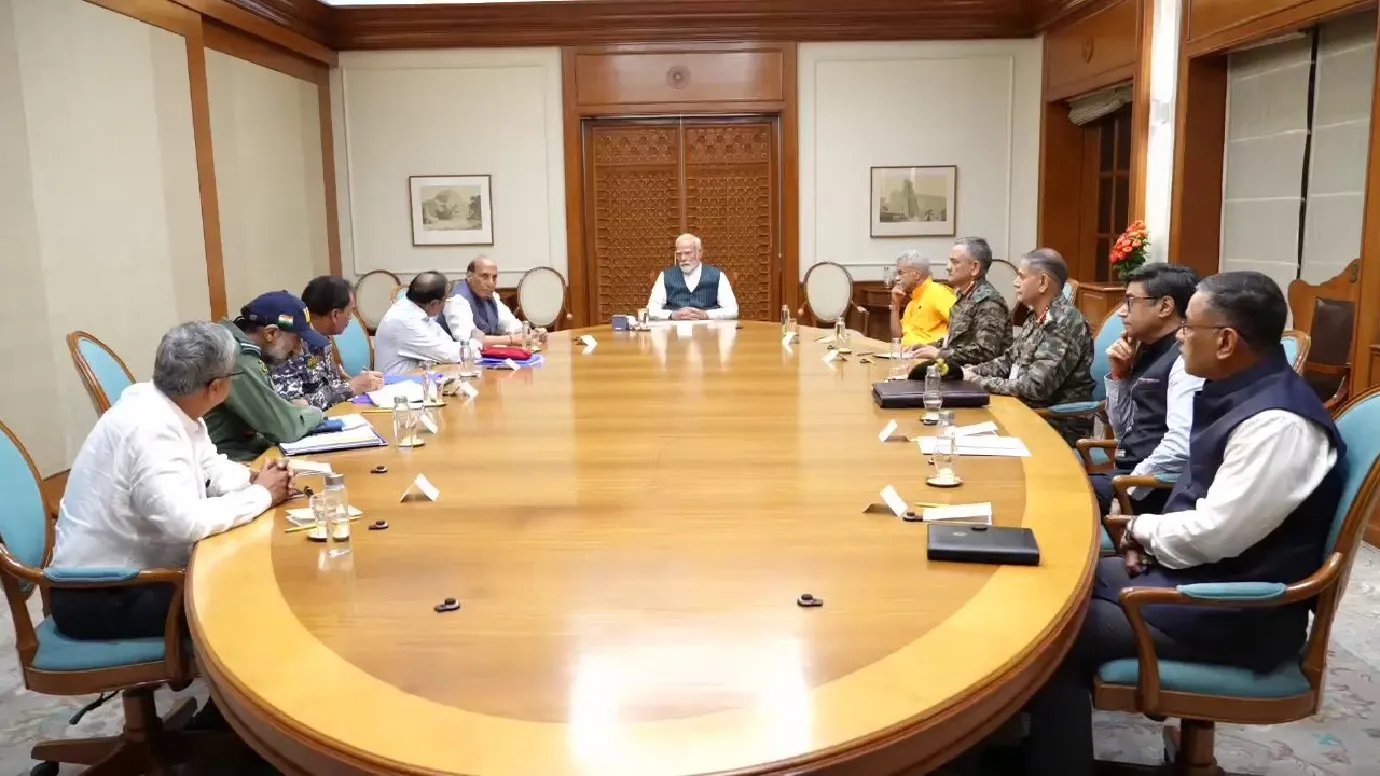

In a demonstration of proactive leadership and strategic foresight, Prime Minister Narendra Modi chaired a high-level security meeting at his official residence, 7 Lok Kalyan Marg, on Friday evening. The urgent gathering brought together key figures from India’s defense and diplomatic landscape, including External Affairs Minister Dr. S. Jaishankar, Defence Minister Rajnath Singh, National Security Advisor Ajit Doval, Chief of Defence Staff (CDS), and the Chiefs of the Indian Army, Navy, and Air Force.
A Gathering of India’s Top Strategic Minds
This closed-door meeting is being closely watched both nationally and globally, as it signals India’s heightened focus on strategic preparedness amidst emerging geopolitical developments. While the official agenda was not publicly disclosed, sources familiar with the discussion suggest that the meeting centered around national defense posture, regional security scenarios, and responses to evolving international dynamics.
Prime Minister Modi, known for his hands-on approach to governance, reportedly emphasized the importance of synergy between defense and diplomacy, a theme that has increasingly characterized India’s strategic policy framework in recent years.
Security Concerns Driving Urgency
The timing of the meeting coincides with rising concerns over border stability, maritime assertiveness in the Indo-Pacific, and global conflicts influencing India’s national interest. The Line of Actual Control (LAC) with China and heightened surveillance along key frontiers are believed to have featured prominently in the strategic briefings.
Recent incidents along India’s northern borders, as well as developments in neighboring regions including Pakistan and the broader Middle East, have called for recalibrated military readiness and diplomatic vigilance. Additionally, cyber warfare threats and defense technology modernization were likely discussed as part of a holistic security assessment.
Focus on Operational Readiness and Coordination
India’s top military commanders, including the Chiefs of the Army, Navy, and Air Force, reportedly briefed the Prime Minister on the operational readiness of the Armed Forces. With Defence Minister Rajnath Singh and CDS present, the discussions were also expected to evaluate the implementation status of ongoing defense modernization projects and joint military exercises with strategic partners.
“The PM stressed the importance of jointness and inter-services coordination to ensure faster decision-making and optimal use of resources,” said a senior official on condition of anonymity. The meeting is said to have reinforced the need for agile command structures and seamless information sharing among key institutions.
External Affairs and Strategic Diplomacy
Dr. S. Jaishankar’s presence underscored the strategic diplomacy dimension of the gathering. With India playing a pivotal role on the global stage from G20 to BRICS balancing defense imperatives with foreign policy priorities has become critical. The EAM is believed to have briefed the panel on India’s current diplomatic engagements, multilateral forums, and responses to recent international developments.
Sources suggest that India's growing alignment with Indo-Pacific partners like the United States, Japan, and Australia (through the QUAD), as well as defense collaborations with France and Israel, were also part of the comprehensive discussions.
NSA Ajit Doval’s Role in Strategic Assessment
National Security Advisor Ajit Doval, widely respected for his sharp strategic acumen, is understood to have provided an intelligence briefing outlining emerging threats, both conventional and unconventional. Doval is also said to have outlined frameworks for intelligence integration and cyber defense preparedness, highlighting India’s expanding capabilities in non-traditional warfare domains.
Technology, Cybersecurity, and Future Warfare
One of the key pillars of the meeting was the integration of cutting-edge technologies into defense planning. Artificial Intelligence, drone warfare, satellite surveillance, and cybersecurity threats were all reportedly on the agenda. India’s ambitious Defense Space Agency and upcoming defense startups were also discussed as part of the broader innovation roadmap for national defense.
The leadership’s attention to these areas reflects an understanding that future conflicts will not be fought with conventional firepower alone but will require digital dominance and tech superiority.
Public Confidence and National Unity
While the exact content of the meeting remains classified, the government’s decision to publicly acknowledge such a high-level consultation sends a strong message to the nation and its adversaries that India remains vigilant, united, and prepared to meet any challenge head-on. The optics of such unity among India’s strategic leadership reinforce national confidence and project diplomatic firmness globally.
A New Chapter in Strategic Governance
This high-powered gathering at 7 Lok Kalyan Marg symbolizes a critical juncture in India’s approach to national security where defense, diplomacy, intelligence, and innovation converge under a unified leadership. Prime Minister Narendra Modi’s coordination with the EAM, Defence Ministry, NSA, and top military brass points to a future-oriented strategy rooted in resilience, real-time action, and strategic foresight.
As India continues to face dynamic security challenges on multiple fronts, such focused engagements are not just necessary they are foundational to the country’s ambition of becoming a leading global power with a robust and responsive security framework.