

Palestine asks the UN Security Council to stop the genocide
At the emergency meeting called by several European countries, Israel again denied that it seeks to permanently occupy Gaza
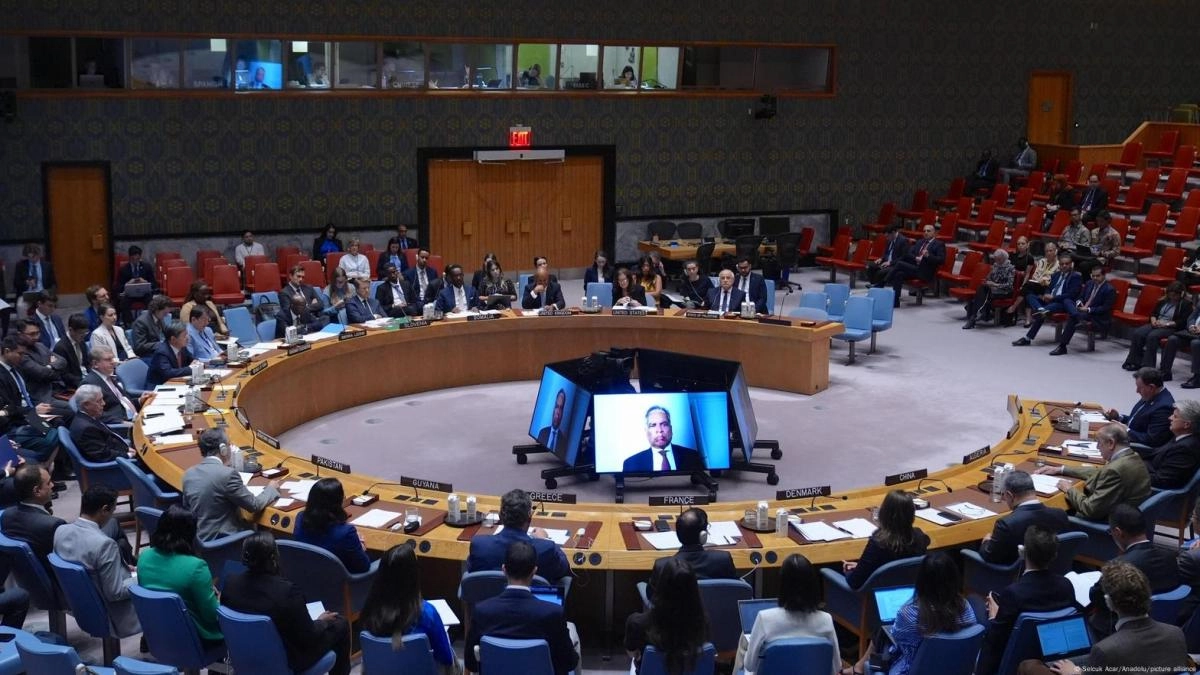

The Palestinian ambassador to the United Nations, Riyad Mansour, called this Sunday to "stop the genocide" during the emergency meeting of the UN Security Council, called by several countries to discuss Israeli Prime Minister Benjamin Netanyahu's new plan for the military occupation of the Palestinian enclave of Gaza.
"Given Netanyahu's insistence on pursuing this genocide, to destroy our people through death and displacement, to annex our territory, to destroy Palestine and any chance of peace, this Council must act," Mansour said in his speech, in which he asserted that "Israel is killing Palestine in Gaza," where he maintained that more than two million people are suffering "pain and agony" that no human being or nation should have to suffer.
"We owe it to them to act now to stop this genocide," he commented. The Palestinian diplomat accused Israel of prolonging the war "not to disarm Hamas," but to "prevent an independent Palestinian state." The extraordinary meeting ended after four of its permanent members, Russia, China, France, and the United Kingdom, questioned Israel's plan, while the other member, the United States, defended the Israeli government's "right" to decide "what is necessary" for its security.
Hunger, pure and simple
At the UN, Israel's deputy permanent representative, Jonathan Miller, maintained that his country "has no plans or desire to permanently occupy Gaza." Meanwhile, the US representative to the Security Council, Dorothy Shea, accused other countries of "spreading lies" about Israel, denouncing that it is "categorically false" that a genocide is taking place in Gaza. Miller reiterated that the new "five principles" of this plan to conclude the offensive in Gaza are the disarmament of Hamas (a group considered a terrorist group by the EU and the United States), the release of all hostages, the demilitarization of Gaza, Israeli control of security over the enclave, and the creation of a peaceful, "non-Israeli" civilian administration for the Strip. "This is the only way to ensure a better future for both Israelis and Palestinians," he insisted. The UN sees it differently. "If these plans are implemented, they will likely trigger another calamity in Gaza, with spillovers across the region and further forced displacement, killings, and destruction," Miroslav Jenca, UN Under-Secretary-General, told the Council. Meanwhile, the UN humanitarian office, OCHA, reported that 98 children have died from acute malnutrition since the start of the conflict in October 2023, 37 of them since July, according to Gaza authorities. "This is no longer an impending hunger crisis, this is hunger, pure and simple," said OCHA's director of coordination, Ramesh Rajasingham. Britain, a close ally of Israel that nevertheless promoted this emergency meeting on the crisis alongside Denmark, Greece, France, and Slovenia, warned that the Israeli plan could prolong the conflict. "It will only deepen the suffering of Palestinian civilians in Gaza. This is not a path to resolution. It is a path to more bloodshed," said Britain's deputy ambassador to the UN, James Kariuki.