

Report reveals data on North Korea's chemical weapons
Study shows Pyongyang regime investing heavily in developing chemical arsenal
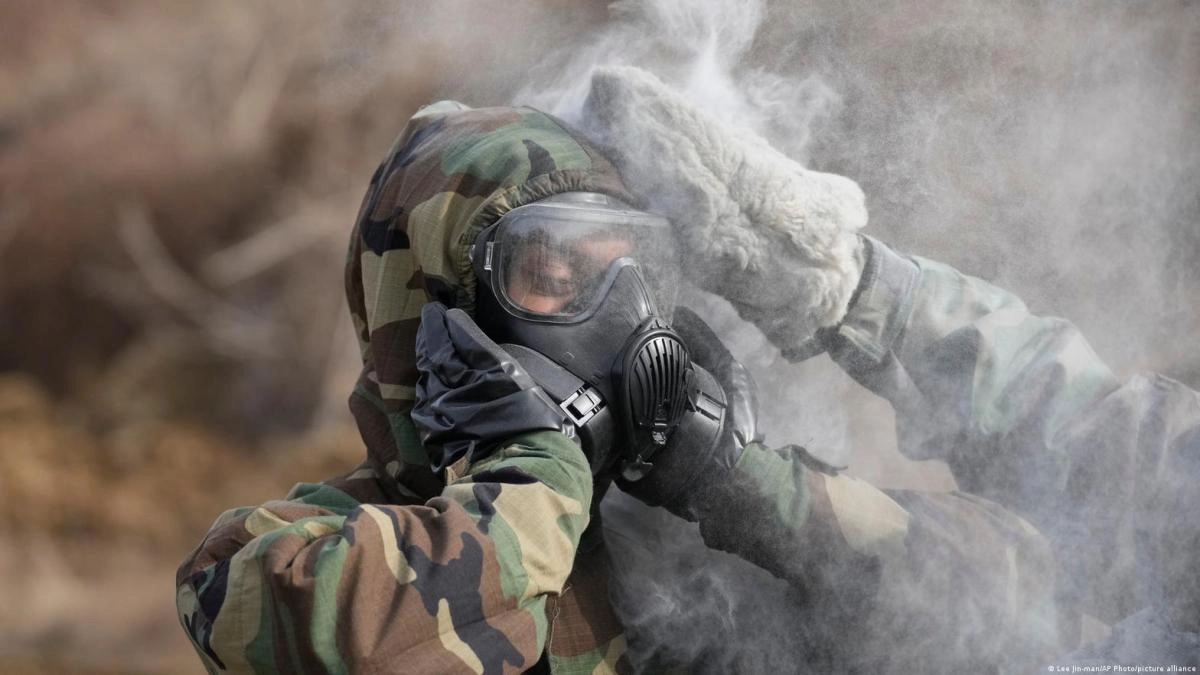

A study published in late May 2026 revealed clues about North Korea's chemical weapons program. The report, published on the 38 North website, was based on research carried out within the framework of Project Anthracite, involving security experts from the Royal United Services Institute (RUSI), a London think tank whose objective is to use open sources to obtain an “overview” of North Korea's chemical military potential.
The report notes that industrial facilities, universities and research institutions run by the North Korean government have the equipment and raw materials necessary for the production of chemical weapons.
Although the investigation emphasizes that none of this proves that North Korea is producing chemical weapons, it does complement the available intelligence information by “providing a basis for feasibility and identifying indicators that deserve monitoring.”
“Taken together, the most striking conclusion of this analysis is not the presence of irrefutable evidence, but the convergence of multiple indicators that point to an integrated industrial capacity,” the document states.
A topic about which little is known
The assessment coincides with other reports and is a cause for concern among experts because Pyongyang has already demonstrated a clear willingness to use chemical weapons. In 2017, agents murdered Kim Jong-nam, the brother of North Korean dictator Kim Jong-un, at the Kuala Lumpur airport in Malaysia with the VX nerve agent.
“It is absolutely clear that North Korea can and has made chemical weapons and the use of VX in 2017 confirms this,” says Margaret Kosal, director of graduate studies at the Georgia Institute of Technology.
"Compared to other former or current chemical warfare programs, we don't know much about what's going on in North Korea," he told DW. There is also not much information about the regime's true nuclear and biological warfare capabilities.
“But from what can be inferred, they have the capacity to produce large quantities of mustard gas and sarin and a certain amount of VX,” says the expert.
The program was previously believed to be designed to be a poor deterrent substitute for an atomic bomb, before North Korea actually developed its nuclear capability, but there is no indication that Pyongyang has reneged on the chemical arsenal.
“It will most likely be used to hinder South Korean soldiers” in the event of a conflict, Kosal says. Nor can it be ruled out “that its use is planned against urban centers such as Seoul.”
Up to 5,000 tons of chemical weapons
North Korea is believed to possess between 2,500 and 5,000 tons of chemical weapons.
Dan Pinkston, a professor of international relations at Troy University in Seoul, tells DW that the North Korean regime would have no qualms about using these weapons if it were considered in imminent danger of collapse.
“The regime is paranoid and any type of lethal weapon is justified as necessary for its own security,” says Pinkston, author of a report for the International Crisis Group on North Korea's chemical and biological weapons program.
Despite the horrors associated with chemical weapons, Pinkston estimates that if a conflict broke out on the peninsula, these weapons would be used before resorting to a nuclear attack.
“A nuclear attack by North Korea would be responded to with overwhelming retaliation that would destroy the regime,” says the expert. “But if a conflict was developing against North Korea and South Korean troops advanced toward Pyongyang, North Korea could use chemical weapons to degrade or delay that operation.”
On the battlefield the consequences would be dire, especially among civilians trapped between the fighting and without special protective equipment.
"Unfortunately we have numerous examples of the use of chemical weapons. Iraq used them against Iranian forces in the 1980s, Syria did the same against rebels and civilians, and there are also reports of Russian use in Ukraine," recalls Pinkston.
“Some say that chemical weapons are taboo because what they do to the human body is horrible and indiscriminate, but North Korea has not signed the Chemical Weapons Convention, there are indications that they have already used them and I see no signs that they are going to give them up,” he explains.
Alarm for additional data
Ryo Hinata-Yamaguchi, a professor of military affairs at Tokyo International University, is alarmed by the data emerging from North Korea. “This is in addition to information from other sources, including high-ranking defectors, so we must take this very seriously,” he maintains.
“That said, and while we know that the regime is ruthless and cruel, we do not know the effectiveness of these weapons and the systems necessary to deploy them on the battlefield,” he adds. Despite this, he agrees that Pyongyang would not hesitate to use them to avoid total collapse.
“They have shown that they were not concerned about the use of VX in a public space in 2017. Furthermore, North Korea regularly defies international law and I think they consider chemical weapons to have a useful psychological impact,” he adds.
“I suspect they would use anything to level the battlefield against a technologically superior opponent, so the likelihood of North Korea using chemical weapons under war conditions is very high,” he says.