

Amazon speeds up its package delivery: it now uses bullet trains that travel at 200 miles per hour
Amazon began transporting packages on Japan's famous Shinkansen bullet trains. The initiative seeks to accelerate deliveries and reduce emissions
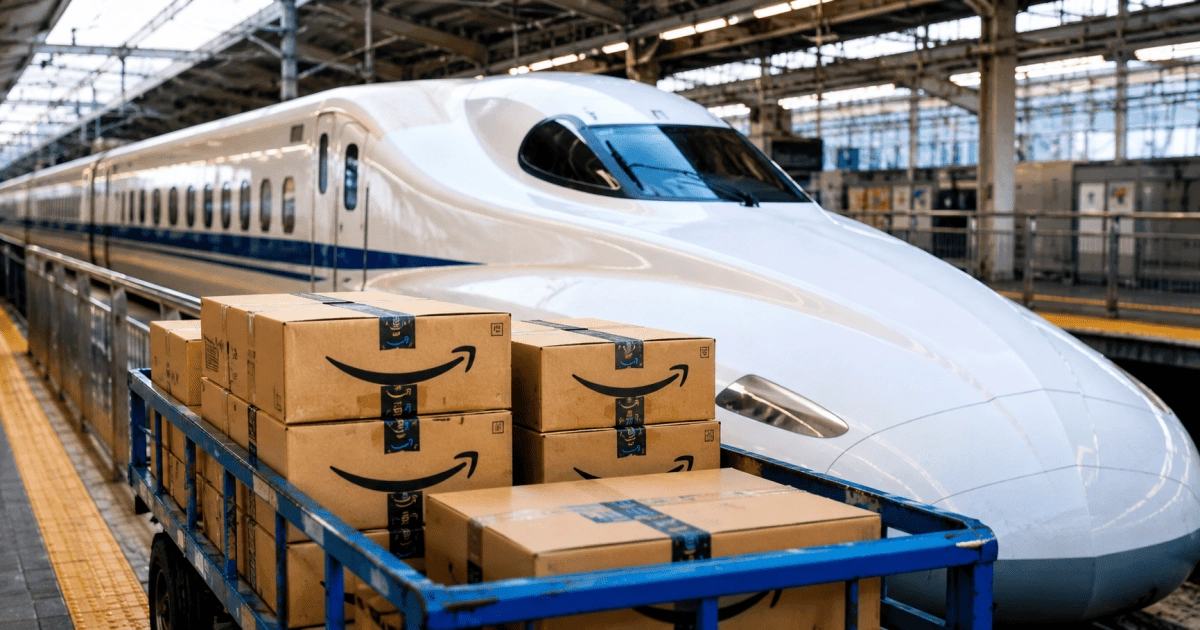

When it seems that there are no longer many ways to speed up deliveries, Amazon surprised again. The company began transporting packages using Japan's famous bullet trains, one of the fastest and most precise rail networks in the world.
The image looks like something out of a futuristic movie: Amazon boxes traveling aboard the iconic Shinkansen, trains capable of reaching speeds close to 200 miles per hour. But this is not an isolated test. The system is already operating on several Japanese routes and is part of the company's strategy to reduce delivery times and reduce polluting emissions.
Packets travel in spaces that were not used before
Amazon announced that it began using non-passenger areas within Japan's high-speed rail network to move packages between fulfillment centers located in different regions of the country.
The initiative is developed together with Japan Railway and takes advantage of the available space on trains that were already circulating, without affecting the service for travelers.
Operations began in March 2026 on lines connecting Tokyo with cities in northern Japan and subsequently expanded to other high-speed routes.
You can see: The bullet train that will connect Las Vegas with Los Angeles would begin operating in 2028
Why Amazon is betting on bullet trains
The explanation has two words: speed and emissions. Moving packages by road can mean long travel hours, traffic, high operating costs and a larger carbon footprint. Shinkansen trains, on the other hand, are famous for their extreme punctuality and for connecting large distances in very short times.
A journey between Tokyo and Osaka that, by road, can take many hours can be done in just over two and a half hours using the high-speed network.
Amazon maintains that this system helps speed up deliveries in remote regions and, at the same time, contributes to its emissions reduction goals. The company remains committed to achieving net-zero emissions across all of its operations by 2040.
You can see: When will the California bullet train be ready? This is what the new 2026 plan says
It is not the first time that Amazon has tried something like this
The company had already been experimenting with alternative transportation models in different countries.
In France, for example, Amazon began moving hundreds of thousands of packages using high-speed TGV trains between Paris and Lyon. In addition, in some European cities it uses electric cargo bicycles and in parts of the United States it continues to develop deliveries using drones.
The difference is that the Japanese case draws special attention because it involves one of the most emblematic railway networks on the planet.
The future of deliveries could increasingly look like science fiction
The news also shows how the logistics business is changing. The pressure to deliver faster and more efficiently led big technology companies to invest billions of dollars in automation, artificial intelligence, advanced distribution centers and new forms of transportation.
Now bullet trains are joining that race. And, although for now the system works only in Japan, the experience could serve as a model for other high-speed rail networks around the world.
A few years ago it seemed futuristic to receive a package the next day. Today Amazon is already shipping boxes aboard trains crossing Japan at speeds approaching 200 miles per hour.