

Wisconsin Supreme Court strikes down 176-year-old abortion ban
The liberal majority of the Wisconsin Supreme Court struck down the state 1849 abortion ban in a decision released Wednesday.
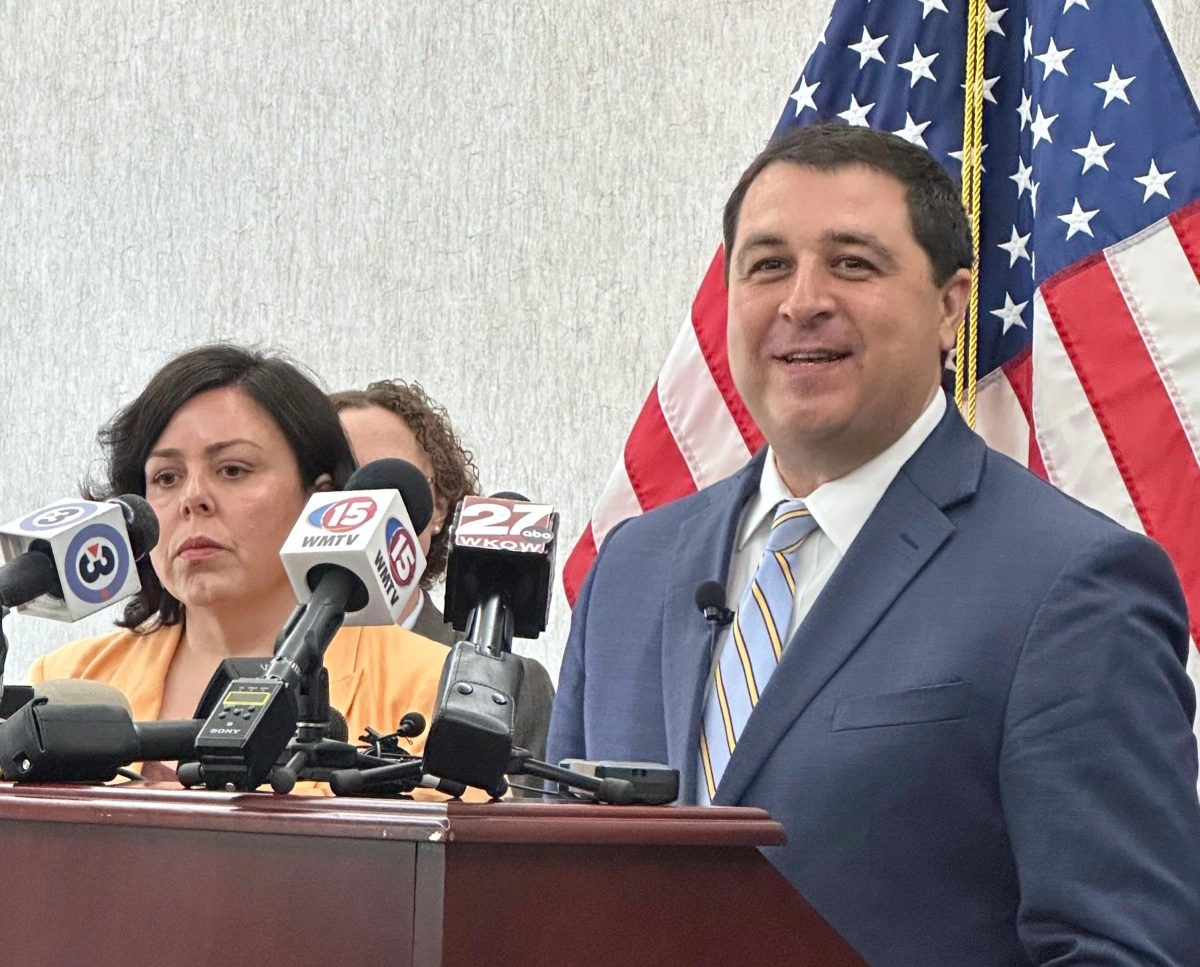

The liberal majority of the Wisconsin Supreme Court struck down the state's 1849 abortion ban in a decision released Wednesday. In a 4-3 ruling, it was replaced by a newer state law that criminalizes abortions only after a fetus can survive outside the womb.
State lawmakers adopted the ban in 1849, making it a felony for anyone other than the mother to “intentionally destroy the life of an unborn child.”
The ban was in place until 1973, when the U.S. Supreme Court’s landmark Roe v. Wade decision, which legalized abortion nationwide, struck it down. However, lawmakers never officially repealed it, and conservatives argued that the U.S. Supreme Court’s 2022 decision overturning Roe revived it. So the majority agreed with Democratic Wisconsin Attorney General Josh Kaul that while the 19th-century law was never formally repealed, it was effectively nullified by more recent laws and regulations, including the 20-week ban. “That comprehensive legislation so exhaustively covers the entire subject of abortion that it was clearly intended as a substitute for the 19th-century’s near-total abortion ban,” Justice Rebecca Dallet wrote for the court. In 2022, Wisconsin Attorney General Josh Kaul, a Democrat, filed a lawsuit arguing that the ban was dwarfed by abortion restrictions enacted by lawmakers during Roe’s nearly half-century of standing. Kaul specifically cited a 1985 law that essentially allows abortions until fetal viability. Some babies can survive with medical help past 21 weeks gestation. In response, Dane County Circuit Judge Diane Schlipper ruled in 2023 that the 1849 ban prohibits feticide, which she defined as the killing of a fetus without the mother's consent, but not consensual abortions. Since then, Abortions have been available in the state, but the state Supreme Court's decision offers health care professionals and patients greater certainty that abortions will remain legal in Wisconsin.
At a news conference Wednesday, Kaul said Wednesday's ruling was a major victory for reproductive rights and a first step in addressing the “devastating impact” of the U.S. Supreme Court's decision.