

Trump threatens Brazil with a 50% tariff and claims that former President Bolsonaro is not judged
Trump said the tariffs will take effect August 1 unless Brazil opens its market and stops the witch hunt against Jair Bolsonaro
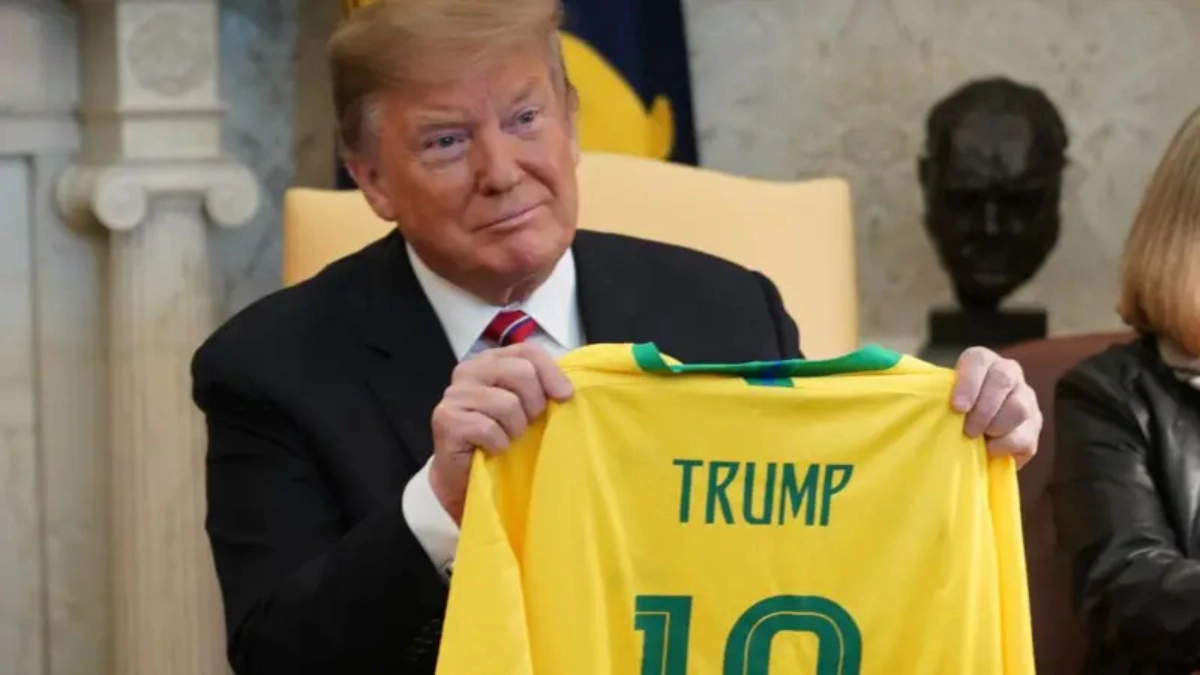

US President Donald Trump announced Wednesday that he will impose a new 50% tariff on products from Brazil.
A In a letter to President Luiz Inacio Lula da Silva, Trump explained that his decision is due to several factors in the United States’ relationship with the South American country.
One, he said, is the “witch hunt” against former President Jair Bolsonaro (2019-2023), who is accused in Brazil of plotting a coup d’état after losing the 2022 elections.
“I knew and interacted with former President Jair Bolsonaro, and had great respect for him, as did most other leaders of other countries. The way Brazil has treated former President Bolsonaro, a highly respected leader around the world during his term, including by the United States, is an international disgrace. This trial should not take place. It is a witch hunt that must end IMMEDIATELY!” Trump wrote in the letter.
Trump and Bolsonaro coincided as presidents in the American’s first term in the White House. Bolsonaro's children have been supporters of the Republican's political project ever since.
Trump also noted that in Brazil there has been an "attack on the freedom of expression of Americans" due to the Brazilian Supreme Court's orders against social media platforms "threatening them with multi-million dollar fines and expulsion from the Brazilian social media market."
He also justified his decision by stating that the US and Brazil have been dragging along in the past trade relationship that "has been far from reciprocal" and that "50% is much less than what is needed to achieve the level playing field that we should have with your country."
He warned that if Brazil responds with reciprocal tariffs, taxes would increase by another 50%. But he also left open the possibility of negotiating for Brazil to open its market to the United States without taxes and achieve a balanced trade balance.
The 50% tariffs on Brazilian imports would take effect August 1.
The United States is Brazil's second-largest trading partner, behind only China.
Historically, the trade balance has been favorable to the Americans, who have accumulated a surplus of $43 billion over the past ten years, according to the American Chamber of Commerce for Brazil.
BRICS and Bolsonaro
On Tuesday, Trump had already threatened to impose 10% tariffs on the BRICS countries, a bloc that includes Brazil, Russia, India, China, and South Africa.
The threat came shortly after the BRICS summit in Rio de Janeiro, led by President Lula da Silva. The summit's final declaration criticized the Trump administration's economic and military policies, without directly naming the United States or its president.
In April, Trump announced increased tariffs on countries around the world, which in Brazil's case was 10% for products sold to the United States. A few days later, he postponed the implementation of many of them.
The rate was viewed positively in Brazil, as it was the lowest of the additional tariffs Trump imposed. Even so, the Brazilian government hoped to reverse the increase through negotiations.
Trump had defended former President Bolsonaro in a message posted on his social media in which he pointed out that he was a victim of political persecution.
President Lula then responded that “the defense of democracy in Brazil is an issue that concerns Brazilians. We are a sovereign country. We do not accept interference or tutelage from anyone.”
Later, on Wednesday, the Ministry of Foreign Affairs summoned the chargé d’affaires of the US Embassy, ??Gabriel Escobar, to demand explanations for the US defense of Bolsonaro.
The summons of a diplomatic representative is one of the measures applied by governments to express their disagreement with the actions of another country.