

Trump's friction with Republicans puts his immigration agenda at risk, senators warn
Adding to the economic disagreements is the unease over Trump's "revenge tour," who has used MAGA force to support Republican rivals
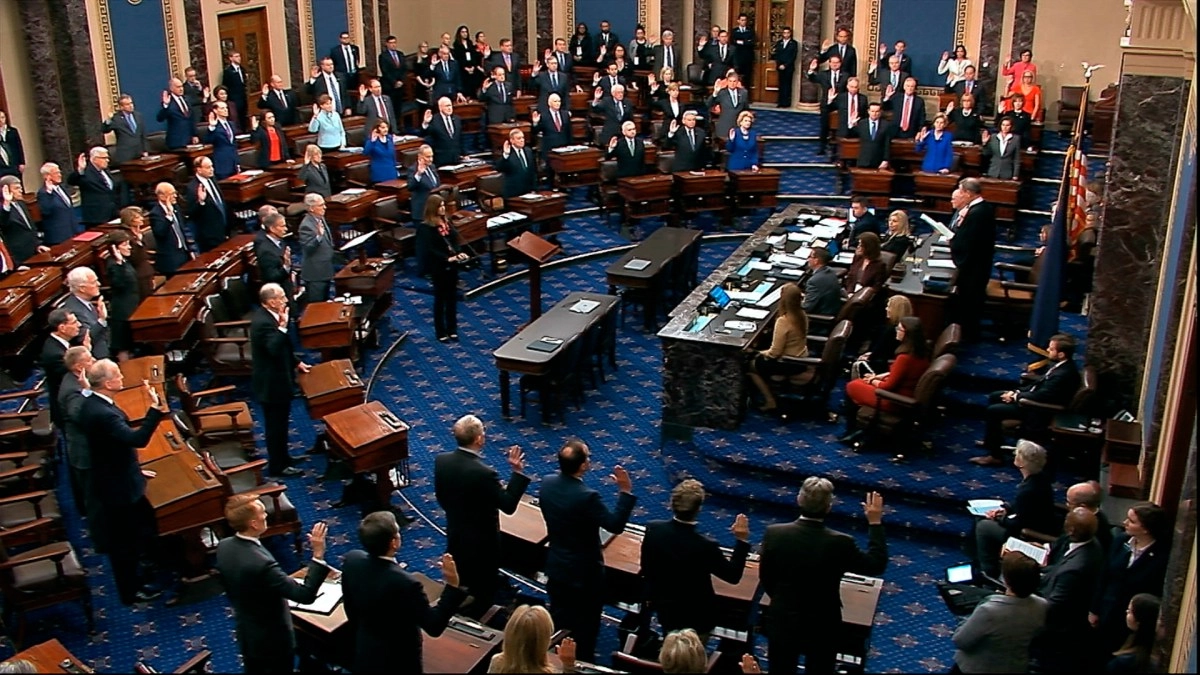

What was supposed to be a quick legislative victory for President Donald Trump ended up revealing deep fractures within the Republican Party. Conservative senators, including some traditional allies of the White House, began to publicly express their frustration with the president's political and budgetary demands, warning that his constant confrontations could derail the Republican agenda heading into the midterm elections.
The conflict revolves around a roughly $70 billion budget reconciliation package aimed at bolstering federal immigration operations through 2029, including funding for Immigration and Customs Enforcement (ICE) and the Border Patrol. The initiative was considered a top priority for Trump and Senate Republicans.
However, the proposal stalled after the administration tried to add resources for two highly controversial projects: a $1.776 billion fund to compensate people who claim to have been politically persecuted during the Biden administration and nearly $1 billion additional to reinforce security for the new ballroom that Trump is promoting in the White House.
The controversy provoked an unusually harsh reaction among Republican lawmakers, who believe that the White House is turning a politically viable project into a difficult battle to defend before voters.
Republican senators show open annoyance
Tension peaked during a private meeting on Capitol Hill with Acting Attorney General Todd Blanche. According to Republican sources, about half of the senators present harshly criticized the legal compensation fund proposal and questioned the lack of limits and oversight over the money.
Among the most critical Republicans are Thom Tillis, Bill Cassidy, John Cornyn and Rand Paul, who, according to legislative advisers, could make it difficult to approve future projects promoted by Trump.
Senator Ted Cruz publicly acknowledged that the relationship between the White House and several Republican members has deteriorated considerably.
“We have a majority of 53 to 47. If you lose four senators, you can't pass anything,” Cruz said on his podcast.
The annoyance has also been fueled by Trump's direct intervention in Republican primaries. The president endorsed political rivals of Cassidy and Cornyn, moves that many senators interpreted as personal attacks against veteran members of the conservative caucus.
Even figures close to the president, such as Lindsey Graham, have expressed recent differences with the White House, particularly over negotiations with Iran and other foreign policy issues.
Senate challenges Trump at key moment
The Republican resistance led to an unusual event in the current Congress: the Senate decided to temporarily stop one of Trump's most important priorities.
Republican leaders opted to postpone voting on the budget package before the Memorial Day recess, avoiding a series of politically awkward votes on the compensation fund and funding for the presidential ballroom.
The decision left Trump unable to meet his goal of signing the legislation by June 1.
Republican Senate Majority Leader John Thune indirectly acknowledged the level of tension within the Republican conference by noting that the administration now understands “the intensity of feeling” about these proposals.
Meanwhile, former Republican leader Mitch McConnell called the idea of using federal money to compensate people linked to the Jan. 6 riots “morally reprehensible.”
The conservative rebellion also spread to the House of Representatives. Some Republicans backed efforts to limit Trump's military actions in Iran and block the use of public funds for the controversial legal offsets program.
Although Trump maintains a strong influence over the Republican base and continues to prevail in primary elections, lawmakers and party strategists warn that his constant clashes with allies in Congress could end up weakening the Republican ability to advance their agenda and retain political control in November.