

Measles outbreak in 38 states: Schumer demands national emergency from Trump administration
Senate Minority Leader Chuck Schumer calls for national emergency over measles outbreak
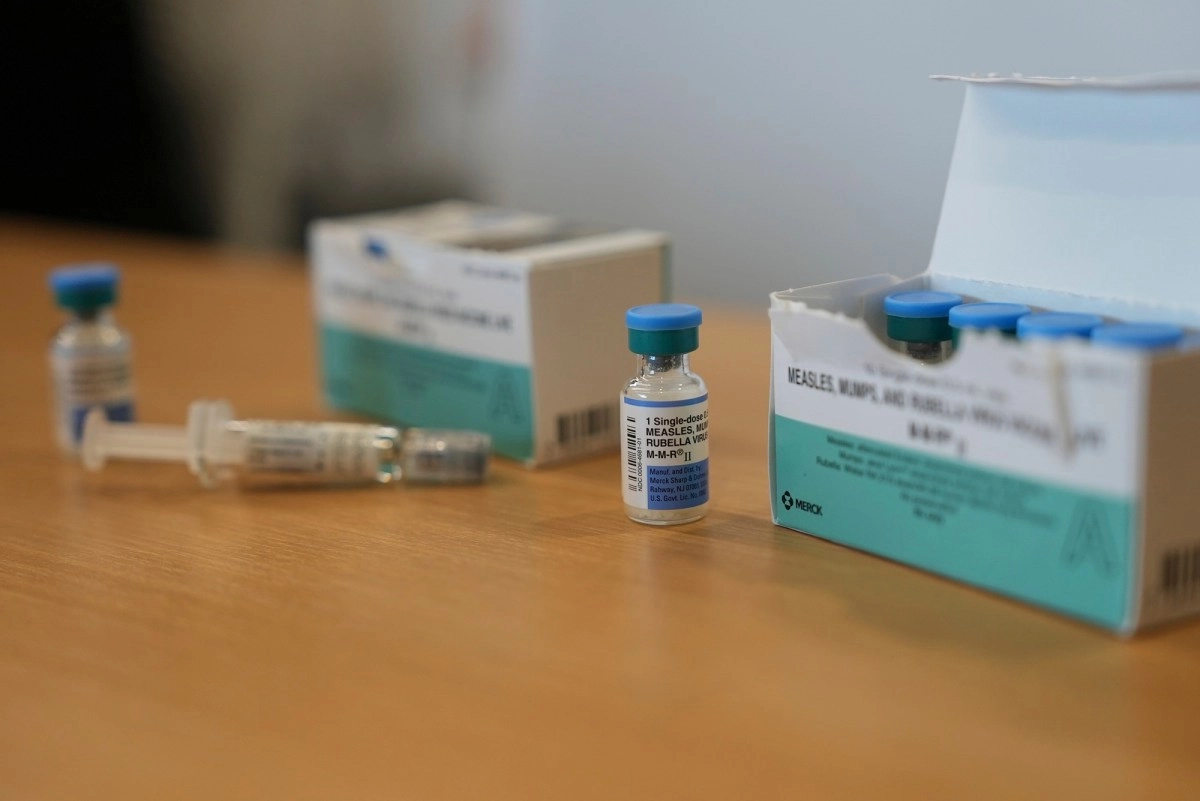

After more than 1,300 cases of measles in 38 states, Senate Minority Leader Chuck Schumer is demanding that Health Secretary Robert F. Kennedy Jr. explain the outbreak, federal actions, and declare an emergency national.
“I am writing with deep concern about your response, or lack thereof, to the rapid resurgence and spread of measles in the United States over the past several months,” Schumer’s letter reads. “Under your watch as Secretary, you have undermined vaccinations, slashed public health funding, and dismantled critical federal protections meant to keep Americans safe.”
He charged that this destabilization of the nation’s infectious disease response infrastructure and the politicization of reform by the Advisory Committee on Immunization Practices (ACIP) have resulted in a measles outbreak in recent months the likes of which have not been seen in 25 years.
The letter warns of the lethality of the disease and the risk to the general population.
“To prevent this record-breaking spread from further escalating and to save lives, you must immediately declare a measles Public Health Emergency,” Schumer said. “The rapid resurgence and spread of measles is alarming and requires increased federal resources.”
While three deaths related to the outbreak have been reported so far, hundreds of serious cases have reached hospitals.
“It is deeply concerning that these tragic measles deaths, the first since 2015, are being met with an inadequate public health response, marked by a lack of federal funding, personnel, and resources,” the letter charges.
Schumer highlights the layoffs of “disease experts” and the cancellation of National Institutes of Health (NIH) research on vaccine hesitancy. Cuts of up to $11 billion have been reported so far.
“In Dallas County alone,50 vaccination clinics were closed and 21 public health workers were fired,” the letter says.
Texas is one of the states facing measles cases, but there are also outbreaks in Alaska, Arkansas, Arizona, California, Colorado, Florida, Georgia, Hawaii, Illinois, Indiana, Iowa, Kansas, Kentucky, Louisiana, Maryland, Michigan, Minnesota, Missouri, Montana, Nebraska, New Jersey, New Mexico, New York, North Carolina, North Dakota, Ohio, Oklahoma, Oregon, Pennsylvania, Rhode Island, South Dakota, Tennessee, Utah, Vermont, Virginia, Washington and Wyoming.
“The delayed and inadequate response by HHS and the rest of the Trump administration indicates that the number of measles cases could continue to increase throughout the country,” it warns.
A real alert
A report from the University of California at Los Angeles confirms that the United States records more measles cases in 2025 than in any other year in more than three decades, and warned that inaction could lead to the infectious disease becoming active again.
The report cites data from the U.S. Centers for Disease Control and Prevention (CDC) that includes the deaths of two children and one adult.
“Cases have been reported in 38 states, most of which stem from an outbreak in the Southwest that began in January in West Texas,” the report states.
Dr. Sanchi Malhotra, medical director of pediatric infection prevention at Mattel Children’s Hospital at UCLA and a professor in the division of pediatric infectious diseases at the David Geffen School of Medicine at UCLA, said several factors have triggered the measles outbreak.
“Vaccination rates have declined during the COVID-19 pandemic and have not yet reached the 95% needed for herd immunity,” she said.
Because Measles is easily spread through airborne particles, and “one person can infect up to 18 other people in an unvaccinated population,” she warns.
“It can be very difficult to control from an infection prevention and public health standpoint, given how contagious it is,” she says.
Dr. Malhotra urges people to get vaccinated because the immunization process is “highly effective.”
Cases confirmed by the CDC include children under five (29%), people between five and 19 (36%), and adults over 20 (34%).