

Concern over the treatment of undocumented children in ICE detention centers
The Department of Justice filed a motion to terminate the Flores agreement, citing recent laws and internal agency rules.
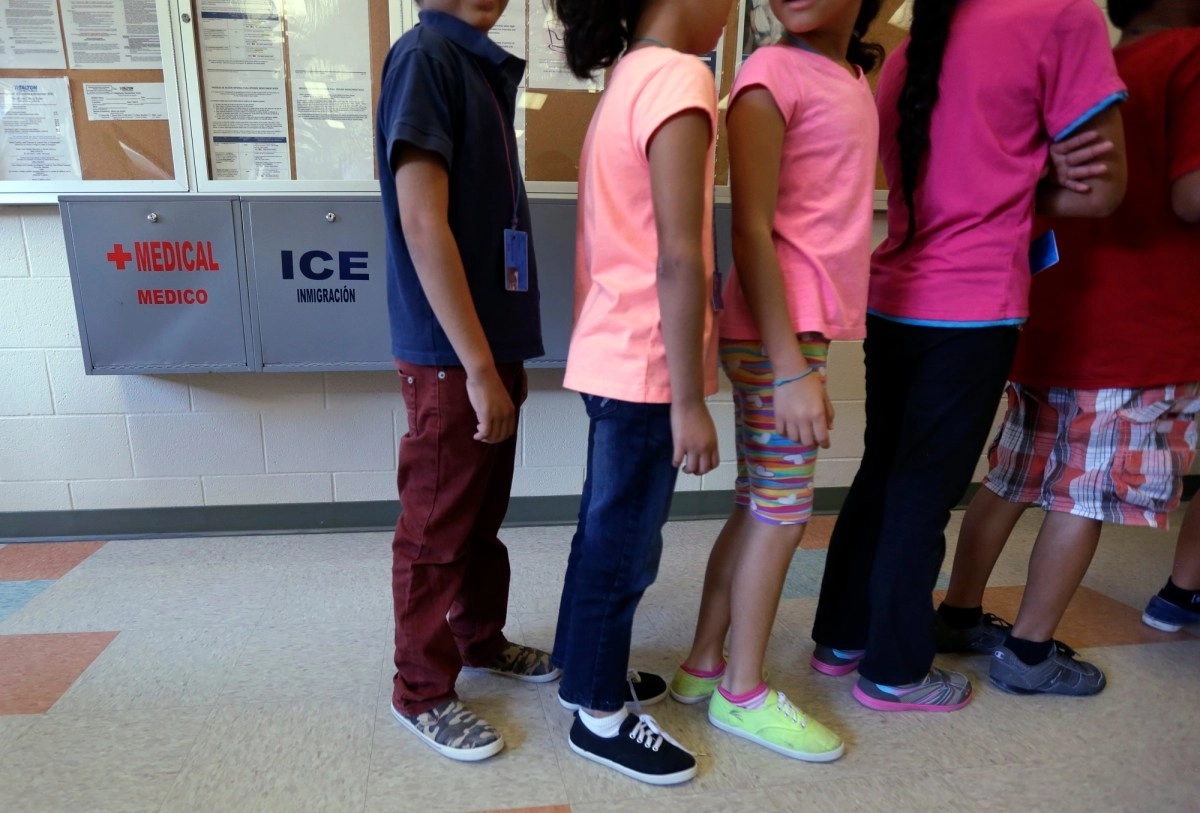

This month, a federal judge rejected the Trump administration's attempt to end a court agreement in place since the 1990s that establishes basic protections for the treatment of immigrant children in U.S. government custody.
Known as the Flores settlement, the 1997 establishes standards of care, such as requiring that children be returned as soon as possible to a relative or other responsible adult, and that they be kept in the least restrictive environment possible. Detention conditions must also be safe and sanitary.
But the reality is that any detention is harmful to children, and the administration should end this practice and use more humane approaches.
In May, the Justice Department filed a motion to terminate the Flores agreement, arguing that recent laws, along with internal agency policies and rules, make it unnecessary.
The following month, a group of immigration lawyers filed a lawsuit to halt the administration's efforts. The lawsuit cites people detained at two facilities where, for example, 40 of the 90 families interviewed by RAICES, an immigrant rights group, spoke of medical neglect. In one case, a nine-month-old baby reportedly lost eight pounds during a month of detention. Research has shown that even when children are detained with their families, detention can have serious consequences for their physical and mental health. A study of conditions at the Karnes County Family Detention Center in Texas found inadequate medical care for existing chronic illnesses, malnutrition, and tuberculosis. It also found inadequate mental health screening protocols. Public health experts concluded that “there is no humane way to detain children, and no version of family detention is acceptable.”
The Biden administration effectively halted the practice of detaining families with children in immigration detention centers, which was common during Trump's first presidency. The Biden administration increased the use of electronic monitoring, case management programs, and other alternatives to detention.
Alternatives to detention have proven successful. In one program, 99% of families kept their appointments with immigration authorities, and the cost was significantly lower than detention. Now, the Trump administration is not only resuming widespread detention of families, it has also made changes that will increase the number of children in federal custody. It is difficult to assess the treatment of undocumented children because the administration has hampered oversight at detention centers. The administration has blocked members of Congress from exercising their legal right to visit these centers.
It has also closed offices within the Department of Homeland Security (DHS) that monitor detention conditions in real time.
Leecia Welch, an attorney with Children's Rights—a nonprofit that represents minors in government custody—recently told The New York Times that this month's ruling by U.S. District Judge Dolly M. Gee of the Central District of California on the Flores settlement “is a huge relief.”
“Flores is the last line of defense against this administration’s plans to round up and detain minors indefinitely in conditions that no child deserves,” Welch said.
The first Trump administration tried and failed to get rid of the Flores settlement in 2019. It is now expected to appeal the latest ruling, and that case may go all the way to the U.S. Supreme Court.
Rather than appeal, the administration The administration should end family detention and use case management, which is a more cost-effective, humane, and equally efficient approach. And when detaining minors is necessary, the government should follow the provisions of the Flores agreement to improve conditions and quickly transfer children out of detention centers.