

A major winter storm will affect the US and Canada with heavy snow and Arctic cold
More than thirty US states will be on alert starting this Friday due to the passage of the winter storm
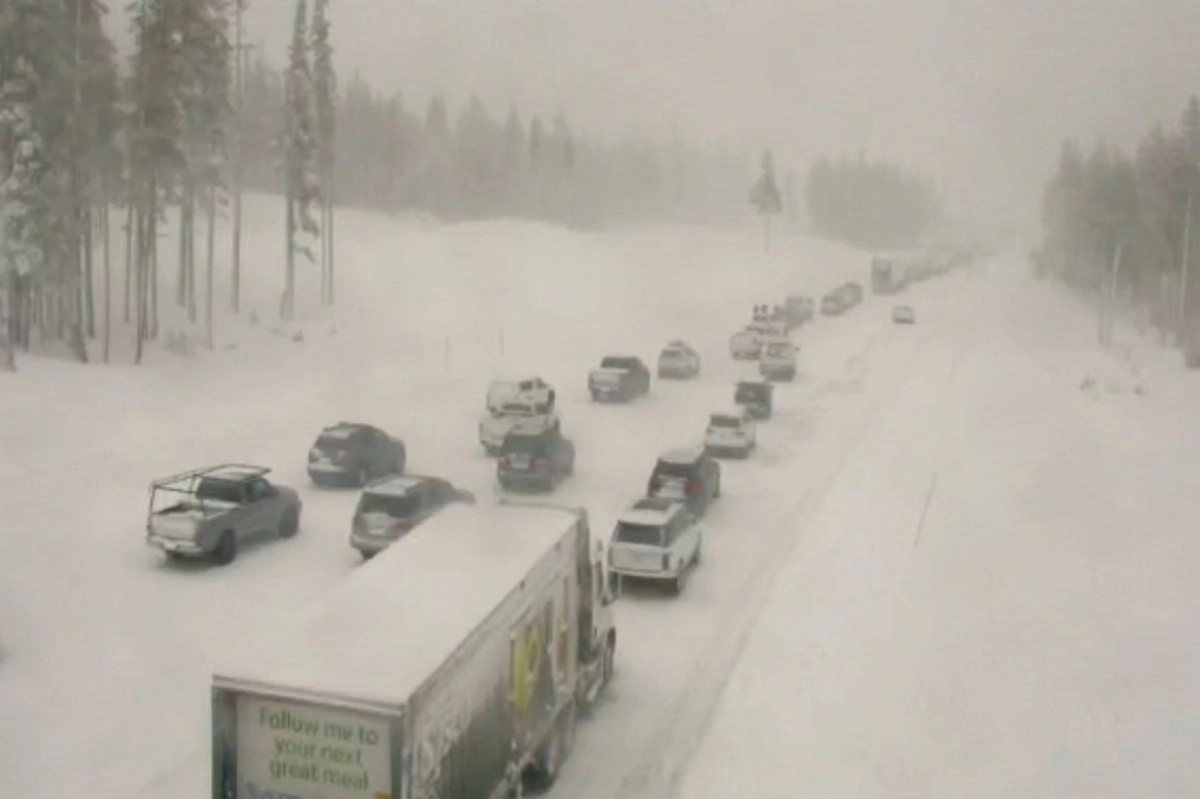

A major winter storm, the biggest so far this season, threatens much of the United States and Canada with heavy snow, ice, and an Arctic cold wave that will affect millions of people, especially toward the end of the week.
More than thirty US states will be on alert Starting this Friday, a storm, which some experts say could be historic, will bring heavy snow, sleet, and freezing rain from the southern Rocky Mountains, the Plains, and the South-Central region starting Friday, moving toward the East Coast through Sunday, warned the U.S. National Weather Service (NWS). The intense snowstorm will begin Friday in Colorado, in the central part of the country, and will leave a trail of snow in its wake across Texas, Kansas, Tennessee, and Missouri before reaching the East Coast and impacting cities like Washington, Boston, and New York. According to the NWS, temperatures could drop below -10°C even in the southeasternmost parts of the country. But the most important alert is the wind chill, as the storm will be accompanied by strong winds that could make it feel below -45°C in some parts of the country. These well below-normal temperatures are expected to extend until the end of January and even the beginning of February, especially in the Ohio Valley and parts of the East Coast. More than 15 cm of snow in New York and Washington. The storm will hit the East Coast hard this weekend, making its presence felt strongly in cities like Washington and New York. The capital is expected to accumulate between 15 and 30 centimeters of snow from Saturday night into Sunday. In New York City, more than 15 centimeters of snow could accumulate between Sunday and Monday alone. However, depending on the storm's path and whether it's all snow or mixed with freezing rain, there could be even more.
The temperature forecast for this Saturday in the Big Apple is -14º C low and -9º C high. Temperatures will not rise above -2°C until at least the end of the month.
In Washington, temperatures below -10°C are also possible.
The thermometer in Canada will reach -40°C
In Canada, the polar vortex is expected to settle over the Prairie region in the west of the country this Thursday, causing temperatures to plummet across most of the country.
Meteorologists anticipate that on Friday, in the provinces of Saskatchewan and Manitoba, the polar air mass will bring the thermometer down to -40 degrees, while in Ontario the figure will drop to -30 degrees Celsius, which could surpass the provincial record for this time of year.
In the province of Quebec, temperatures will also be near record lows, falling below -30 degrees.
For This Wednesday, the Canadian Meteorological Service warned that Toronto, the country's most populous city and the fourth largest in North America, will receive around 10 centimeters of snow and wind gusts of up to 50 kilometers per hour, which could cause serious traffic problems, with temperatures reaching -16 degrees Celsius with the wind chill. EFE