

Alejandro Carranza, the Colombian who allegedly died in a US attack in the Caribbean
Colombian Alejandro Carranza disappeared when he set out on his boat on September 14
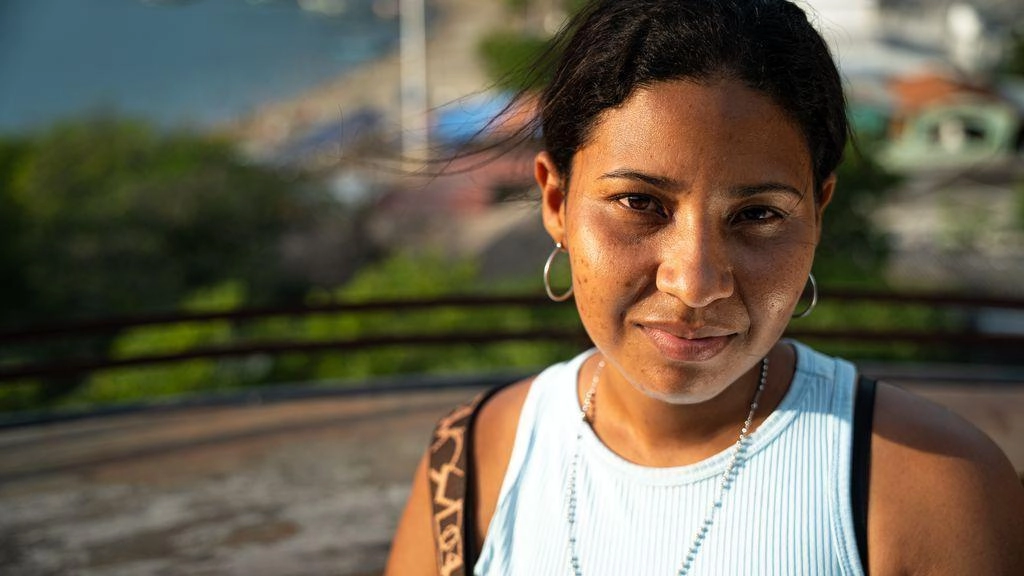

The family of Alejandro Carranza, a Colombian who allegedly died during a US attack on a vessel in the Caribbean, filed a complaint with the Inter-American Court of Human Rights (IACHR) in Washington.
The British newspaper The Guardian broke the story, which was confirmed by BBC Mundo through lawyer and activist Daniel Kovalik, legal representative from the family and from Colombian President Gustavo Petro, a strong critic of the policies of his US counterpart, Donald Trump.
“On September 15, 2025, US military personnel bombed the boat of Alejandro Carranza Medina (…) as it set sail in the Caribbean from the coast of Colombia. Carranza died in the process of this bombing,” the complaint states.
At least 83 people have died since September in attacks ordered by the Trump administration against alleged drug-laden vessels as part of its fight against drug trafficking in the Caribbean and the South American Pacific.
The US government justifies this military campaign as saving American lives by stopping drugs from entering its territory.
However, experts have stated that the attacks could violate international law.
For weeks, Petro and Carranza's family publicly denounced the disappearance of this alleged fisherman and attributed it to the actions Americans, although his body has not been found and the evidence is limited.
Carranza's case, along with that of Colombian Jeison Obando Perez and Ecuadorian Andres Fernando Tufino Chila, survivors of another attack on October 16, are the only ones in which the names of the alleged victims of the attacks have been made public.
Kovalik hopes that his petition will pave the way for more families to speak out and is confident that more evidence about Carranza's disappearance will be published.
Weeks of denunciation
Carranza, 42, said goodbye to his family on the morning of September 14 before setting sail in his boat as usual,According to his cousin Audenis Manjarres, who spoke to a Colombian state media outlet.
According to this testimony, Carranza departed from the Colombian department of La Guajira, which borders Venezuela in the Caribbean.
The following day, Trump announced an attack in international waters against a vessel that had departed from Venezuela and said that the three crew members had died.
Since that day, Carranza's niece, Lizbeth Perez, has heard nothing from her uncle.
Perez told the BBC that Carranza's five children miss their father and that the family anxiously awaits answers, not knowing if the Colombian was even on the vessel during the attack.
“The truth is that we don't know if it was him. We have no proof that it was him, apart from what we saw on the news,” Perez commented.
In mid-September, Petro denounced that at least one of the multiple attacks The US operation in the Caribbean had been carried out against a Colombian vessel with Colombian citizens on board. Petro initially relied on “indications,” without providing further details, and to date the government has not offered any evidence, despite a request from BBC Mundo. On October 18, a report by the state-run media outlet RTVC revealed that Carranza, whom it identified as a fisherman, was on one of the boats attacked. Petro reinforced his accusations with the publication of the report and accused Washington of violating Colombia's sovereignty and committing murder. Trump responded by announcing the suspension of payments and subsidies to Colombia and, days later, by sanctioning Petro for alleged links to drug trafficking. “Extrajudicial execution” Perez told the BBC that Carranza “was a kind man, a good person, "Friend; good father, uncle, and son."
"He was a cheerful person. He loved his work and his fishing," added the alleged victim's niece.
Carranza's family is large. Around 20 members live in a small house in the fishing village of Gaira.
After initially identifying him as a fisherman, Petro alleged in early November that Carranza wanted to help his daughter study at university and therefore accepted payment from a drug trafficker to transport drugs to an island.
It was then that his boat was hit, according to the president.
"We don't know if he was carrying fish or cocaine, but (...) he wasn't under the death penalty and they had no reason to kill him," said Petro.
The Colombian press has reported on Carranza's alleged criminal past, which includes a theft of police weapons nine years ago.The family has denied these reports and says they are hurt by his characterization as a drug trafficker. According to Kovalik, the family's lawyer, even if the Trump administration maintains that the attacks are against drug traffickers, "that doesn't give you the right to engage in extrajudicial killings." "They're small boats... if you really believe they're doing something wrong, those people should be arrested, tried in court, convicted, and sentenced," the lawyer added. Kovalik shared the complaint document with BBC Mundo. It points to Pete Hegseth, the US Secretary of Defense, as responsible for ordering bombings like the one in which Carranza allegedly died. When asked for evidence that Carranza's death occurred under the reported circumstances, Kovalik referred us to the testimony of a witness mentioned in the petition. the IACHR, whose identity he asked to be protected.
“When the witness saw the video of the bombing, he was sure it was the type of boat Alejandro uses and he was sure it was Alejandro. The timings also matched. Obviously, it's not proof, but it is good evidence,” Kovalik responded.
On tenterhooks
Kovalik is optimistic about the reach of his complaint before the IACHR, hoping it will encourage more families to join and make public the disappearances of their loved ones.
Meanwhile, the US attacks terrify fishermen in South American waters, fearful of being mistaken for drug traffickers on the high seas.
The US government maintains that the US is “threatened” by “terrorist organizations” and that drugs kill thousands of its citizens.
The US Drug Enforcement Administration (DEA) indicates that the Seizures of cocaine, the most produced and trafficked drug in South America, increased by 18% in 2024 compared to the previous year. However, fentanyl is the substance that causes the most deaths in the U.S., and it is produced and transported to the country from Mexico. Many in South America do not believe that the objective of the U.S. military deployment in the Caribbean is the alleged drug-running boats, but rather to pressure Venezuelan President Nicolas Maduro to relinquish power. The U.S. accuses Maduro of leading a criminal organization called the Cartel of the Suns, something the Venezuelan denies. Trump stated on Tuesday that the U.S. will begin carrying out "ground attacks" that could target Venezuela or any country it considers to be producing or selling illegal drugs to the U.S. The region remains on edge, facing an unpredictable outcome.