

An improvised morgue continues to receive bodies in La Guaira
Doctors and forensic technicians are overwhelmed and work outdoors with bodies under improvised tarps.
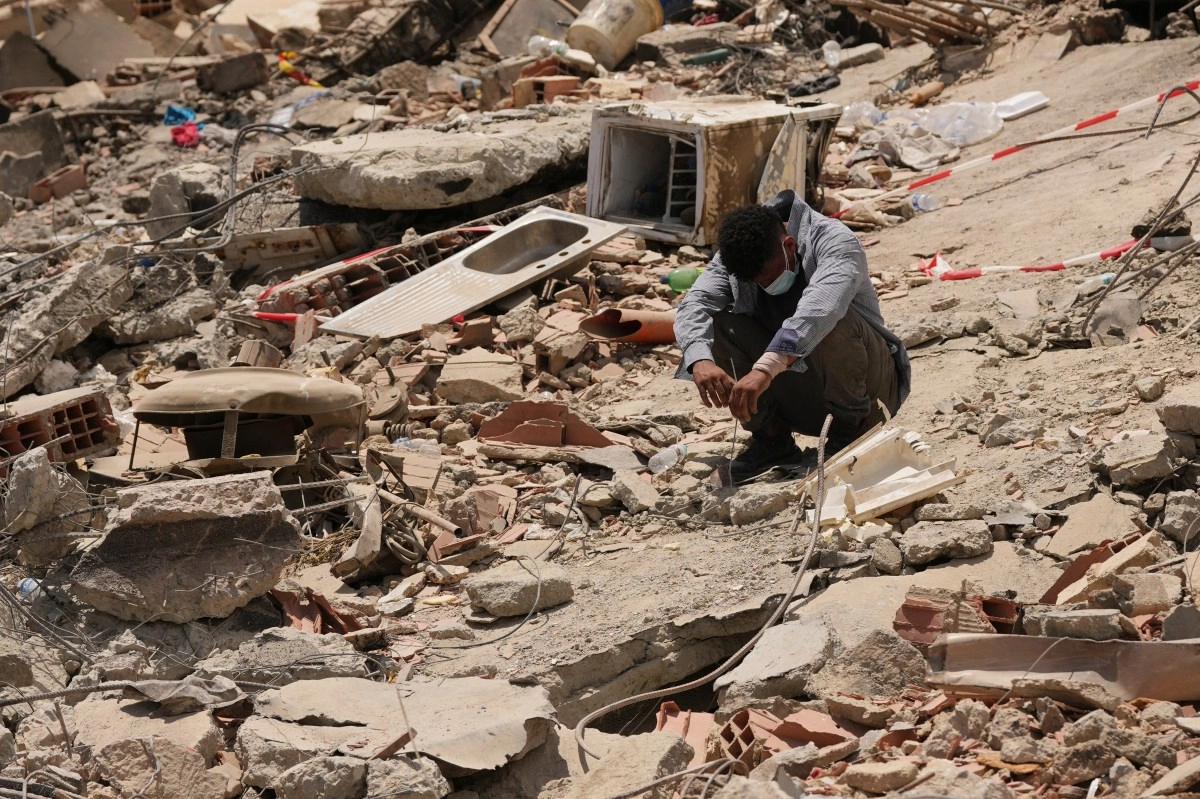

Forensic doctors in blue coats and hats walk among dozens of mortuary bags stacked on the ground in a makeshift morgue installed in the port of La Guaira, the area most devastated by the earthquakes five days ago in Venezuela and where bodies continue to be extracted from the rubble of collapsed buildings.
Some bodies are already in wooden coffins, also on the floor. Near the white awning where the operation is centered, there are a hundred empty ballot boxes on one side and rubble on the other, AFP journalists confirmed.
The earthquakes that hit the country on Wednesday with magnitudes of 7.2 and 7.5 in an interval of seconds devastated La Guaira, a coastal state neighboring Caracas, whose port is one of the most important in the country due to its proximity to the capital.
The latest toll is just over 1,700 dead, but the number continues to increase and the forensic experts are overwhelmed. In the first days, the wounded and corpses were sent to area hospitals, but the health center morgues quickly collapsed.
A long wait to identify bodies
“My family is there, they tell me that my sister and her children are there, well, and the children of my brother, the one who survived,” says Wilker Molalla, 25, while waiting to be called to eventually identify the bodies.
This family lived in a neighborhood in that town. There were 11 people: only Molalla and his brother were saved because they were working.
The wait at the port is long. Relatives wait in line until they can enter and recognize their loved ones or receive their bodies. Many carry bouquets of red, yellow, white and fuchsia flowers in their hands.
They criticize the lack of personnel to attend to the emergency, a complaint that adds to the many about the handling of the emergency.
The search among the rubble is done, in most cases, without help from the authorities.
“I recognized her because of the ring.”
Doctors and forensic technicians work outdoors with the corpses under tarps held up with four poles. Some of the bodies are covered with lime, a procedure that some experts consider unnecessary.
At the port of La Guaira they deliver death certificates and authorizations for cremation. A truck identified as the “Special Hospital Waste Unit” also arrives there to take away the waste from the autopsies.
“I came yesterday and I walked everything, and I walked everything, and I walked everything, and I didn't get my daughter,” says Antony Marcano, a 41-year-old cook, devastated.
“Today I came more calmly and thank God I got it, I identified it,” he added. “I recognized her because of the ring I gave her.”
Marcano participated in the recovery of the body, which he explains was unrecognizable. The clothing and the ring helped in the identification.
UN to supply 10,000 body bags
The authorities avoid talking about the missing, but the UN estimates that there are about 50,000, and this Monday it announced that it will supply 10,000 body bags.
Private funeral home representatives provide free transportation and cremation service. The hearses are parked outside the port.
Darwin Silva, 37, is preparing to move his deceased mother into a social housing complex called Hugo Chávez I, part of a government flagship program.
“It is already recognized, they already gave me the death certificate,” said this broken man, who himself took the body to the port to finish the procedures.
They found it with a beam on top, late at night and with the help of an electric plant enabled by the neighbors to provide lighting.
Given the saturation of the morgues, some chose to take their deceased relatives directly to the main forensic service in Caracas. There are also those injured in hospitals who lost their relatives and who have not come out to be able to identify them.