

Who are the immigrants who led the demand for citizenship by birth?
Barbara, Susan and Mark were the people who led the class action lawsuit that defeated President Trump's executive order on birthright citizenship
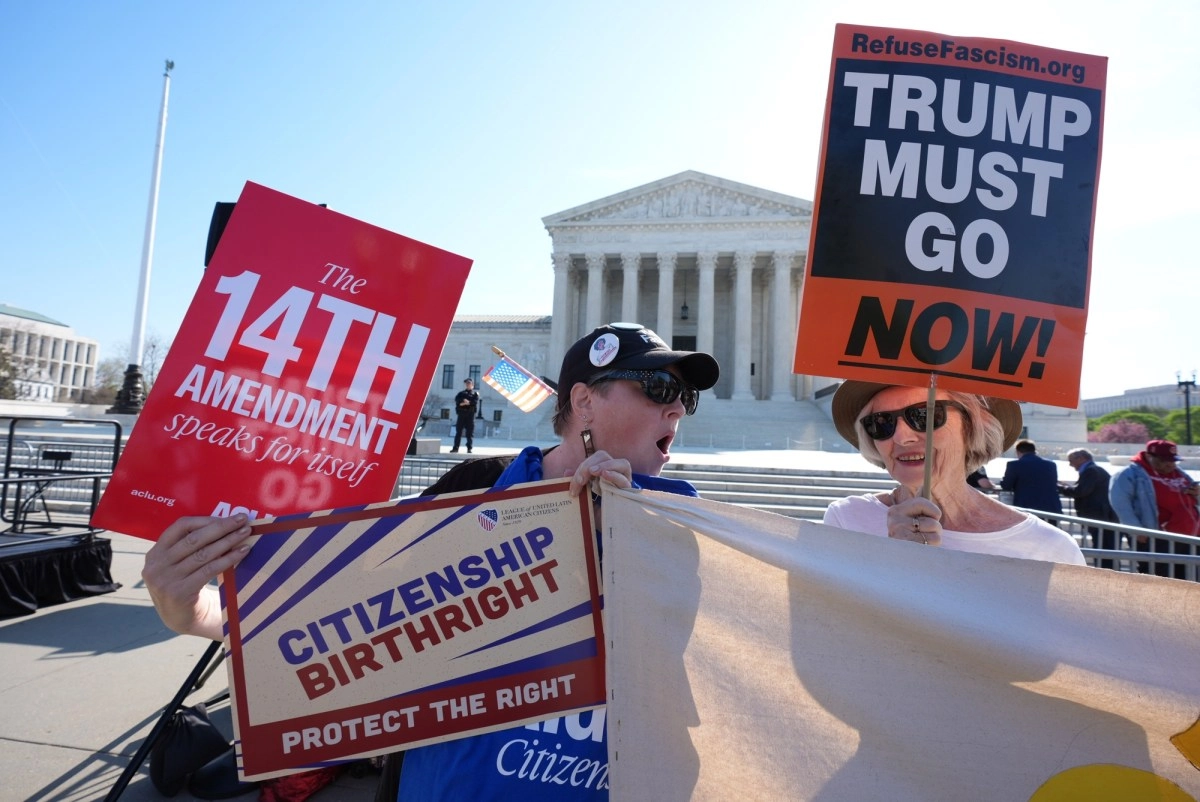

Efforts by President Donald Trump and his Republican allies to end birthright citizenship for children of undocumented immigrants faced a challenge from several Fourteenth Amendment organizations, but particularly from three immigrants who led the class-action lawsuit that reached the Supreme Court.
Trump v. Barbara is a lawsuit filed on June 27, 2025, after the Supreme Court limited district court rulings to federal policy determinations. That limited a previous lawsuit over President Trump's executive order, signed on January 20, 2025.
However, the American Civil Liberties Union of Maine, the ACLU of New Hampshire, the ACLU of Massachusetts, the Legal Defense Fund, the Asian Law Caucus, and the Democracy Defenders Fund filed a class-action lawsuit against Trump's order on behalf of a group of affected babies and their parents.
This lawsuit was led by three immigrants, although its impact is nationwide, and it was the one that the Supreme Court decided on this Tuesday, June 30, blocking Trump's executive order with 6 votes in favor and 3 against, considering an opinion from Chief Justice John Roberts.
Barbara, an immigrant from Honduras
The lead plaintiff, Barbara, resides in New Hampshire with her husband and three minor children. She has a pending asylum application with the U.S. Citizenship and Immigration Services (USCIS) office and has resided in the United States since 2024. Her identity is not revealed to protect her.
“Her husband, the father of her child, is neither a United States citizen nor a lawful permanent resident,” the lawsuit says.
When the lawsuit was filed, she and her husband were expecting their fourth child, who would be born in October 2025, so they feared that President Trump's order would affect their son, since he would be denied US citizenship at birth.
“[Barbara] fears that her son will be unfairly denied the security, rights and opportunities that come with U.S. citizenship, leaving his future uncertain,” the lawsuit adds.
Susan, originally from Taiwan
A Utah resident, Susan, is another of the immigrants who led the class action lawsuit. She has lived in the United States for 12 years.
“He currently has a student visa and is processing an application for legal permanent residence based on an approved immigrant visa for work reasons,” the lawsuit adds. "Her husband, the father of her children, is neither a U.S. citizen nor a legal permanent resident. Susan gave birth to her fourth daughter, Sarah, in Utah in April 2025."
Susan's full identity is also not revealed, although it is indicated that she has three other children, all of whom are American citizens.
"After more than ten years living in the United States, she and her family have forged strong ties with the community. She fears for her daughter's future," the lawsuit says. "She is worried that her daughter will be subject to immigration enforcement. She is also afraid that her family will be separated or that her children, American citizens, will be forced to move to an unknown country."
Mark, a citizen of Brazil
The lawsuit was completed with Mark, who resides in Florida, but has lived in the United States for the past five years and is in the process of applying for legal permanent residence based on family ties.
“His wife gave birth to their first child, Matthew, in Florida in March 2025,” the lawsuit from June of that year states. When the first lawsuit was filed, her son was not yet born.
Mark's wife does not have legal status in the United States.
“After five years living in the United States, Mark has forged strong ties to the country,” the lawsuit states. "He fears for his son's future. He worries that his son will be subject to immigration control for not speaking the language."