

Canceling TPS: a blow to families, communities and the economy
Immigration authorities explained that the protections would remain in force until a District Court agrees with the Supreme Court ruling.
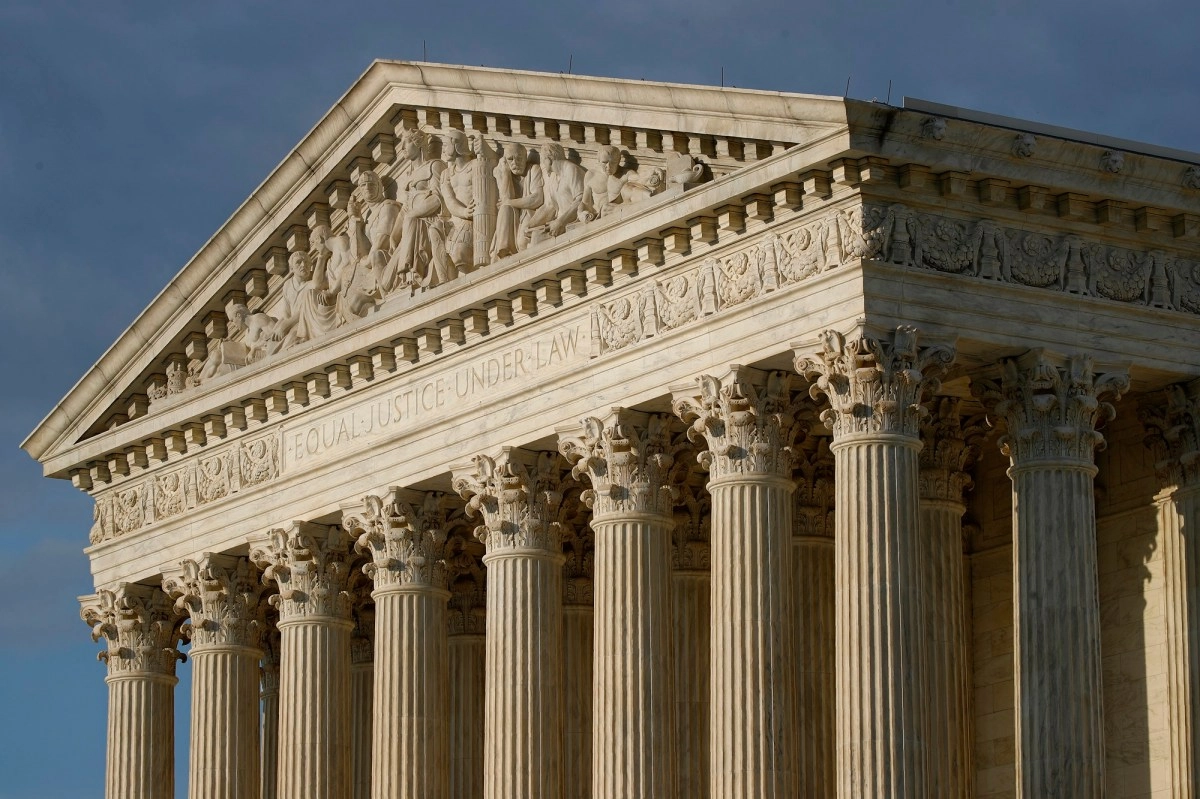

Temporary Protected Status (TPS) for Haitians is supposed to be canceled in the coming days following the Supreme Court's ruling in favor of Donald Trump's government, also allowing the termination of the program for Syrians, but in reality affecting the 1.3 million beneficiaries who currently have work permits and protection from deportation.
It was indicated that the cancellation would be effective on July 10, but experts, activists, and the USCIS itself (Citizenship and Immigration Services) explained that the protections would remain in force until the lower court agrees with the Supreme Court's ruling, which could occur on July 20.
But whatever the expiration date, the effect of this ruling will be devastating on individuals, families, children, employers and the economies of the localities, cities and states where the beneficiaries reside.
Furthermore, Haiti is mired in a precarious and violent political and economic situation and is not a safe place to receive hundreds of thousands of people. The TPS was created precisely to grant work permits and protection from deportation to people who are in the United States whose countries of origin are going through natural disasters, wars or political and, therefore, economic instability.
Calls to extend rather than cancel TPS also come from Republican politicians in states like Florida and Ohio with a strong presence of Haitian TPS recipients who are a central part of their communities and their economy.
“It cannot be said that (Haiti) is a stable place, so we must extend TPS not only for Haitians, but also for Venezuelans,” said Republican Congressman from Florida, Carlos Giménez, alluding to the earthquakes in Venezuela that also mean that that nation cannot absorb the more than 600,000 Venezuelans covered by the canceled TPS.
Nicole Malliotakis, a Republican congresswoman from New York, is among 11 Republican lawmakers who supported a failed Democratic measure to extend TPS to Haitians in April. “Many of the few of us who voted in favor of the extension of TPS have expressed our concern for the businessmen in our district,” he indicated. Malliotakis stated that they have asked the White House for an extension of TPS or a special program that allows them to continue working.
“It doesn't seem like they are willing to do it, but it is the right thing to do and we will continue to press for it to happen,” said the congresswoman.
According to an analysis by FWD.us, “200,000 Haitian TPS holders are already part of the US workforce working in essential sectors, including 15,000 agricultural workers, 13,000 nursing assistants, 8,000 caregivers and many more.”
Furthermore, “there are 50,000 children with US citizenship who have at least one parent who is a Haitian TPS holder.” “If TPS is revoked, it is estimated that 25,000 of them would be condemned to poverty when Haitian TPS beneficiaries lose their work permits.”
FWD.us estimates that the 330,000 Haitian TPS recipients “generate $5.9 billion for the U.S. economy each year and annually pay $805 million in federal and payroll taxes, as well as $755 million in state and local taxes.”
Critics of TPS argue that it is a temporary program, not permanent. But it is also true that it is valid to extend it if the receiving countries are not in a position to absorb thousands of their nationals.
As it is also true that if they are people who have been living in the United States for years, some decades, working in essential sectors of the economy, paying taxes, and with established families and citizen children, the correct and sensible thing would be to extend the permit or legalize them.
And canceling TPS by delegalizing its beneficiaries provides Trump with immigrants to detain and deport if they do not leave on their own.
But it destabilizes families who lose jobs and protections, employers who lose employees, children, the sick, seniors who lose their caregivers, and governments who stop receiving millions of dollars in taxes.
It is the consequence of political opportunism and not good sense directing the immigration issue.