

Information repression in Venezuela after Maduro's capture: 14 journalists detained
Journalists were detained during the swearing-in of Delcy Rodriguez as interim president, denounced the Press Workers Union
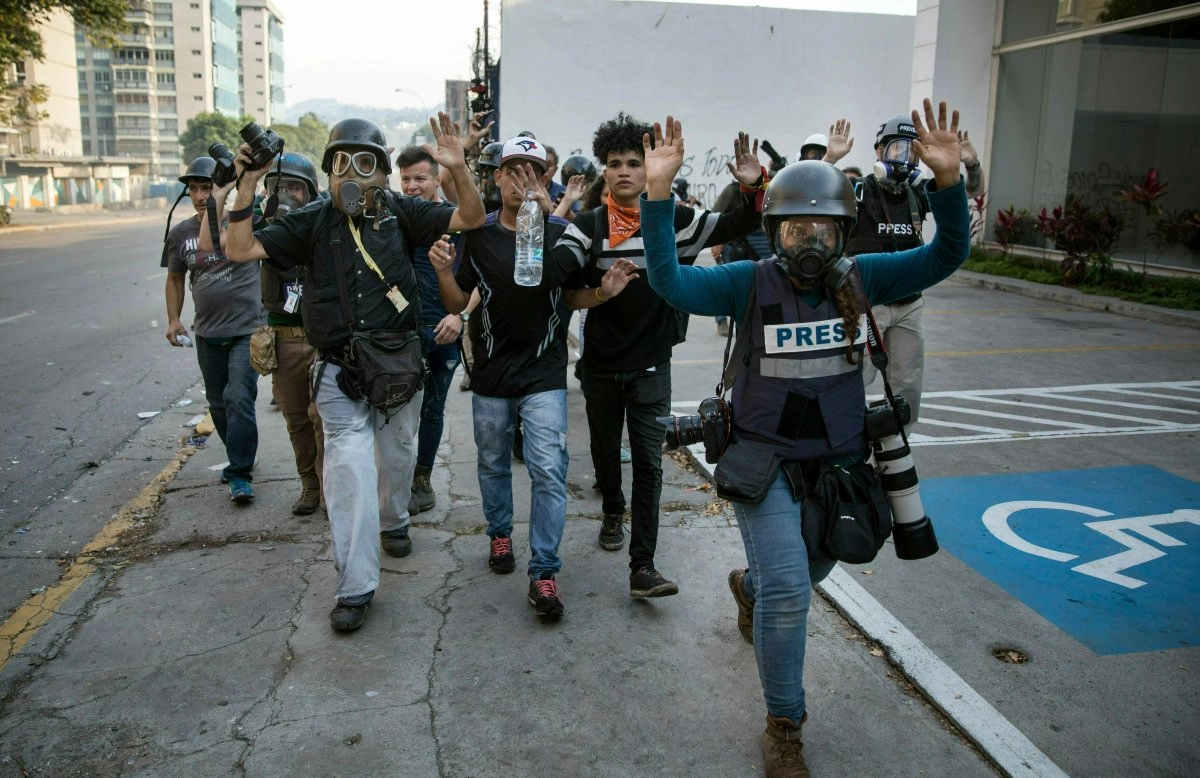

The Venezuelan Press Workers Union (SNTP) denounced that at least 14 journalists and media workers were detained on January 5 in different parts of Caracas. The incident occurred just two days after the US military operation that resulted in the capture of Nicolas Maduro and his wife, and on the day of Delcy Rodriguez's swearing-in as interim president. According to the press association, eleven of those affected work for international media outlets and agencies, and one for national media. Four journalists were released hours later, while ten others remain detained, some without official information about their whereabouts. The arrests took place during coverage of the opening session of the National Assembly and the swearing-in of Delcy Rodriguez as interim president of Venezuela. Prohibitions and illegal searches at the Legislative Palace. During the day, journalists were prohibited from broadcasting live, recording videos, or taking photographs inside the Federal Legislative Palace. At least three journalists were detained by officials from the General Directorate of Military Counterintelligence (DGCIM) and taken to the National Guard command post located within the parliamentary complex. According to the National Union of Press Workers (SNTP), as part of the procedure, officials searched the journalists' cell phones, demanded access codes, and accessed photographs, contacts, private conversations, voice notes, emails, Instagram accounts, and files stored in the cloud. In the case of journalist Daniel Alvarez, a reporter for the Venezuelan channel Televen, he lost custody of his phone for a period when the officials left the area where they were holding him before releasing him. “Forced access to personal devices violates the privacy and professional secrecy of sources and constitutes a pattern of criminalizing journalistic practice,” the union warned.
A climate of tension following Maduro's capture
The arrests occurred in a context of deep political and social crisis, two days after the capture of Nicolas Maduro and his wife, Cilia Flores, on January 3, during a US military operation called Absolute Resolve.
Maduro and Flores were arrested in Caracas and taken out of the country.
They are currently in custody in the United States, where they face charges of drug trafficking, corruption, and human rights violations.
On January 5, amidst this backdrop, Delcy Rodriguez was sworn in as interim president of Venezuela before the National Assembly.
The journalists' union's call
In a statement released minutes before the arrests, the SNTP (National Union of Press Workers) warned that the country is experiencing a “profound political, institutional, and social crisis” and cautioned that progress toward a democratic transition is impossible while persecution, censorship, and arbitrary detentions persist.
“Freedom of expression, the right of access to information, and the right to work are not concessions from political power, but fundamental human rights,” the union emphasized, recalling that these are enshrined in the Venezuelan Constitution and in international treaties signed by the State.
The SNTP reiterated its demand for the immediate release of the journalists who remain detained and The union denounced the imprisonment of journalists as “a serious violation of press freedom and a practice aimed at intimidating, silencing, and generating self-censorship.”
Structural Censorship and Media Blocking
According to the union, this situation is compounded by the blocking of more than 60 online media outlets, which it described as a form of “structural censorship” that limits media pluralism and deliberately restricts citizens' access to diverse sources.
The arrests of January 5, according to labor and human rights organizations, reinforce a pattern of persecution against the press that intensifies during times of political crisis and power struggles.