

Latino Survivor of Rare Cancer to Ride on City of Hope Float
This year's Rose Parade theme is
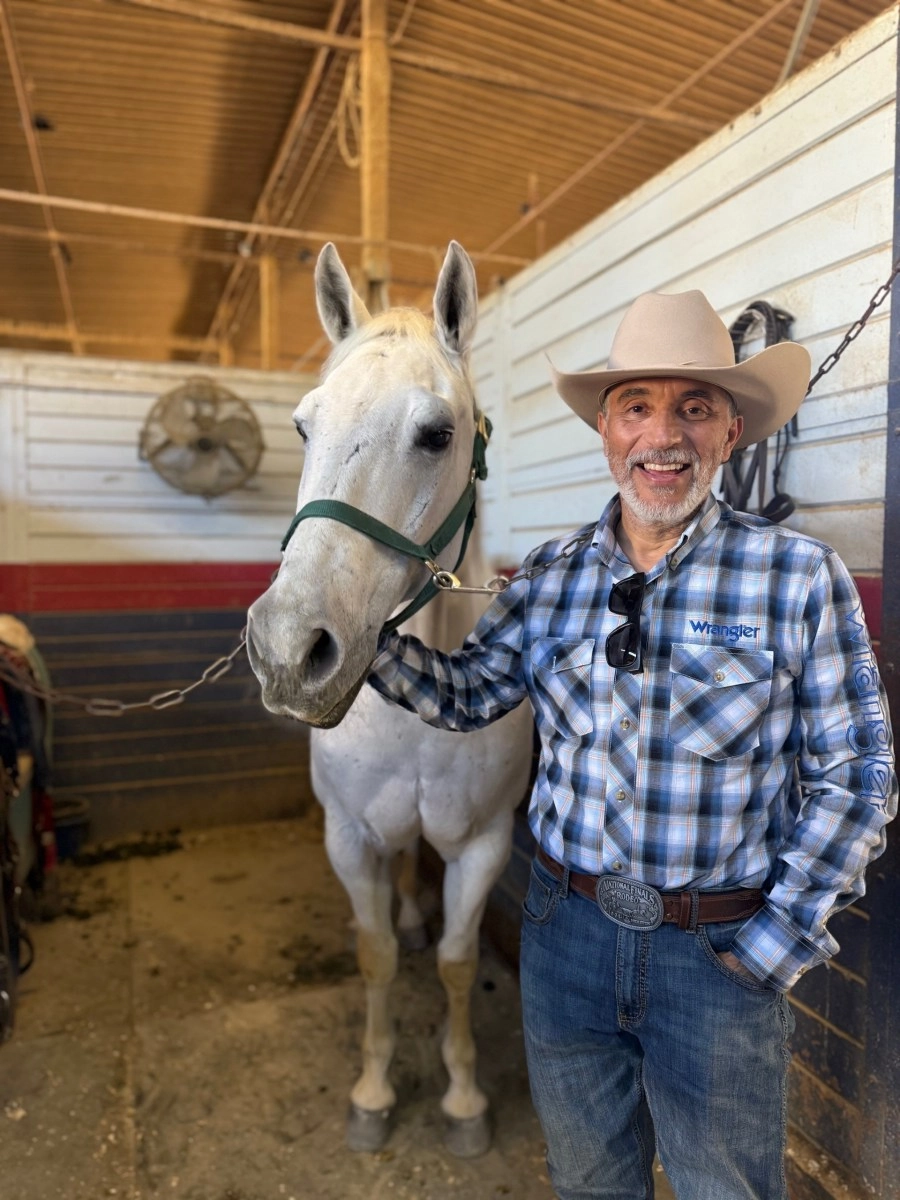

Joey Gibson Rivas, a horse trainer, describes City of Hope, one of the largest and most advanced cancer research and treatment organizations in the United States, as a family that embraces patients and helps them regardless of their economic situation. "City of Hope is not a hospital. It's not a cancer center. It's a place where families can feel like they're going to Grandma's house," said Joey, 47, who will be the only Latino riding on the City of Hope float in the 137th annual Pasadena Rose Parade on January 1, 2026. "When you get there, they open their arms to you, and in that embrace, you feel hopeful that you can overcome any obstacle," he added. The City of Hope float is titled “The Magic of Teamwork” and will feature seven participants from its national centers: patients—including Joey—families, doctors, and researchers who come together to study and overcome all types of cancer. In 2005, Joey was diagnosed with a rare type of leukemia: essential thrombocythemia (ET), a myeloproliferative disorder where the bone marrow produces too many platelets, increasing the risk of blood clots (thrombosis) and bleeding (hemorrhage), although many patients are asymptomatic and are diagnosed incidentally. “I've been living with chronic leukemia for over 20 years,” Joey said. His blood cancer also causes fatigue, weight loss, severe bone pain, and other complications. When he was 29, Joey's initial treatment included aggressive chemotherapy and a bone marrow biopsy. "I wasn't feeling well. My bones hurt a lot, and I had frequent nosebleeds," Joey recalls. “I thought something was wrong with me, so I went to see a doctor.” That doctor called him and asked to speak with him in person. It was an oncologist who diagnosed him with leukemia and recommended he start aggressive treatment quickly. "I want to see where this treatment takes us," the doctor told him. “For me, it was like I'd been kicked in the face,” Joey said. "I left that office devastated. My first thought was that I had a death sentence." Joey searched the internet for all kinds of information: about the medication he was going to take and about a possible bone marrow transplant. "I started to push through, but I felt bad every day; I lost a lot of weight, I lost my hair. I was nauseous, I was vomiting all the time. I couldn't sleep.The pain medication they gave me was very strong. It was morphine to keep me calm.” Throughout the process, these sons of Salvadoran parents, Jose Adalberto and Maria Elena Rivas, received unconditional support and care. They both helped him go to the bathroom. However, in 2015 he learned about the City of Hope, and that's where his destiny was. began to change.
“Ali, at City of Hope, Dr. Haris Ali, my nurse Raymond Hernandez, and everyone treated me like family. For the first time, I felt hope," said Gibson Rivas, who has also faced other challenges.
In January 2020, an electrical fire destroyed his home in Highland Park, leaving him and his wife, Cheryl, with nothing. The fire also took the life of Pixie, one of their favorite dogs. A friend offered them his home in Malibu.
In January 2025, the couple again feared losing their home to a fire. This time, it was the massive, wind-driven Pacific Palisades Fire. They were displaced for two weeks, but the house survived. Unfortunately, Gibson Rivas lost his job due to the fire. He worked as a personal chef for a family whose home was destroyed. When standard treatments stopped working for his cancer, Dr. Ali and his team secured the use of an experimental therapy, Navitoclax, in late 2024. The daily chemotherapy pill has stabilized his blood counts. research, particularly for studying apoptosis, or programmed cell death, in cancer cells. “I had to have another bone marrow biopsy,” Joey recalls. "They sent it for two months to be examined, and when they told me about the new medicine that was being studied, it was like getting a Christmas present. It was a huge deal for me." The first few months of the new treatment were tough, mainly because of the nausea and vomiting, but little by little, Joey began to regain his energy, and by the eighth month of taking Navitoclax, the medication no longer caused him side effects. To cope with the loss of his job, Gibson Rivas also turned his passion for horses into a new career. He now works on a ranch in Agoura Hills, California, and dreams of opening a farm to care for abandoned horses and offer equine therapy to people who need emotional support. “I am living proof that hope, faith, and great care can overcome adversity,” said Gibson Rivas. “City of Hope truly lives up to its name.” Today, Joey says he feels “normal,” although he hasn't achieved complete remission from cancer, but his appetite has returned; the bone pain is no longer as intense as before. He feels strong. “Thank God I was able to succeed with my equine science degree, because as a horse trainer I need to know how to treat a leg injury,how to detect a tendon injury, and how to administer medication," he tells La Opinion. This passion for horses and rodeo was inherited from his grandfather, Manuel Urrutia, who owned a cattle and horse ranch in El Salvador. Pioneers in Revolutionary Cures Joey's story is one of six that City of Hope will celebrate on its float, titled “Overcoming Cancer and Diabetes Together.” Five cancer survivors and one person thriving after an islet cell transplant to treat diabetes are coming from across the country, representing City of Hope cancer centers in Los Angeles, Phoenix, Chicago, Atlanta, and Orange County, California, and will accompany their doctors. In keeping with the Rose Parade theme, “The Magic in Teamwork,” the City of Hope float highlights how pioneering researchers of breakthrough cures, expert care teams delivering the latest treatments, and patients and their families come together to overcome cancer and other life-threatening illnesses. City of Hope is one of the nation's leading cancer research and treatment institutions, offering specialized therapies, clinical trials, and advanced care that give patients the best chance to beat cancer. With centers in five major metropolitan areas across the country, some 86 million people live within a short drive of one of its national facilities. The Float: Standing 20 feet tall and adorned with more than 12,000 flowers, the City of Hope float features a central pillar displaying the word “hope” on either side. Above it rises an iconic sculpture of the Spirit of Life®, An elegant depiction of two adults and a child with their arms raised in optimism.
This sculpture celebrates family and vitality, reflecting on the shared human journey through illness and healing. Animated butterflies float above vibrant koi flowerbeds, a signature feature inspired by the Japanese Garden at City of Hope's Los Angeles cancer center. Nearby, graceful peacocks, leafy trees, and elegant birdbaths create an inspiring display of strength, renewal, and tranquility.