

Mexico: The national holidays affected by the drug trade, until when?
Due to violence, several Mexican municipalities suspended their Independence celebrations

Every September 16, Mexico has commemorated its emancipation from Spain for 215 years. Throughout the country, on the night of the 15th, the Cry of Independence is celebrated, which commemorates the beginning of the fight for freedom.
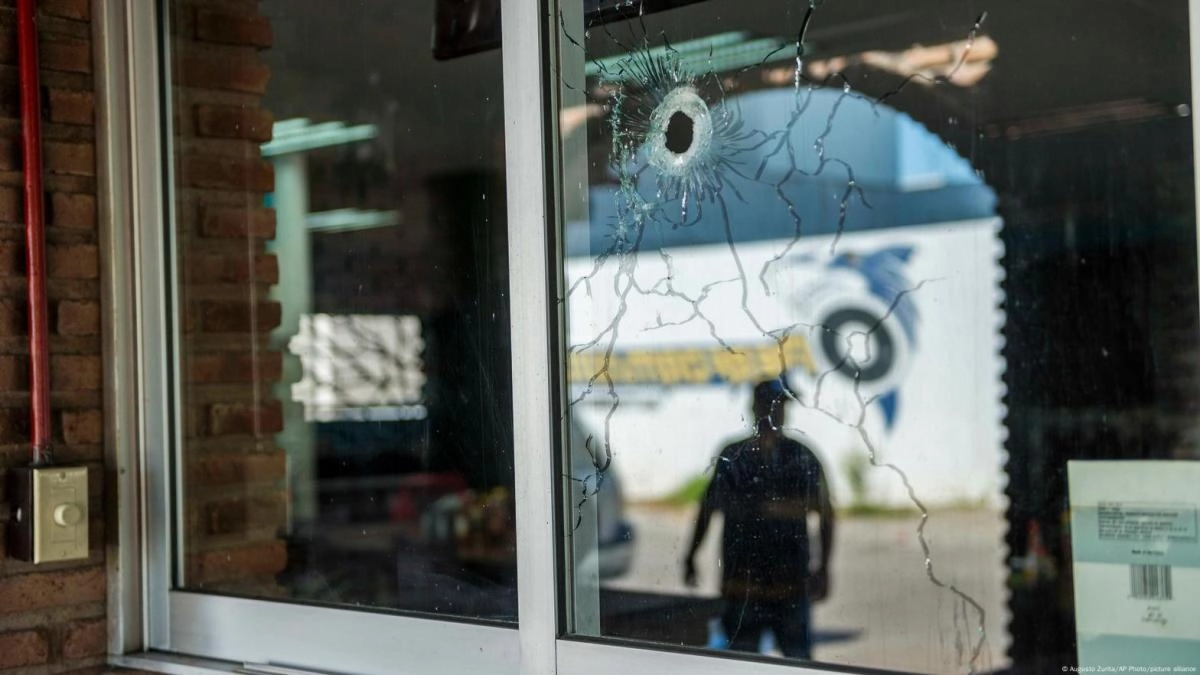
But tonight, for the second consecutive year, some states with high rates of violence will suspend their celebrations for security reasons. This is the case in the state of Sinaloa, where a war between factions of the criminal group, the Sinaloa Cartel, has been raging for a year, resulting in 1,850 murders. As well as some municipalities in the states of Veracruz and Michoacan.
“I have decided that the celebration of our independence will be limited solely to the formal civic act with the participation of representatives of the powers of the State and the Armed Forces,” announced this weekend the governor of the state of Sinaloa, Ruben Rocha Moya, on social media, who is involved in a series of accusations for his alleged links to drug trafficking.
It was a “difficult decision” for the authorities, forced by the climate of violence originating from drug trafficking prevailing in the region, he explained.
According to official records, the struggle between the factions of the Sinaloa Cartel ?Los Chapitos and La Mayiza? has left, only since September 9, 2024 (which marks the beginning of this internal confrontation after accusations of treason), a balance of 1,850 people murdered and more than 1,800 forced disappearances, of people who are also presumed dead.
Drug trafficking as a constant in power in Mexico
To what extent is drug trafficking involved with local governments in important regions of the country? Could drug trafficking be considered the new power that is overwhelming the population?
“Both in the past and in the present, and probably also in the future, drug trafficking will play a key role in the destiny of the country,” says Florian Huber, representative in Mexico of the Heinrich Boll Foundation, linked to the German Green party, in an interview with DW.
However, currently, “the challenge is, on the one hand, the dispersion and atomization of drug trafficking structures,”the German jurist indicates. “And, on the other hand, the capacity of criminal groups to diversify, always reinventing themselves and adapting to circumstances,” he adds.
“Drug trafficking is, without a doubt, a harsh reality, and it has a significant influence in many parts of the country,” agrees Siegfried Herzog, regional director for Latin America of the liberal Friedrich Naumann Foundation, based in Mexico. “But it's nothing new. It started before the First World War, and it's not going to go away as long as there's demand for its 'products,'” he says.
And he adds about the difficult reality that prevails in Mexico: “Claudia Sheinbaum's government, under the direction of her Secretary of Security, Omar Garcia Harfuch, has taken stricter measures that have yielded results. Now the problems are not being ignored, but confronted.”
“What's missing, as always, is money: spending on security and justice is not enough, and both politics and justice need structural reforms,” Herzog also points out about this new attempt by the Mexican government to combat the problem.
Although he points out that the suspension of these celebrations makes sense given the situation the country finds itself in: “In total, [the suspensions] apply to about 20 municipalities throughout the country: with the exception of Sinaloa, it doesn't seem out of the ordinary to me,” says the interviewee.
By For his part, the representative of the Boll Foundation approves of the national government's performance in this regard: "Sheinbaum has tried to implement better coordination between security and judicial authorities - federal, state, and local - and has opted to strengthen intelligence."
Social fatigue
However, "while violence continues to mark the daily lives of many citizens, there is a growing feeling of fatigue in society after almost two decades of violence," laments Huber.
"For responsible actors, institutional and political, it is often uncomfortable to be confronted with acts of violence and they prefer to direct attention to other issues where they can show better results," he indicates.
"Organized crime cannot be completely eliminated, but it is possible to reduce its power, recover public space, and limit violence," Herzog adds. "It wouldn't be right to say the fight is lost, but things aren't under control either." However, Claudia Sheinbaum will become the first woman in Mexican history to lead the celebration of the Cry of Independence from the presidential balcony tonight: a historic gesture that resonates amid the violence shaking the country.the ability of criminal groups to diversify, always reinventing themselves and adapting to circumstances," he adds.
"Drug trafficking is, without a doubt, a harsh reality, and it has a significant influence in many parts of the country," agrees Siegfried Herzog, regional director for Latin America of the liberal Friedrich Naumann Foundation, based in Mexico. "But it's nothing new. It started before the First World War, and it's not going to disappear as long as there is demand for its 'products,'" he says.
And he adds about the difficult reality that prevails in Mexico: "The government of Claudia Sheinbaum, under the direction of her Secretary of Security, Omar Garcia Harfuch, has taken stricter measures that have yielded results. Now the problems are not being ignored, but confronted.”
“What is missing, as always, is money: spending on security and justice is not enough, and both politics and justice need structural reforms,” Herzog also points out about this new attempt by the Mexican government to combat the problem.
Although he points out that the suspension of these celebrations makes sense given the situation the country finds itself in: “In total, [the suspensions] apply to around 20 municipalities across the country: with the exception of Sinaloa, it doesn’t seem out of the ordinary to me,” says the interviewee.
For his part, the representative of the Boll Foundation approves of the national government’s performance in this regard: “Sheinbaum has tried to implement better coordination between security and judicial authorities – federal, state, and local – and has opted to strengthen intelligence.”
Social fatigue
However, “while the Violence continues to mark the daily lives of many citizens. There is a growing sense of fatigue in society after almost two decades of violence," laments Huber.
"For responsible actors, both institutional and political, it is often uncomfortable to be confronted with the acts of violence, and they prefer to direct attention to other issues where they can show better results," she indicates.
"Organized crime cannot be completely eliminated, but it is possible to reduce its power, reclaim public space, and limit violence," adds Herzog. "It would not be correct to say that the fight is lost, but things are not under control either."
However, Claudia Sheinbaum will become tonight the first woman in the history of Mexico to lead the celebration of the Cry of Independence from the presidential balcony: a historic gesture that resonates amid the violence that shakes the country.