

After the fire in Boyle Heights, another Latino community evaluates a mega warehouse project
On average, communities near these warehouses experience a nearly 20% increase in nitrogen dioxide levels
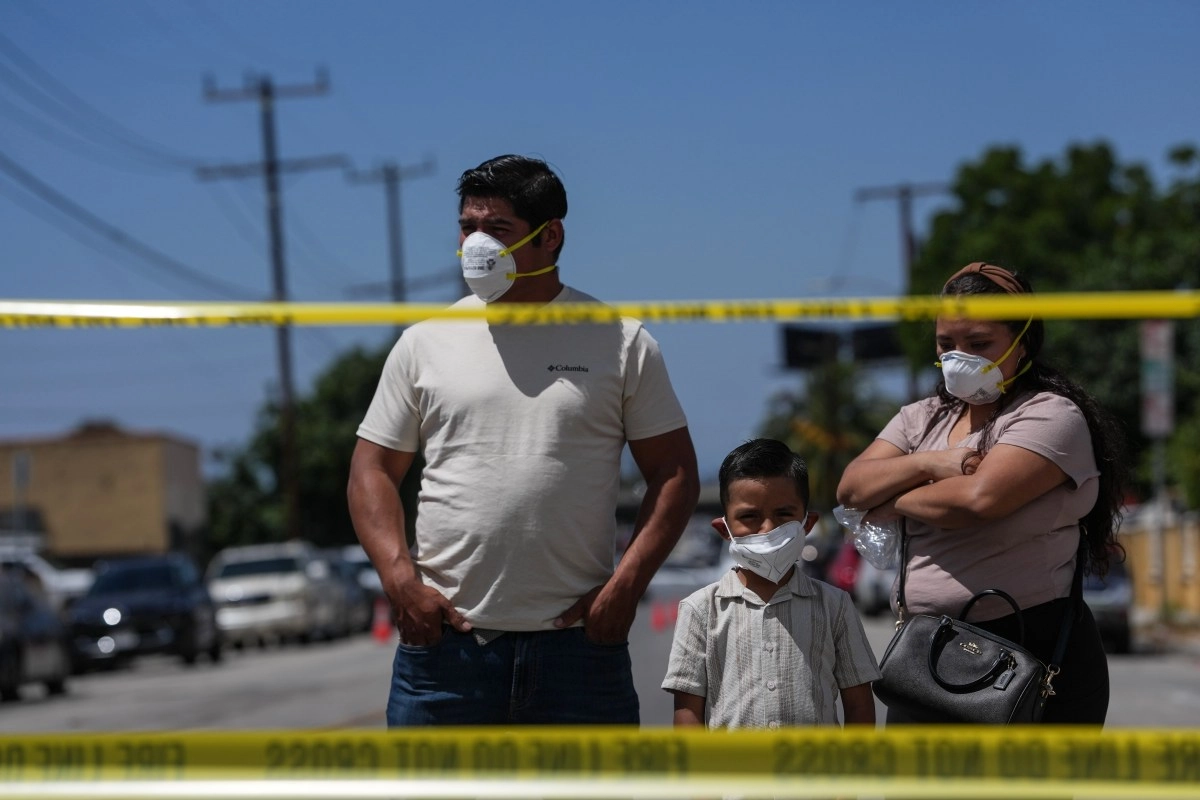

Latino children and families in Bloomington will once again suffer the worst consequences of exposure to higher levels of toxins—linked to the development of pediatric asthma, cardiovascular disease, premature death, and other health problems—if San Bernardino County community leaders do not take action.
This is not an abstract risk. Experts have long warned that warehouses and related activities worsen local air pollution. On average, communities near these warehouses experience a nearly 20% increase in nitrogen dioxide (NOx) levels. The neighborhoods disproportionately affected are communities that are on the front lines of exposure.
San Bernardino County will soon vote on the Bloomington Business Park project, a 3.5 million-square-foot complex in south Bloomington that would sit just 11 feet from the nearest homes and schools. Students at both Zimmerman Elementary School and Bloomington High School would be exposed to countless health and safety risks that could impact their lives in the short and long term.
The recent Lineage warehouse fire in Boyle Heights—a historically majority-Latino neighborhood—is a perfect example of the dangers that come with locating warehouses in the middle of residential areas and overdevelopment. The risk is not merely theoretical; This is a real and immediate danger. However, you don't have to look that far west to see the impact that warehouse fires can have on marginalized communities.
In 2020, a large fire devastated a 600,000-square-foot warehouse in the northern part of Redlands, an area with a larger population of people of color than the southern part of the city. The fire generated huge columns of toxic smoke that spread throughout the area and forced the closure of Highway 10. After the incident, the charred debris was deposited near a neighborhood in San Bernardino. Residents complained about pungent odors and how strong winds kicked up gravel that hit windows, people, cars and pets.
Unincorporated Bloomington has a modest population of approximately 25,000, nearly 90% of whom are Latino. According to Warehouse CITY—a tracking tool from Radical Research and the Robert Redford Conservancy for Southern California Sustainability at Pitzer College—the city has 16 warehouses; one of them is empty and four have not yet been built. Many of these warehouses are located next to homes, schools and other sensitive areas. By contrast, unincorporated neighborhoods like Mentone, Oak Hills and Phelan—which have flat topography and similar access to major highways—have far fewer warehouses. In these areas, the Latino population ranges between 40% and 60%.
Community members find it difficult to provide meaningful input into these life-transforming projects, given that English is not the primary language for up to two-thirds of Bloomington residents. However, quality translation services are not offered at public meetings.
How are they expected to participate in the civic process if they do not offer the right tools and information? It is evident that these communities are affected by these predatory developments. Projects must be presented and communicated in languages that the community understands. Meetings should be accessible and not held in the middle of the day if community participation is truly sought. Additionally, we need to stop pretending that anyone wants to live near a warehouse or that building these centers will solve all of our problems.
The Boyle Heights fire, the countless environmental reports and the unscrupulous practices that appear to target Latino communities should serve as a warning to authorities in Bloomington and throughout California: these facilities are not harmless neighbors. They are potential sources of disaster that disproportionately endanger families.
(*) Andrea Vidaurre is co-founder of the People's Collective for Environmental Justice.