

The Supreme Court of Brazil sentences Bolsonaro to 27 years in prison for attempted coup detat
Bolsonaro defense announced that it will appeal the sentence, including at international levels
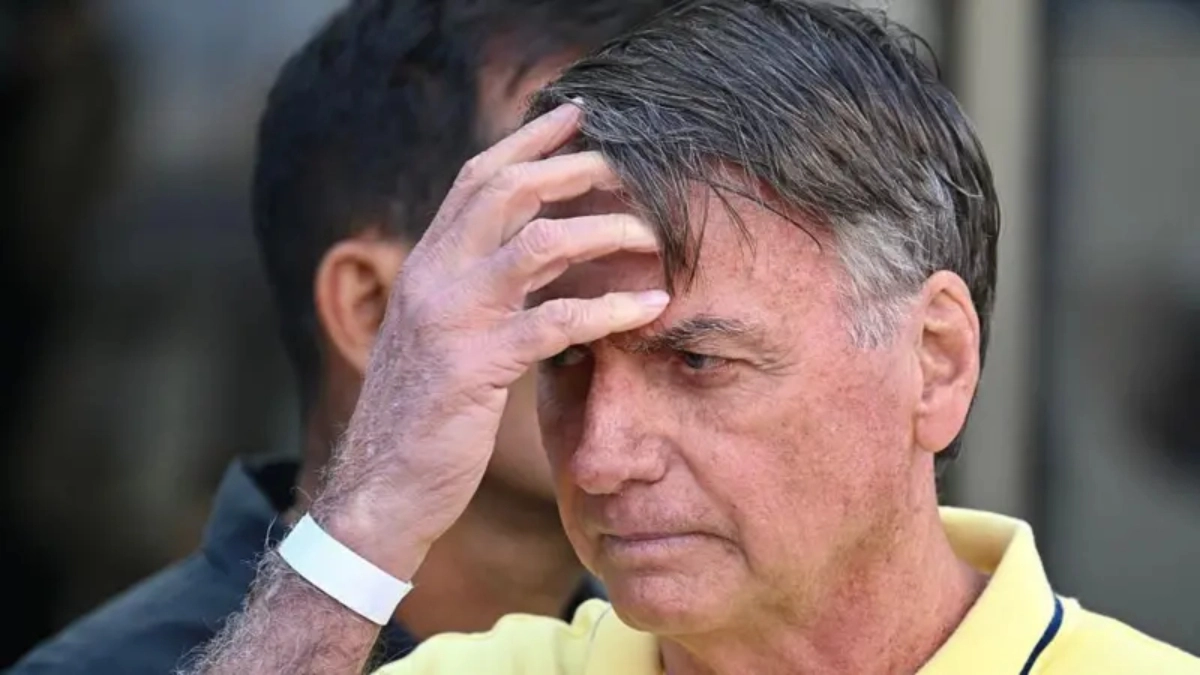

The Supreme Federal Court of Brazil sentenced former President Jair Bolsonaro on Thursday to 27 years and 3 months in prison for participating in an attempted coup d'etat, after having lost the presidential elections in October 2022.
The sentence of the former president, 70 years old of age, was made possible thanks to magistrates Carmen Lucia, Alexandre de Moraes, Flavio Dino and Cristiano Zanin.
The fifth judge, Luiz Fux, acquitted Bolsonaro and proposed annulling the case, citing the Supreme Court's alleged lack of jurisdiction to try him.
Bolsonaro's defense lawyers announced Thursday that they will appeal the sentence, including at international levels.
"The defense considers the sentences imposed to be incredibly excessive and disproportionate and (...) will file the corresponding appeals, including at the international level," said Bolsonaro's advisor, Fabio Wajngarten, in a statement posted on social media.
The four-to-one decision makes it difficult for Bolsonaro to try to overturn the sentence.
Had there been two acquittals, it could have opened the way for the case to be re-evaluated by the Supreme Court's 11-judge plenary session.
Zanin, who was the last to vote, fully supported the position of the reporting judge, Alexandre de Moraes.
According to Zanin, the case file contains a “robust universe” of evidence that clearly shows Bolsonaro’s involvement in the coup attempt and that he had a “populist political strategy” to undermine institutions.
The decision against Bolsonaro constitutes a historic ruling, as never before has a former Brazilian president been convicted of coup plotting.
The Supreme Court also convicted seven former associates of the former president, who were also tried for participating in the coup plot to try to keep Bolsonaro in power beyond the constitutional term for which he had been elected.
The defendants were convicted of the following crimes:
Among Bolsonaro's convicted collaborators are four former senior military commanders, now retired, who held the highest military responsibilities during Bolsonaro's government.
These are Augusto Heleno, who was Chief Minister of Security of the Presidency, and the former Ministers of Defense Walter Braga Netto and Paulo Sergio Nogueira. These three officers all reached the highest rank of four-star Army general.
They are joined by Almir Garnier, who reached the highest rank of admiral and was commander of the Brazilian Navy.
According to BBC Brasil, a conviction by the courts of high-ranking officers of the Armed Forces is unprecedented.
The sentence against Bolsonaro sparked reactions in the United States, where President Donald Trump, a staunch ally of the Brazilian leader, said he was surprised by what happened.
"It's very similar to what they tried to do to me, but they didn't succeed. He was a good man," said Trump.
US Secretary of State Marco Rubio condemned the Supreme Court's sentence and called it "unfair."
A "tropical version" assault on the Capitol
The proceedings against Bolsonaro are linked to the assault on Brazilian institutions that took place on January 8, 2023, when thousands of the former president's supporters took over the National Congress, the Supreme Court, and the Planalto Palace in a desperate attempt to make the newly inaugurated government of Luiz Inacio Lula da Silva unviable.
“It looked like a tropical version of the assault on the United States Capitol,” said Caio Quero, editor of BBC Brasil.
On that day, Bolsonaro was not in Brazil, having left for the United States on December 30 to avoid being present during Lula's inauguration on January 1.
Bolsonaro has denied having any connection with that kind of civil uprising. However, the Supreme Court justices saw this event as part of a broader plan to overthrow Lula.
In fact, during the process, the right-wing former president was accused of leading a conspiracy to discredit the electoral system, attack institutions, and ignore the voting results.
The ultimate goal of these actions can perhaps be summarized in some of the crimes for which Bolsonaro was tried: attempted coup d'etat and violent abolition of the democratic rule of law.
From Lula's freedom to criticism of the elections
According to the Brazilian Attorney General's Office, the coup plot began to take shape in 2021, after Lula regained his freedom and, with it,his ability to run in elections thanks to the Supreme Court's dismissal of a corruption conviction against him due to procedural flaws.
From that moment on, Bolsonaro began systematically criticizing Brazil's electoral system and questioning, without offering evidence, the reliability of the voting machines.
Later, during their investigations, police authorities found evidence that some of Bolsonaro's associates considered ways to cast doubt on the voting system.
Despite efforts to discredit the elections, the vote took place normally in October 2022, and Lula managed to win by obtaining 51% of the votes in the second round, compared to 49% for Bolsonaro.
Then, the still incumbent president locked himself in the presidential residence, where he remained for 40 days without speaking in public.
When he finally spoke out, it was through a brief statement in which he authorized the start of the transition, but without any recognition of his electoral defeat.
Between the plot and Trump's sanctions
During the weeks in which Bolsonaro was imprisoned, his followers began to set up camps in front of the barracks calling for a "military intervention."
Judicial investigations link several of the former president's collaborators to these protests. One of them, Mario Fernandes, admitted to the Supreme Court that he drafted a plan to assassinate Lula and his vice president-elect Geraldo Alckmin, as well as Alexandre de Moraes, one of the justices of that court.
Although Fernandes denied that he would present that document to anyone, the prosecution determined that he printed it in November 2022 before meeting with Bolsonaro at the presidential palace.
According to the investigation, Bolsonaro also studied the draft of a decree ordering the arrest of the Supreme Court justices and allowing for new elections.
In early December 2022, Bolsonaro met with the country's military commanders to present a draft decree declaring a state of siege, but, according to the Federal Police, the lack of support from the military commanders of the ground and air forces scuttled the alleged coup plot.
During the investigations, Bolsonaro admitted to having discussed the "possibilities" he had after the elections with Armed Forces officers, but said they were all within the Constitution.
After his eventual return to Brazil, Bolsonaro began denouncing the investigations against him as political persecution, while his son, Congressman Eduardo Bolsonaro, moved to the US.to lobby the Trump administration, which has been a strong ally of the former Brazilian president.
The effect of these efforts became visible last July, when Trump announced that he would impose 50% tariffs on Brazilian products due to what he called a “witch hunt” against Bolsonaro.
The US government also sanctioned Alexandre de Moraes, the Supreme Court justice leading the case against Bolsonaro, through the Global Magnitsky Act, created to punish foreigners accused of serious human rights violations or corruption.
This Thursday, after the sentence against Bolsonaro and his collaborators was announced, Marco Rubio lashed out at the judge.
“Political persecution by Alexandre de Moraes, sanctioned for violating human rights, continues after he and other members of the Brazilian Supreme Court unjustly decided to imprison former President Jair Bolsonaro,” he wrote in X.
“The United States will respond accordingly to this witch hunt,” he warned.