

USCIS to Increase Prices for Several Premium Immigration Services
Starting March 1, there will be new fees for some premium immigration services, such as work visas
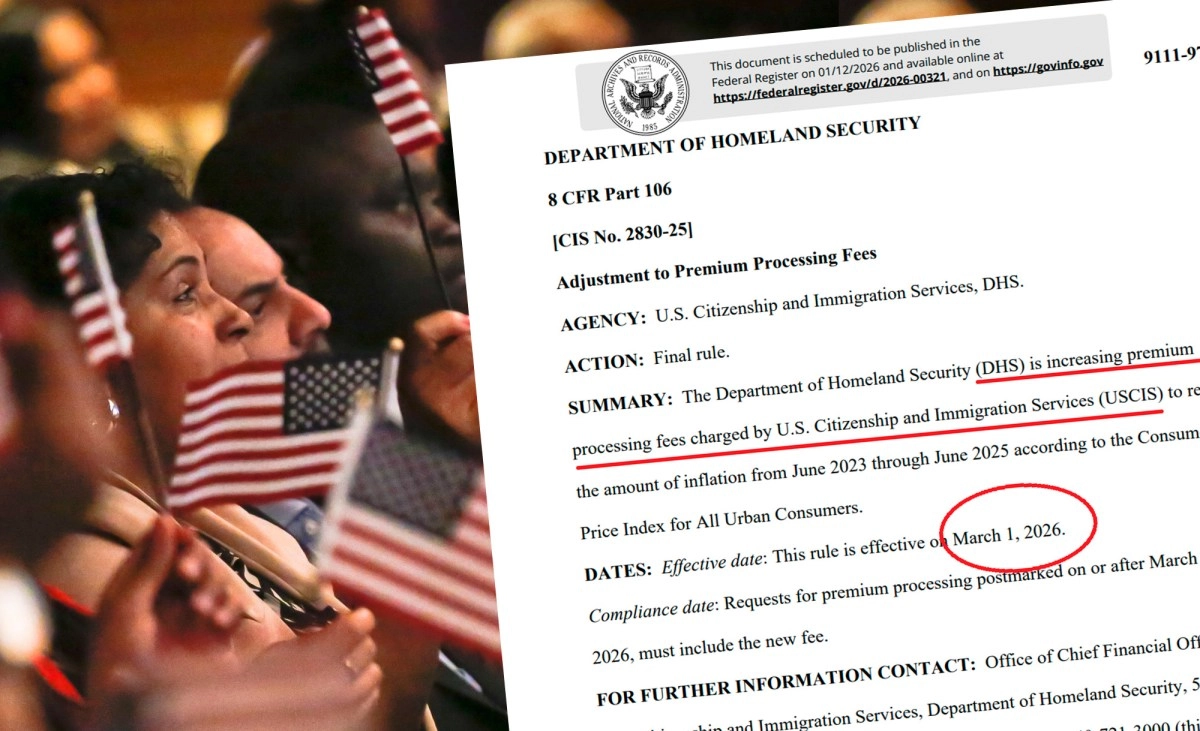

The Department of Homeland Security (DHS) announced an adjustment to premium processing fees, effective March 1, for certain immigration applications.
“The USCIS Stabilization Act authorized DHS to adjust premium processing fees every two years to reflect inflation,” the agency explained. “Fees will continue to be adjusted across the agency to reflect inflation and protect the true value of the premium processing service we provide.” In a notice to the Federal Register—to be published on January 12—USCIS adds that if you file a premium processing request postmarked on or after March 1, 2026, you must include the new fee for the specific benefit you are requesting. Premium processing allows employers, immigrants, and petitioners to pay an additional fee for U.S. Citizenship and Immigration Services (USCIS) to expedite the resolution of select petitions, reducing wait times to a maximum of 15 days. This option is particularly popular with companies seeking to ensure the rapid availability of visas for skilled workers, as well as with applicants facing urgent travel or employment deadlines. What fees are changing? Under the rule, fees for several categories of requests will increase to offset inflation. Increase in operating costs as measured by the Consumer Price Index (CPI-U) between June 2023 and June 2025.
Among the most notable changes:
The premium processing fee for I-129 petitions, which covers nonimmigrant visas such as H-1B, L-1, and others, will increase from $2,805 to $2,965.
For the same I-129 form in H-2B and R-1 categories, the fee increases from $1,685 to $1,780.
The premium fee for I-140 (immigrant worker petitions) also increases to $2,965.
The fee for Form I-539 for changes or extensions of nonimmigrant status will increase to $2,075.
The Form I-765 for Employment Authorization will see its premium fee adjusted to $1,780.
These modifications will apply to any premium processing request filed on or after March 1, 2026.
DHS Justification
In the shared document, the DHS justifies the adjustment by stating that keeping the fees unchanged would dilute the real value of premium processing services against inflation.
The updated fees reflect an approximately 5.72% increase in the CPI-U during the evaluated period, which supports the biennial adjustment required by law.
The final document also details that the fee increase will generate approximately $77 million in additional annual revenue for USCIS—considering the number of annual petitions—funds that will be transferred to the agency to support its processing and adjudication operations.