

Why Mexico imports more than 50% of the gasoline it consumes, despite being one of the largest oil producers in Latin Am
The country has been struggling for years with obsolete refineries that force the country to import 50% of its gasoline consumption from abroad.
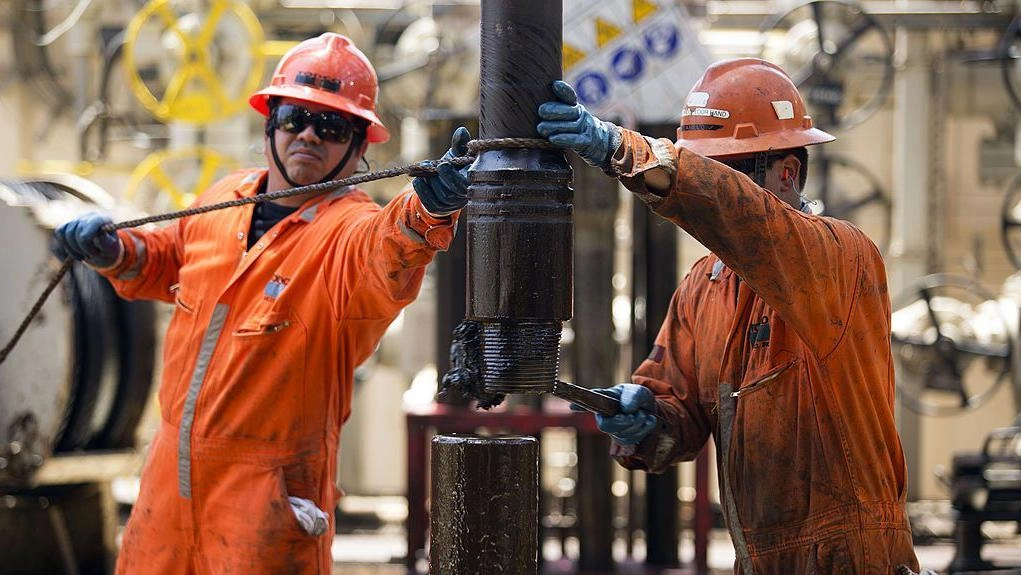

Oil in Mexico is not only a large source of income, it is also a symbol of national identity.
The country is one of the largest oil producers in the world and the second in Latin America behind Brazil. The extensive crude oil reserves provide approximately 30% of federal income and are a fundamental pillar of the Mexican economy and its social spending.
And yet, the Latin American nation imports more than half of the gasoline it needs to function daily, mainly from the United States although a small proportion comes from China, Singapore, South Korea and the Netherlands.
According to data from the Ministry of Energy, in 2018 alone Mexico bought 75% of the gasoline it consumed abroad, although in recent years that figure began to decrease thanks to the efforts of Andrés Manuel López Obrador and the continuity government of Claudia Sheinbaum to achieve self-sufficiency.
An objective that makes more sense these days when the blockade of the Strait of Hormuz due to the war between the United States and Israel with Iran has sent the price of crude oil above US$100 a barrel.
But the reasons why Mexico is not yet 100% self-sufficient in fuel include, among other things, the characteristics of the Mexican subsoil and the type of crude oil it currently extracts.
"Mexico is one of the main oil producers in the region. God blessed us there, but the devil cursed us, because the oil we have is of a heavy and bitter nature. Comparable to that of Venezuela, but eventually even with more sulfur," Julio César Rentería, president of the Refining Committee of the Mexican Institute of Chemical Engineers (IMIQ), explains to BBC Mundo.
Another component of Mexican crude oil is asphaltenes. That is, the heaviest and stickiest part of the oil. Insoluble molecules that, when temperature or pressure changes, become clumps with the potential to clog wells and pipelines.
“It is a crude oil of very poor quality to process in Mexican refineries,” adds Rentería.
Being so acidic, it complicates its refining and poses technological challenges for the facilities in charge of transforming it into gasoline.
The refineries also hold the key.
Obsolete refineries
“For years, investment in maintaining the refineries was stopped with the argument that refining oil to convert it into gasoline was not a business and that what was wanted as a source of income for Pemex was the sale of crude oil as such,” says Rentería.
"And with that idea it even seemed that the refinery was getting in the way and they were practically abandoning them to be scrapped. Many of them were rusty, others were stopped and others were missing pumps or other components," says the engineer.
“Mexico was putting less than 600,000 barrels of process into its refineries, when the capacity is 1.6 million.”
This political decision led to a historical model focused on exporting unrefined oil instead of processing it within the country and importing already refined gasoline for daily consumption, especially from its northern neighbor.
In contrast to Mexico, the facilities that the United States has in the Gulf are historically designed and converted to process crude oils with these characteristics: heavy, sulfurous and complex.
It was President Andrés Manuel López Obrador (2018-2024) who decided to launch a program to modernize refineries and stop importing finished products.
Many experts point out that his plan had extensive energy security considerations. In the winter of 2021, a freeze in Texas paralyzed the gas pipelines that supply Mexico, causing multimillion-dollar losses to the country.
In pursuit of energy self-sufficiency, AMLO wanted to guarantee national sovereignty, reduce dependence on imported gasoline—mainly from the US—and control inflation by keeping fuel prices stable for consumers.
“How long would Mexico last if they don't sell it?”
“What we want is […] for us to process all our raw materials so that we do not have to buy gasoline abroad because that means more increases in the price of gasoline and affects consumers,” said the then president.
"If we process the raw materials here, there is employment, there is work and we are more independent. How long would a Mexican government last if the powers decide not to sell it oil or, rather, not sell it gasoline? At most, a month," he emphasized.
AMLO began his plan to achieve fuel self-sufficiency coinciding with the first presidency of Donald Trump, whose statements seriously strained the relationship with his most immediate neighbors, Mexico and Canada.
For this reason, among his first measures upon becoming president, the six existing refineries began to be rehabilitated and the construction of a new one began, in Dos Bocas. According to AMLO, the plan was to “achieve that in three years all the gasoline we consume will be produced in Mexico.”
“The majority of the plants that make up these six refineries were designed more than 50 years ago, based on technology of that time,” explained Francisco José Barnés de Castro in a scientific publication by the Energy Regulatory Commission in 2022.
“From the beginning, our refineries had a significantly lower level of energy consumption efficiency and integration than the US Gulf Coast refineries with which they compete.”
Multimillion-dollar investments and continuity
Turning that situation around was not easy or cheap.
During AMLO's administration, the state oil company Pemex bought 50% of a facility located in Texas, called Deer Park, for US$600 million and US$21,000 million was invested in building the new Olmeca refinery, in Dos Bocas. Both are designed to treat extra-heavy crude oil from Mexico.
"It is a decision that is more political than economic. When you see what is happening in Iran now, it undoubtedly reinforces this thought that it is better to produce internally so as not to be subject to this variation or this fragility," comments Álvaro Vertiz, partner and head of Latin America at the consulting firm DGA Group.
"But today, refining a barrel of oil in Mexico is much more expensive than importing it. Dos Bocas is still not at its point. And therefore we continue to be somewhat inefficient in terms of the process to convert our oil into gasoline," he adds.
In the Pemex Work Plan for 2025-2030, published early last year and presented by President Claudia Sheinbaum, the state oil company reaffirmed its commitment to the goal of energy security.
“Within the framework of this strategic plan, actions will be implemented to increase hydrocarbon reserves with the objective of guaranteeing at least ten years of consumption,” said Victor Rodriguez Padilla, general director of Pemex.
In communication with BBC Mundo, a company spokesperson attributed the recent increase in gasoline and diesel production to the strengthening of the National Refining System.
But not everyone sees the investment in refinery upgrades as a positive.
"It is money poorly spent. Gasoline does not need to be refined in Mexico, there is no harm in importing it. If you are not good at an activity like refining, then let someone else do it much cheaper. The richest countries are not the ones that produce everything themselves," says economist Juan Carlos Belausteguigoitia Rius, director of the Energy Center of the Autonomous Technological Institute of Mexico.
Pemex reported losses of US$2.6 billion in the first quarter of 2026, which it attributed to lower sales abroad and debts with suppliers.
Most analysts attribute the losses to the impact of prioritizing domestic refining over crude exports in a rising global market.
“In Mexico, for various reasons, it is very expensive for us to refine,” says Belausteguigoitia.
Furthermore, the economist points out, the refining business is very competitive and, even doing it well, it has very small margins.
"If it costs you to refine at home, let's say 10, and it costs others 1, it is better to sell the oil at the international price and then import gasoline. That from an economic point of view makes a lot of sense. It is more sensible to import," says Belausteguigoitia.
"Every peso that goes to refining is a peso that does not go to education, it is a peso that does not go to health, it is a peso that does not go to security or infrastructure. And with all the shortcomings that the country has, it makes no sense to continue in that business."
When consulted by BBC Mundo, the state oil company did not respond to the question about whether Mexico's refinery system is really prepared to profitably process the country's heavy crude oil.
“Persistent operational challenges”
According to credit rating agency Moody's, Pemex burned through more cash than it generated as a result of “persistent operational challenges, including declining production due to limited capital investment and continued losses in the refining segment.”
“While the refineries on the Gulf coast of the United States have been modernizing throughout these years, ours, always subject to budget restrictions, have been falling behind and the refineries that make up our National Refining System (SNR) have significantly lower operating margins,” explains Barnés de Castro.
"Its profitability margins are very small and, except in rare cases, it operates at losses. It is for this reason that the decision was made to reduce the level of operation of the SNR and thus minimize its losses," he writes in his report.
Belausteguigoitia, however, remembers that unlike gas, "gasoline can be brought from anywhere in the world. You don't have a single supplier, you have many. Therefore, it makes sense to import it."
AMLO failed to fulfill his promise to stop buying gasoline abroad in three years.
However, the country is in a transition process. Currently, national gasoline production already covers almost 50% of demand. A figure that in 2018 represented 20%.