

Will Santa Claus and a White Christmas survive climate change?
As climate change warms the planet, snowy winters are becoming less common in Europe
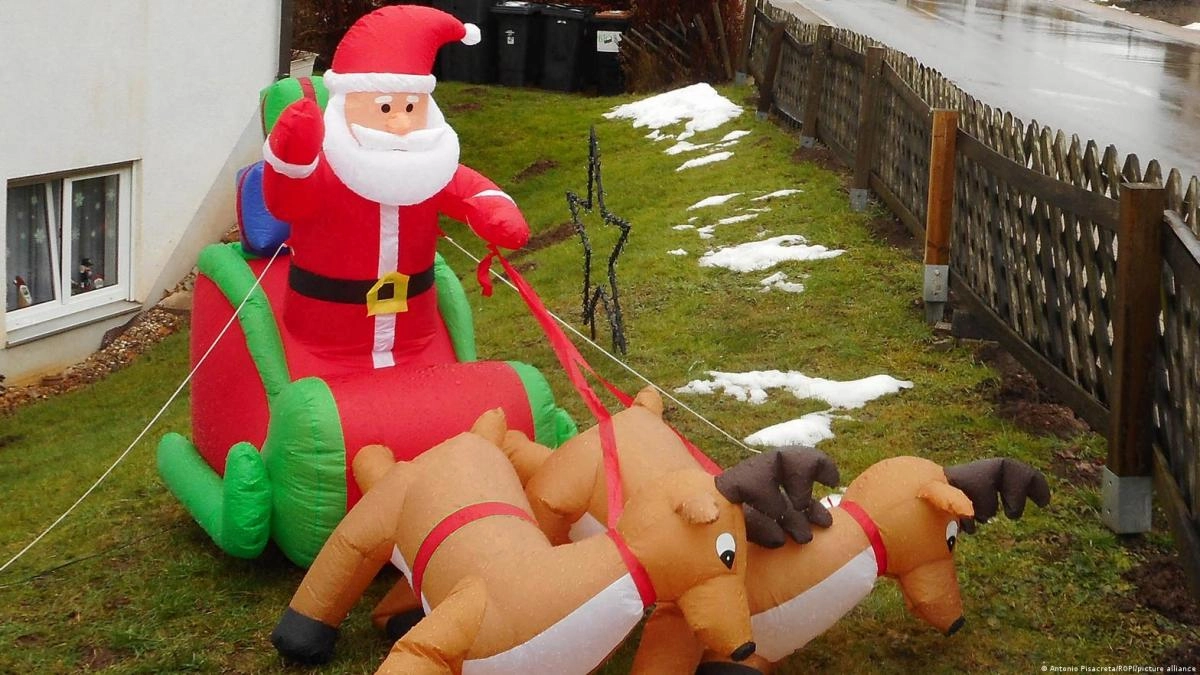

When Erika Lundell moved south of Stockholm, Sweden, a decade ago, she was struck by the number of Christmas decorations in her new home in Malmo (and around the world) that included ice and snow. “Suddenly, they stood out in a different way,” said Lundell, an ethnographer and senior lecturer at Malmo University. “There are so many Christmas decorations with a touch of snow.”
Whether it's the white fleece adorning shop windows, the icicle lights hanging from a pine tree, or even the Baby Jesus, incongruously bundled up for a cold, snowy night in a Middle Eastern nativity scene, decorative snow is ubiquitous this time of year. In Sweden, Lundell stated that the idea of ??an authentic Nordic winter, complete with a thick blanket of snow, is considered by many to be part of the national identity.
Lundell, who studies the cultural aspects of snow and winter, has spoken with dozens of Swedes of all ages about their experience of winter weather and how it is changing as winters become warmer in the Northern Hemisphere.
Older generations have stories of living with snow, but for younger Swedes, it's not part of their lives, Lundell explained. They are more accustomed to sleet and icy, muddy snow. Most told Lundell that they “miss the snow,” that classic winter popularized by centuries of songs, stories, and images, especially during the Christmas season. There is a very poetic and romantic view of snow there, he said. “There is a very ingrained idea in this part of the world that there has to be snow for it to be a perfect Christmas.” Christmas culture is ubiquitous. The link between snow and Christmas has spread around the world, driven by colonialism and capitalism. Even in New Zealand, where the holiday falls in summer and is celebrated with beach barbecues, in Singapore and Kuala Lumpur, or in South America, houses are decorated with artificial Christmas trees, inflatable plastic snowmen, and reindeer, said tourism and sustainability expert C. Michael Hall. And they have Santa Claus in their suit […], they have enormous pine trees with artificial snow. The iconography is there, and it will undoubtedly be with us for a long time,” Hall told DW from Auckland.Both Hall and Lundell hope that familiar Christmas symbols and traditions won't disappear anytime soon, even if we have to work harder to maintain them. Pine trees, which are also struggling to adapt to global warming, remain a key element. A recent Ipsos poll in the US revealed that nearly 83% of Americans opted for a practical artificial tree this year. "I think the culture associated with Christmas and snow will continue to be very strong. But the distance between the object and what it represents will be much greater," Lundell said.
Europe, the fastest-warming continent, has seen a decline in the average number of snowy days over the past 40 years, with two of the warmest winters on record occurring in the last five years. In North America, traditionally frozen areas, such as the Great Lakes region along the US-Canada border, are also experiencing a thaw. The relatively mild winter of 2019/2020, for example, saw very little ice on the inland seas, which typically freeze more than 40% of their surface.
“Culturally, [that loss] will be a big impact,” Hall said. That absence will be felt especially in Rovaniemi, the self-proclaimed “official hometown of Santa Claus” in northern Finland. When people visit Rovaniemi, they expect the best: sleigh rides, Santa Claus, and, of course, fun in the snow.
Hall, currently a professor at Massey Business School, has spent many years at the University of Oulu, south of Rovaniemi, where he has observed how climate change is affecting the “imagined Christmas country.”
“In terms of visitor numbers, for Rovaniemi, Christmas is its peak season,” he said. But during his last visit to Rovaniemi, he noticed that some tourists weren't so bothered by the lack of snow. “They were just looking for the photo with the reindeer,” he said, despite being surrounded by slush and mud.
Leaving Snow and Santa Claus Behind
The Icelandic travel agency Nordic Visitor, which has operated Christmas and winter tours in Northern Europe since 2002, hasn't had to change its destinations for weather reasons. However, it has modified some of its activities.
“Fifteen years ago, we relied heavily on traditional images of snow, which reflected travelers' expectations of the season. Almost all of our tours included winter activities such as dog or reindeer sledding, snowmobiling, and glacier experiences,” a company representative explained to DW.
Now, faced with a lack of snow, suppliers have adapted by transporting their dog sleds on wheels. Santa Claus Village in Rovaniemi remains open year-round, and Santa Claus greets visitors “rain, snow, or shine.” “[With climate change] winter will lose one of its components, the snow, but not the darkness,” said Lundell, adding that we might begin to see less emphasis on snow and cold, and more on another important symbol of the season:“the interplay between light and darkness.” “Perhaps in the future, winter will be known more as the dark season than the cold season,” he said. The idea of ??snow and winter would then fade from our shared cultural memory, “like something out of a fairy tale.”