

Hyundai premieres the new IONIQ 6 N: an electric extreme
Hyundai launches the IONIQ 6 N, its high-performance electric sedan with more than 600 horsepower, designed for curves, circuits and daily use

For a long time, Hyundai has scaled from functional to bold. What was once considered a low-cost manufacturer has transformed into a group with global ambitions, capable of competing in segments such as SUVs, electric cars, and high-end sports cars.
Also read: Toyota warns about the real impact of electric cars
Now, Hyundai returns with an electrifying proposal: the IONIQ 6 N, its most powerful and "rogue" electric sedan to date, designed to challenge the limits of the segment.
You can read: Volkswagen celebrates 50 years of the Polo with a special edition
This model represents not only a technical evolution, but also an image evolution: Hyundai is committed to consolidating itself as an innovative brand, capable of combining aggressive design, extreme performance, and electric technology.
However, although the initiative has technological merit, its commercial success seems complicated.
From accessibility to the exclusive segment
Two decades ago, Hyundai and KIA were recognized for offering functional vehicles at low prices, with basic technology. Today, both brands are present in all categories, from efficient SUVs and electric cars to high-performance models.
Hyundai, in particular, has created a sports line highly appreciated by enthusiasts with its "N" division.
In this strategic journey, Hyundai is now entering the niche of extreme electric sports cars, an attractive segment in terms of technology and marketing, but with little real demand.
These are very powerful and expensive cars, aimed at a minority audience, which limits their commercial projection.
The IONIQ 5 N: successful experiment, modest sales
Hyundai's first high-performance electric experiment was the IONIQ 5 N. This model combined the IONIQ 5's electric platform with an all-wheel drive system with more than 600 hp, adaptive suspension and a circuit configuration.
It was received enthusiastically by critics, praising its balance and sporty feel.
However,Its commercial adoption has been modest. Its initial price was around $78,000, a figure that has risen almost $10,000 since its introduction in 2021, reaching nearly $88,000, which places it out of reach of the average electric buyer.
The IONIQ 6 N: power, design and technology
The new IONIQ 6 N inherits the legacy of the IONIQ 5 N, but adjusted to the electric sedan. Hyundai will present it at the famous Goodwood Festival of Speed, in July. This event is an ideal catwalk for high-performance machinery, with brands dedicated to speed and competition.
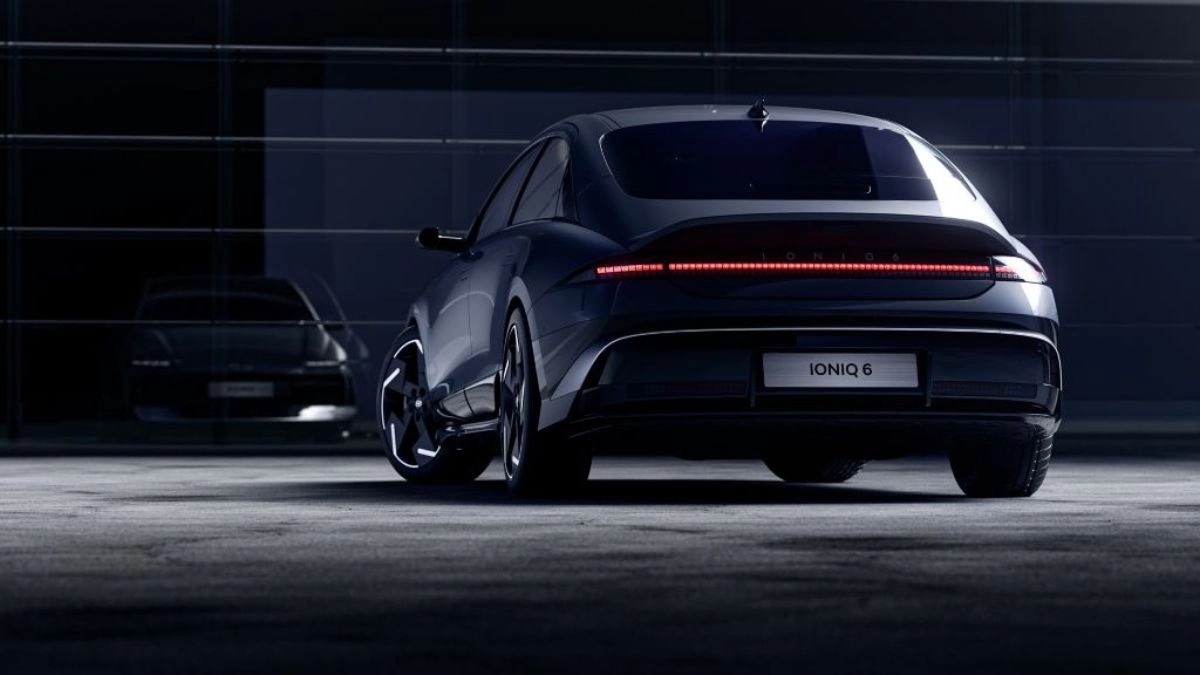
In addition to performance, the IONIQ 6 N features a design language that underlines its aggressiveness: flared wheel arches, muscular lines, and a prominent rear spoiler.
The LED headlights and aerodynamic bodywork reflect a design that is literally “leveled up” compared to the conventional IONIQ?6, and even compared to the sporty IONIQ 5 N. A radical visual redesign is anticipated, accompanied by a reinforced chassis and competition suspension.
Expected performance: more than 600 horsepower and 450 km of range
Although Hyundai has not yet provided official power figures, well-informed rumors suggest that the IONIQ 6 N will be equipped with a system similar to that of the IONIQ 5 N: more than 600 hp combined between the front and rear axles, 84 kWh battery and an estimated range of 450 km according to the WLTP cycle.
This performance would place it among the most powerful electric sports cars on the market. In practical terms, it would offer explosive acceleration on the track and enough autonomy for daily use, although the price will be the main obstacle.
Estimated price: more than $ 80,000 dollars
If the IONIQ 5 N starts at $ 88,000 dollars, the new IONIQ 6 N —with aerodynamic bodywork, superior performance and initial edition exclusivity— could raise the price to more than $ 90,000 dollars, or even approach $ 100,000 dollars in equipped versions.
This price range causes a dilemma: on the one hand, it attracts performance and technology enthusiasts; On the other hand, it limits its sales volume and reduces the return on investment in the development of electric sports models.
Can an ultra-exclusive electric sports car thrive?
The high-performance electric market represents a paradox. In terms of technical and brand value, it is a key segment. It serves as a test bed for next-generation technologies and has built image intuitions.
However, the reality is that sales will always be low: only a few buyers willing to pay a premium for electric performance, all-wheel drive, and exclusivity will manage to achieve the minimum figures to truly be a commercial success.
Compared to models like the next Tesla, Porsche or even future electric sports cars from luxury brands, the IONIQ 6 N has its arguments: it's fast, eye-catching, and offers a high-performance sedan.
However, in price and prestige it may be surpassed. Tesla is betting on volume, Porsche is emphasizing prestige, and other brands are launching less extreme but more affordable sporty hybrids.
The Audi e-tron S and the BMW i4 M50 are examples of high-performance but less radical electric cars, with prices between $70,000 and $80,000, sacrificing some of the aggressiveness of the IONIQ 6 N.
Now, Hyundai seems to be betting on image strategy: using this model as a flagship to attract attention, reinforce its technological reputation, and justify the development of future generations of hybrids or more affordable electrics, even if sales of the IONIQ 6 N do not reach massive levels.