

We are going through bad times, affirm entrepreneurs in the San Fernando Valley
Immigration raids affect business owners in Van Nuys, Business is very low, there are businesses that have closed and the ones that are open are just surviving.

Ricardo Fernandez reads the newspaper while waiting for customers to arrive to buy cell phone cases, but after weeks and weeks of raids in the Los Angeles area, customers are not coming out as before.
Business is very low, there are businesses that have closed and the ones that are open are just surviving, because we don't know when this situation is going to end, said Fernández, who has had his business in Van Nuys for 9 years. We feel sorry for all the people who are undocumented... if they don't go to work, there's no money, if there's no money they can't buy, if they don't buy, how do places like this survive, especially since it's a [mostly] Latino area, then we're going through a bad time.
The 73-year-old Mexican migrant shared that sales at his store have dropped by at least 50% and that what he earns per day only covers his rent and the gas he uses to get to work.
So far, the businessman has remained positive and hopes to continue opening his store until October or possibly until the end of the year.
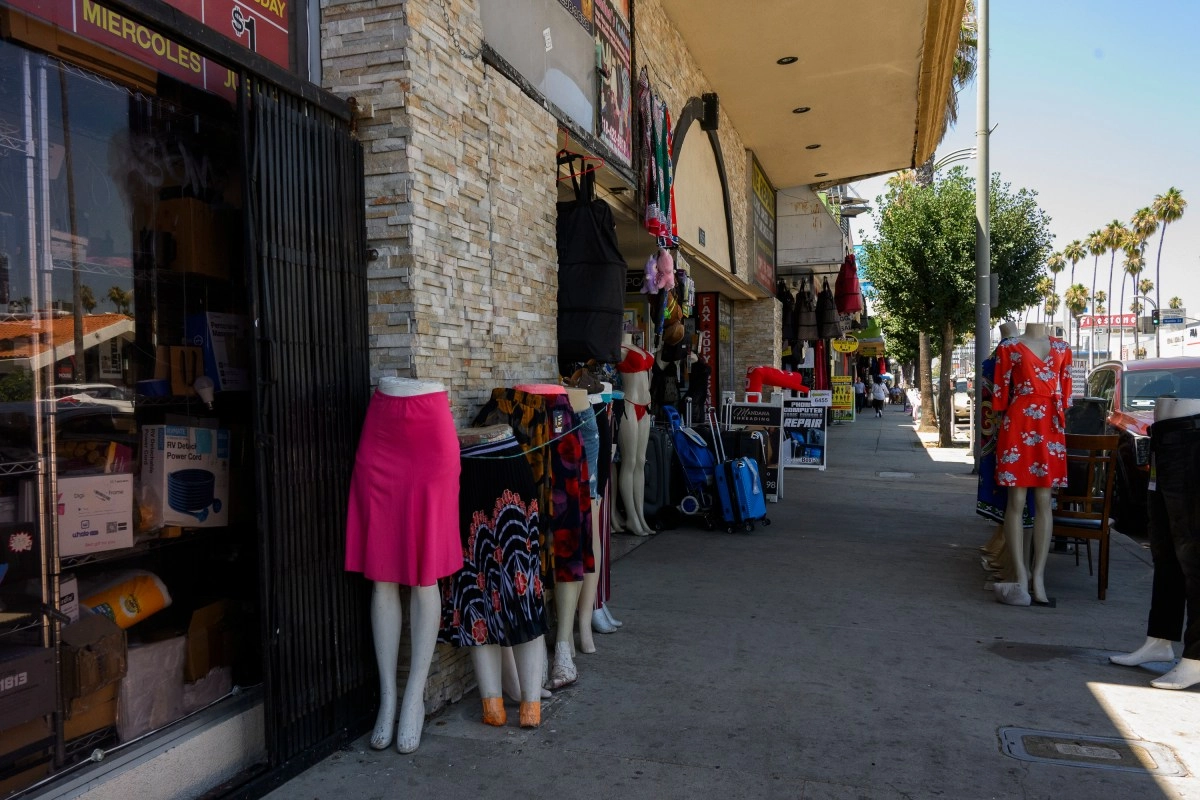
On Van Nuys Boulevard, the lack of pedestrians is evident; it is very quiet and the businesses are practically empty. The fear of the operations is latent.
The Department of Homeland Security stated that the Trump administration has arrested more than 300,000 illegal aliens by 2025.
In addition, the big, beautiful bill will allow ICE to arrest and deport even more aliens by providing $14.4 billion for deportations, 10,000 new agents, 80,000 new beds, and a $10,000 hiring bonus for new agents.
This will help ICE accomplish up to 1 million deportations a year, DHS wrote in the July 20 statement.
To date, at least 10 businesses on the block of Victory and Van Nuys Blvd. have closed their doors, according to area business owners. Among those businesses were Central American restaurants and clothing stores.
The block not only lost businesses but also Latino businesses in an area where they represent the majority of the population.
According to the Van Nuys demographic profile compiled by the Los Angeles City Planning Department, Latinos make up 50% of the area's residents.
A handful of business owners in the area shared that customers prefer to make their purchases as quickly as possible to avoid problems.
Claribel Cavel, owner of Claribella's Fashion, opened her business three years ago and noticed a 50% drop in sales after the raids. Additionally, she was shocked to see the fear within her own customers.
"They come in quickly, they want to make a quick purchase because they don't want to take too long," said the Salvadoran entrepreneur.
Near Cavel's business is Shucos Los Meros Meros, a Guatemalan food restaurant, where one of the owners, William Cifuentes, shared that his customers prefer to place their orders by phone and pick up the food quickly so they can return home. Ordering online through food delivery apps has also become the norm for some of his diners.
Sometimes they don't even want to get out of the car, they just call and say 'I'm outside here, can you bring me my order,' and you have to do it to support them, you understand, said Cifuentes, who started the business seven years ago with a lunch box that is still working.
The entrepreneur just had to lay off two workers and cut the hours of the others due to the lack of sales and the need to pay rent and expenses of the premises that total more than $6,000 a month.
It makes me sad to see that people don't want to walk around the streets, they stay locked in their houses and all of that is a chain, said the Guatemalan entrepreneur. "They're not going out to work today, they don't have money for their food, they're not going to go to a restaurant and we're not going to have money to go shopping here, go shopping there, it's a chain."
Inside the clothing store, Redzone, Mauricio León normally works on weekends and has noticed an unease in the community about the raids.
"Just a couple of weeks ago, we were wondering, where is everyone?" León said. "It seemed like a ghost town."
Even though he became a citizen in 2017, the Salvadoran says he still doesn't feel comfortable going out unless he has to work.
“My family and I stay home most of the time, so it’s hard for us to go out,” León said. “It’s the only thing you can do right now… it’s hard because even if you’re an American citizen, they keep trying to get you out of here. It all comes down to skin color.”
For street vendors in the area, the situation is much the same. Margarita Orozco, who has been selling in the area since 2018, says she has never seen so few people.
Whereas she used to earn $150 a day, she now only earns $20, which has caused a lot of anxiety for the Mexican woman who is falling behind on her house payments.
However, the street vendor maintains that there are migrants like her who came to the country to work and earn a living.
"Not all of us are criminals or terrorists, like the president says," Orozco said. "He is very wrong."
Every day that Juan Carlos Ruiz works, he walks between 13 and 18 miles a day while selling raspados and other snacks.
The Guatemalan has also seen a reduction in sales, but maintains he has no choice but to go out to work.
"If we stay locked up, who's going to pay our rent, how are we going to eat, and how are we going to support our families back home," Ruiz said.
Nevertheless, the street vendor says he tries to stay positive because he also fears what could happen.
"I feel bad because it's a fear that one carries; one is not at peace on the streets," Ruiz said. "That freedom and that peace that one felt before are no longer there."