

Hyundai recalls thousands of Tucsons due to screen failure
A software update will correct a bug that can turn off the screens of the Hyundai Tucson 2025 and 2026 in the United States
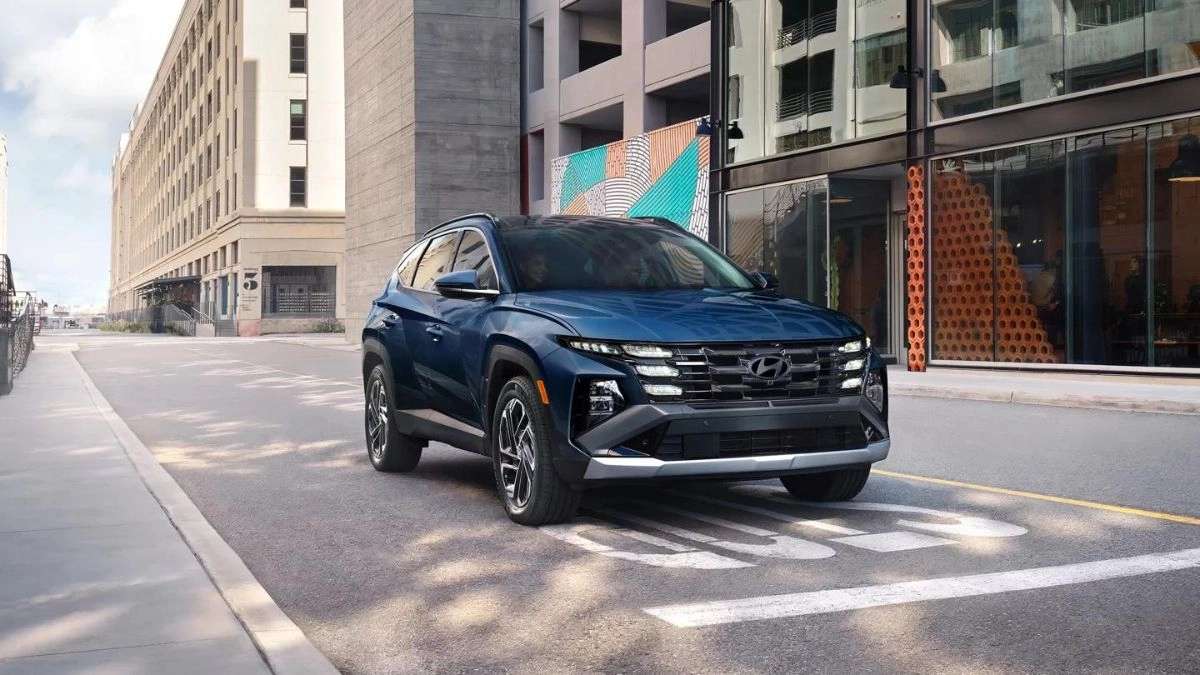

Engine performance is not the problem. Neither are the brakes or the steering. Hyundai's concern focuses on an electronic system that, under certain circumstances, can leave the driver without visual information while the vehicle continues to circulate.
Read also: Hyundai wants a more aggressive and powerful Elantra N
This situation led the brand to begin a recall campaign in the United States that involves 96,310 units of the Hyundai Tucson corresponding to the 2025 and 2026 models. The measure also includes the hybrid (HEV) and plug-in hybrid (PHEV) variants, all affected by a software error related to the vehicle's screens.
You can read: The new Mitsubishi Montero rescues a super classic 4×4
Although no accidents, injuries or fires linked to this condition have been reported so far, authorities consider the problem to represent a safety risk due to the possibility of the driver failing to see essential information while driving.
A bug that affects driver information
The campaign was presented to the National Highway Traffic Safety Administration (NHTSA), the body that oversees this type of recall in the United States.
According to the investigation carried out by Hyundai North America Safety Office (NASO), the failure does not come from a physical component, but from the programming that manages communication between the instrument panel and the Head-Up Display (HUD) system. When the error occurs, both screens may turn off unexpectedly.
As a result, the driver stops viewing critical data such as speed, fuel level, warning lights and other important messages related to vehicle operation.
The vehicle continues to run, but the risk increases
Hyundai explained that the SUV can continue moving even when the screens stop displaying information. However, doing so without knowing the speed at which you are traveling or without receiving alerts from the system increases the risk of suffering an accident.
In addition to the speedometer, warnings related to tire pressure, oil level and other warnings that help the driver detect potential problems before they become a bigger problem could also disappear.
For this reason, the company determined that this condition does not meet the requirements established by the Federal Motor Vehicle Safety Standard FMVSS No. 101, which regulates mandatory controls and indicators in automobiles marketed in the United States.
The solution will come through an update
Unlike other recall campaigns that require replacing parts or performing mechanical repairs, this intervention will consist of installing a new version of the system software.
Official Hyundai dealers will carry out the update at no cost to owners. The new programming modifies the communication logic between the instrument panel and the Head-Up Display, preventing an interruption in the latter from causing a complete shutdown of the main system.
The brand will also leverage its Bluelink platform to distribute the update via Over-the-Air (OTA) technology. Thanks to this method, some owners will be able to install the new software remotely, without having to go to a dealer.
Hyundai clarified that not all 2025 and 2026 Tucsons sold in the United States are affected by this condition. Therefore, it is recommended to verify the vehicle identification number (VIN) when the campaign is available both in the NHTSA database and on the brand's official channels.