

Kia freezes the premiere of the EV9 GT in the US market
Kia decided to postpone it in the US market due to an uncertain regulatory environment and the loss of tax incentives for electric vehicles
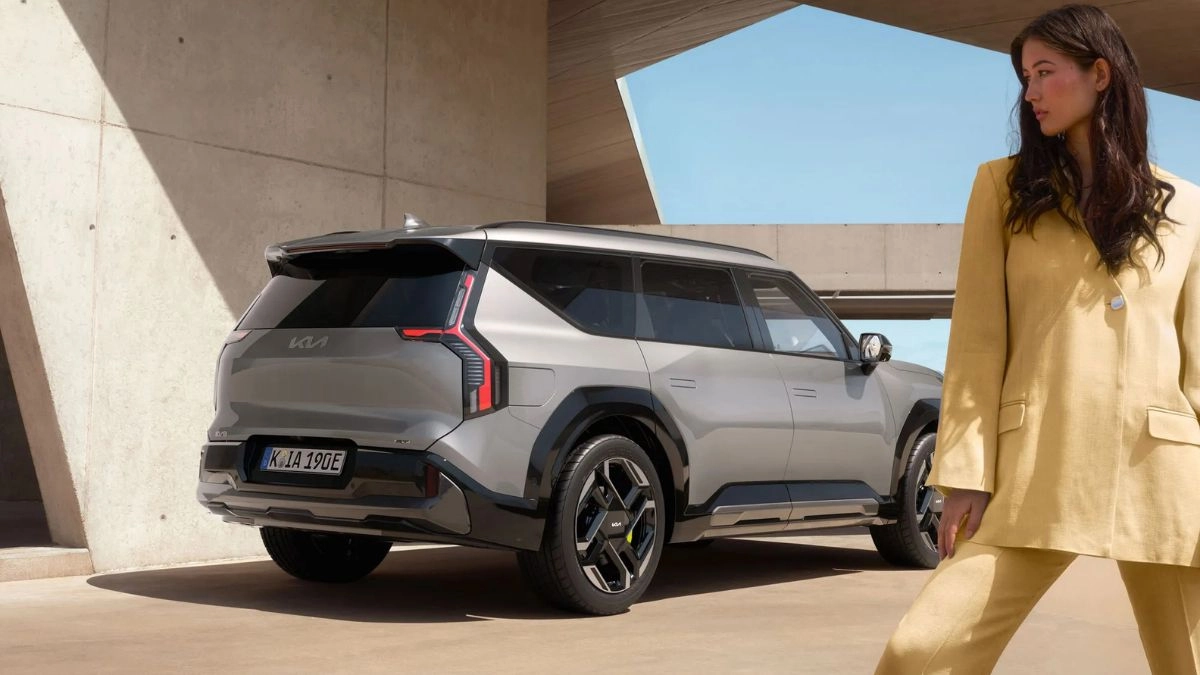

The electric vehicle landscape in the United States is going through a decisive moment, marked by regulatory changes and a demand that is no longer growing at the rate of previous years. Amid this scenario, Kia made a decision that surprised analysts and potential buyers: to indefinitely postpone the arrival of the EV9 GT to the country.
Also read: BMW M340i 50 Years: a modern tribute to the 3 Series
The brand had initially announced that its high-performance electric SUV would debut at the end of 2025, positioning itself as the most powerful and technologically advanced variant of the EV9 family. However, the South Korean brand decided to halt the project before its launch, citing an unfavorable market environment.
You can read: BRZ STI Sport Type RA: Subaru's exclusive super gem
This decision is not limited to the EV9 GT. This is part of a broader adjustment within Kia's electric vehicle portfolio in the United States, a market that in recent months has presented obstacles forcing a rethinking of priorities.
A tax scenario that complicates imports
One of the central reasons behind this indefinite delay is the elimination of the federal tax credit for many electric vehicles not manufactured in the United States. This incentive was key to maintaining competitive prices, and its elimination directly affected models imported from South Korea, such as the EV9 GT.
The change in regulations left Kia in a difficult position: launching a high-performance SUV with a higher final price than its local competitors, many of which do qualify for tax benefits. This disadvantage would have significantly reduced the model's competitiveness from its arrival.
The impact is not limited to the EV9 GT. The EV4 electric sedan, which was slated to debut in the North American market, was also recently postponed for similar reasons, revealing a pattern in the brand's strategy: prioritizing models eligible for incentives or produced in the United States. In the case of the standard EV9,whose manufacture takes place in Georgia, the situation is different. Its local production allows it to avoid tariffs and comply with tax requirements, but the GT version depends entirely on South Korean production lines, which drives up costs and complicates its profitability.
The EV9 GT: A High-Performance SUV Awaiting Arrival
Although its arrival in the United States has been paused, the EV9 GT continues to be a key product for Kia's expansion in the high-performance electric range. The model stands out for its 501 horsepower, considerably higher than the GT-Line variant.
Its architecture includes dual-motor all-wheel drive, electronically controlled adaptive suspension, a torque-vectoring differential, and simulated gear changes to provide a sportier driving feel.
In terms of performance, the EV9 GT accelerates from 0 to 100 km/h in 4.6 seconds, and its top speed is limited to 220 km/h. The SUV also features a 99.8 kWh battery, capable of fast charging that allows it to go from 10% to 80% in approximately 24 minutes, depending on the charging point. These attributes position the EV9 GT as an attractive option within the premium electric vehicle segment. In markets such as the United Kingdom and South Korea, reservations are already open, and the first units are expected in 2026. Kia has stated that its global strategy will continue, although it acknowledges that the US market situation requires further analysis. The indefinite delay of the EV9 GT highlights the current difficulties faced by manufacturers in the United States. The elimination of tax incentives, the increase in tariffs on imported vehicles, and more cautious demand complicate the arrival of expensive or highly specialized models.The SUV also features a 99.8 kWh battery, capable of fast charging that allows it to go from 10% to 80% in approximately 24 minutes, depending on the charging point. These attributes position the EV9 GT as an attractive option within the premium electric segment. In markets such as the United Kingdom and South Korea, reservations are already open, and the first units are expected in 2026. Kia has assured that its global strategy will continue, although it acknowledges that the US market situation requires further analysis. The indefinite delay of the EV9 GT highlights the current difficulties faced by manufacturers in the United States. The elimination of tax incentives, the increase in tariffs on imported vehicles, and more cautious demand complicate the arrival of expensive or highly specialized models.The SUV also features a 99.8 kWh battery, capable of fast charging that allows it to go from 10% to 80% in approximately 24 minutes, depending on the charging point. These attributes position the EV9 GT as an attractive option within the premium electric segment. In markets such as the United Kingdom and South Korea, reservations are already open, and the first units are expected in 2026. Kia has assured that its global strategy will continue, although it acknowledges that the US market situation requires further analysis. The indefinite delay of the EV9 GT highlights the current difficulties faced by manufacturers in the United States. The elimination of tax incentives, the increase in tariffs on imported vehicles, and more cautious demand complicate the arrival of expensive or highly specialized models.