

Apollo EVO: Radical, exclusive, and brutally fast
It's an ultra-limited production naturally aspirated V12 hypercar that prioritizes excitement, extreme aerodynamics, and performance above any comfort
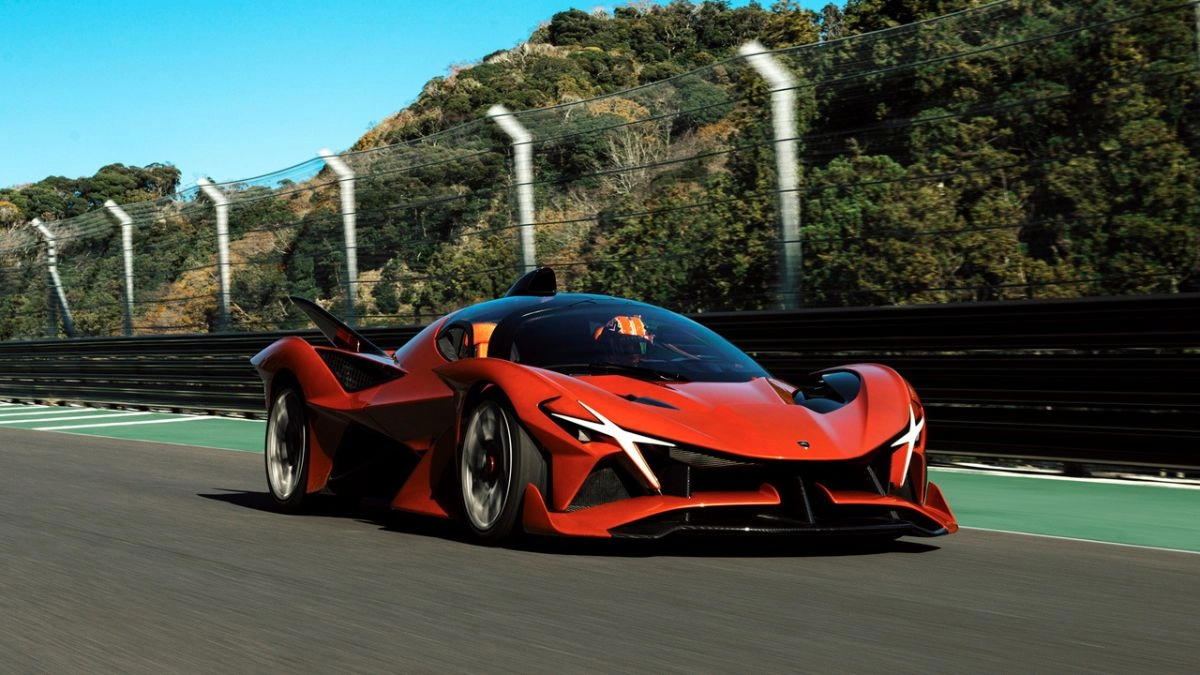

It wasn't designed to be practical, comfortable, or politically correct within the modern automotive industry. The Apollo EVO was born with a single mission: to provoke a visceral reaction in anyone who sees it and an adrenaline rush in anyone privileged enough to drive it.
In an era dominated by electrification, digital assistants, and energy efficiency, this model emerges as a declaration of mechanical rebellion.
Apollo Automobil, a German firm specializing in extremely limited-production vehicles, is once again shaking up the hypercar world with a machine that deliberately ignores current trends. Its predecessor, the Intensa Emozione presented in 2019, had already demonstrated that the company wasn't interested in half measures. With the EVO, that philosophy is taken several steps further.
It's not just a successor, but a complete reinterpretation of the radical car concept: lighter, stiffer, more powerful, and above all, more emotional.
Design Sculpted by Air
The Apollo EVO's bodywork looks like it came straight out of a science fiction film with input from aeronautical engineers. Every panel, every air duct, and every edge has a specific aerodynamic function. The result is an aggressive, low, and sharp figure, impossible to mistake for any other production vehicle.
The floating clamshell hood, star-shaped headlights, and six-pointed radial taillights create a visual signature that looks more like a Le Mans prototype than a road-legal car.
The entire exterior structure is made of carbon fiber and cases a completely new monocoque that weighs a mere 363 pounds. This figure represents a 10% reduction compared to the Intensa Emozione chassis, while increasing structural rigidity by 15%. A combination designed to withstand extreme forces without compromising handling precision.
The butterfly doors not only enhance the dramatic aesthetics but also facilitate access to the very low cabin, reinforcing the feeling of entering a race car rather than a conventional automobile.
Active aerodynamics pushed to the limit
If the EVO is impressive when stationary, in motion it transforms into something almost unreal. Apollo has developed a fully functional active aerodynamics system, where the hydraulic rear wing deploys in less than a second and constantly adjusts its angle of attack according to speed, braking, or cornering.
At 199 mph, the EVO generates up to 3,013 pounds of downforce, a figure that slightly exceeds its own curb weight of 3,035 pounds.
In practical terms, this means the vehicle can literally “glue” to the asphalt, maintaining stability even in extreme conditions. This level of downforce is normally reserved for pure racing cars. In the case of the Apollo EVO, it's integrated into a model that, at least technically, can be driven on public roads. A naturally aspirated V12 as a mechanical manifesto. Far from opting for hybrid systems or forced induction, Apollo chose an engine that's almost an endangered species: a 6.3-liter naturally aspirated V12. Derived from the engine used in the Intensa Emozione, this block has been extensively revised to deliver 800 horsepower and 610 Nm of torque. Its maximum engine speed reaches 8,500 rpm, accompanied by a metallic sound reminiscent of endurance race cars of yesterday. Power is sent exclusively to the rear axle via a six-speed Hewland sequential transmission, controlled by electro-pneumatic paddle shifters. According to the manufacturer's figures, the EVO accelerates from 0 to 60 mph in approximately 2.5 seconds and reaches a top speed of nearly 221 mph. These figures place it squarely among the elite of the fastest hypercars on the planet. Racing chassis and uncompromising cockpit. The driving experience is consistent with the rest of the concept: extreme. The suspension uses a pushrod system with adjustable dampers on both axles, similar to that of racing prototypes. The 15-inch carbon-ceramic brakes work in conjunction with 20-inch front and 21-inch rear forged center-lock wheels, fitted with Michelin Pilot Sport Cup 2 R tires. Inside, there are no giant screens or sophisticated multimedia systems. Everything is reduced to the essentials: carbon fiber, aluminum, A compact steering wheel and bucket seats bolted directly to the monocoque. The adjustable pedals allow for adapting the position to different drivers, but beyond that, comfort takes a backseat.
Extreme exclusivity and a price to match
The Apollo EVO isn't designed for the masses or even the average collector. Only 10 units will be manufactured worldwide, each one custom-configured according to its owner's wishes.
The starting price is around $3,500,000, a figure that reflects both its level of engineering and its practically handcrafted nature.