

The new face of the Tesla Semi surprises with its technology
With styling inspired by the Cybertruck and advancements in aerodynamics and fast charging, Tesla is preparing to begin mass production in 2026
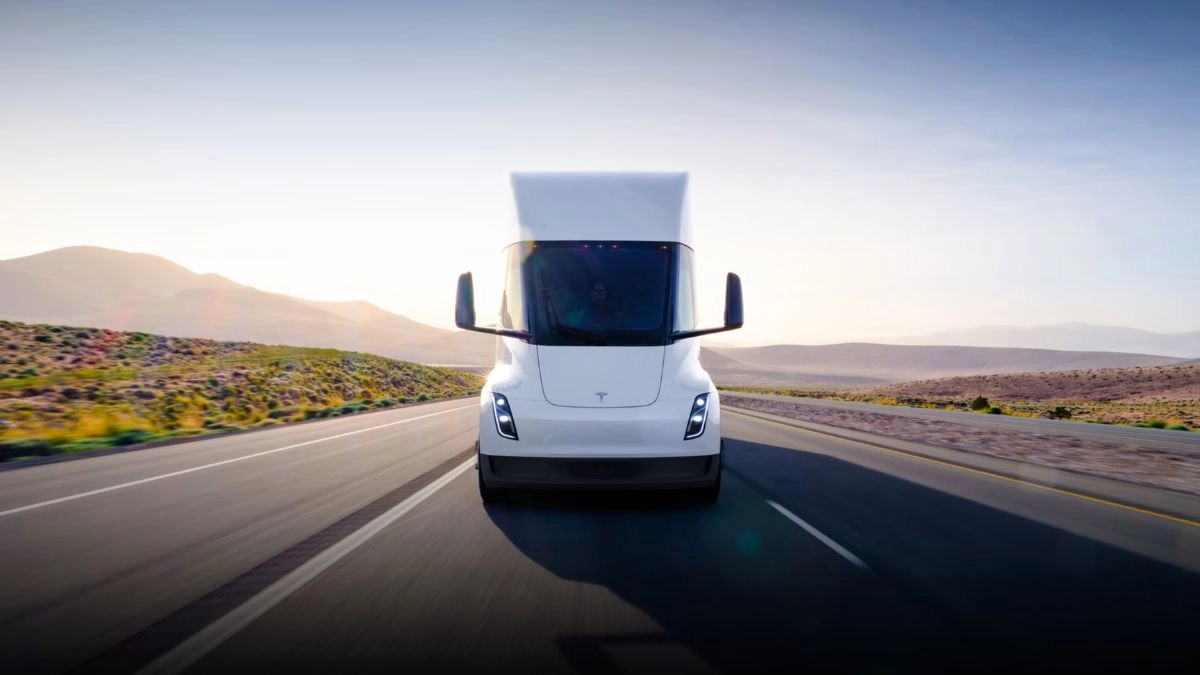

Tesla is making headlines again with a major update to its electric truck, the Tesla Semi, which has not yet begun mass production.
During the last annual shareholders meeting, the company confirmed that this model—first presented in 2017—is ready to enter a new phase with a refreshed design and optimized performance.
Far from being a simple cosmetic refresh, the new Semi seeks to establish itself as the benchmark in sustainable freight transport. With this revision, Tesla not only updates its visual appeal but also improves the aerodynamic and technical efficiency of its flagship vehicle for commercial fleets.
A more modern and functional design
The new Tesla Semi adopts a design language that combines features of the Cybertruck and the Model Y, with a more robust and futuristic presence. The front end has been completely redesigned: the old vertical headlights have been replaced by a full-width horizontal LED light bar, providing a distinctive and modern light signature.
The bumper has also been revised and incorporates aerodynamic channels that direct airflow around the front wheels, reducing drag and improving energy efficiency.
In addition, side cameras were added near the doors, complementing the traditional mirrors and helping the driver have a wider view of the surroundings. These changes not only aim for a visual improvement, but also respond to a practical objective: optimizing every detail to reduce consumption and increase range. Electric Efficiency and More Power Beyond the exterior redesign, Tesla introduced significant improvements in the Semi's efficiency and performance. According to the brand, the truck now achieves a consumption of 1.7 kWh per mile, with an estimated range of 500 miles per full charge. To achieve this, the model uses an approximately 850 kWh battery, designed to withstand long days of heavy hauling without compromising performance. In terms of power, the Semi doesn't fall short: it delivers 1,072 horsepower,surpassing most diesel trucks in responsiveness and acceleration. With these figures, the Tesla Semi aims to demonstrate that electric mobility can compete head-to-head with combustion engine vehicles, even in the demanding freight transportation sector. Ultra-fast charging and autonomous vision: One of the Tesla Semi's biggest draws is its ultra-fast charging system, capable of reaching up to 1.2 megawatts (1,200 kW). This allows it to recover 70% of its range in just 30 minutes, a crucial advantage for fleets operating with tight delivery schedules. The company also confirmed that the truck is ready for autonomous driving, although it has not yet revealed details about its implementation. This capability is part of Tesla's strategy to lead the transition to smarter, more efficient transportation, supported by next-generation software and sensors.
Projected Production and Outstanding Challenges
Tesla CEO Elon Musk stated that mass production of the Semi will begin in 2026, with the opening of a new plant in Nevada early that year. However, the project has faced several delays since its original announcement in 2017, when it was promised that it would be ready by 2019.
Despite the delays, Musk insisted that the company is fully committed to the model's development and that the improvements introduced demonstrate the program's progress.
The main challenge for Tesla will be meeting deadlines and scaling production without compromising the vehicle's quality or performance.