

Volkswagen moves forward with the ID.Polo and reveals more details
Volkswagen continues to reveal details of the ID.Polo. Now, the focus is on its interior, which combines retro design, physical buttons, and state-of-the-art technology

The Volkswagen Polo is entering a new stage in its history. After decades as one of the German brand's most recognized hatchbacks, its transition to electric mobility is no longer just an idea, but an ongoing project that is beginning to take clearer shape.
Also read: New tires on the back or the front: What's safer?
Under the name Volkswagen ID.Polo, this 100% electric model continues to be revealed gradually, and now the focus shifts from the powertrain to the vehicle's interior.
You can read: China reaches a new record in automotive production
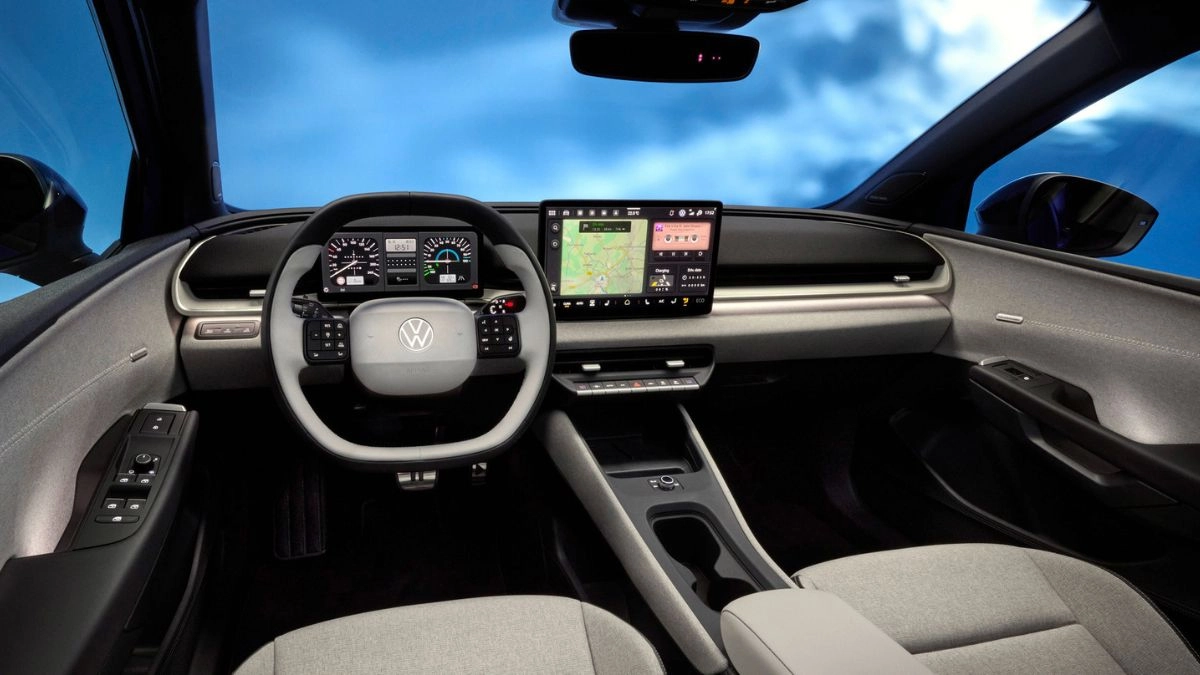
After Volkswagen shared key information about its mechanical design in December, the brand took another step by showing official images of the interior. Although the exterior remains camouflaged, the interior of the ID.Polo already reveals the model's philosophy: a balance between modernity, historical identity, and a more intuitive driving experience.
An interior design with nods to the past
The interior of the Volkswagen ID.Polo features a visual language that blends retro and contemporary elements. The intention is clear: to avoid a complete break with the Polo's heritage while adapting it to the era of electrification.
As explained by Andreas Mindt, Volkswagen's head of design, the goal was to create an environment that would feel familiar to the brand's users, without sacrificing the technological advancements that are essential today.
This idea is reflected in a cabin that conveys a familiar feeling from the first touch. Physical buttons regain prominence, something Volkswagen considers key to improving usability. According to the brand, this decision “brings balance and confidence to the driver,” a statement that sets it apart from interiors almost entirely dominated by touchscreens. The materials and finishes also aim to elevate the perception of quality. New retro-inspired upholstery is integrated into the overall design.generating an emotional connection with the model's history and reinforcing the ID.Polo's character as a direct heir to the traditional hatchback.
Well-integrated and easy-to-use technology
Although the design evokes nostalgia, technology is clearly the star. The dashboard features a dual-screen configuration, headlined by a 10.25-inch digital instrument cluster, accompanied by a 13-inch central multimedia system. This combination offers a modern interface without visually cluttering the space.
Below the main touchscreen is a physical keypad for controlling the climate control and lights, a solution designed to reduce distractions while driving. On the center console, a rotary dial allows for intuitive volume adjustment and track or station changes, reinforcing the idea of ??simple and accessible controls.
In addition, an extra row of physical buttons located at the bottom of the multimedia center provides easy access to other vehicle functions.
Volkswagen is thus sending a clear message: digitalization doesn't have to eliminate direct interaction. This return to traditional controls is also reflected in the steering wheel, which again incorporates physical black buttons, designed to offer a more direct and precise response. For those seeking a higher level of comfort, the ID.Polo can be equipped with a Harman Kardon sound system, as well as electrically adjustable seats with a massage function. Electric Powertrain and Different Configurations In terms of technical specifications, the Volkswagen ID.Polo will feature an electric motor developed in-house by the brand, located on the front axle. The range will offer different power levels to suit different user profiles. The entry-level version will deliver 114 hp, while a mid-range variant will reach 208 hp. At the top of the range will be the ID.Polo GTI, which will reach 222 hp and a maximum torque of 290 Nm, maintaining the sporty spirit historically associated with this name.
Batteries, Range, and Efficiency
Volkswagen will offer two battery options for the ID.Polo. The first will be a 37 kWh LFP battery, while the second, with greater capacity, will use a 52 kWh NMC chemistry. Both packs employ cell-to-pack technology, which integrates the cells directly into the assembly without intermediate modules.
This approach allows for improved energy density, reduced weight, and optimized use of available space. In terms of range, Volkswagen estimates a range of between 300 and 450 km, depending on the version and battery chosen.
Although some details are still to be confirmed, the Volkswagen ID.The Polo is beginning to emerge as a key model within the brand's electric strategy. Its interior reveals a commitment to ergonomics, identity, and a balance between technology and usability, while its powertrain promises to cover everything from efficient urban use to a sportier variant.