

They condemn alleged reprisals against participants of the hunger strike in Adelanto
Immigrant advocates participate in death simulation protest in downtown Los Angeles
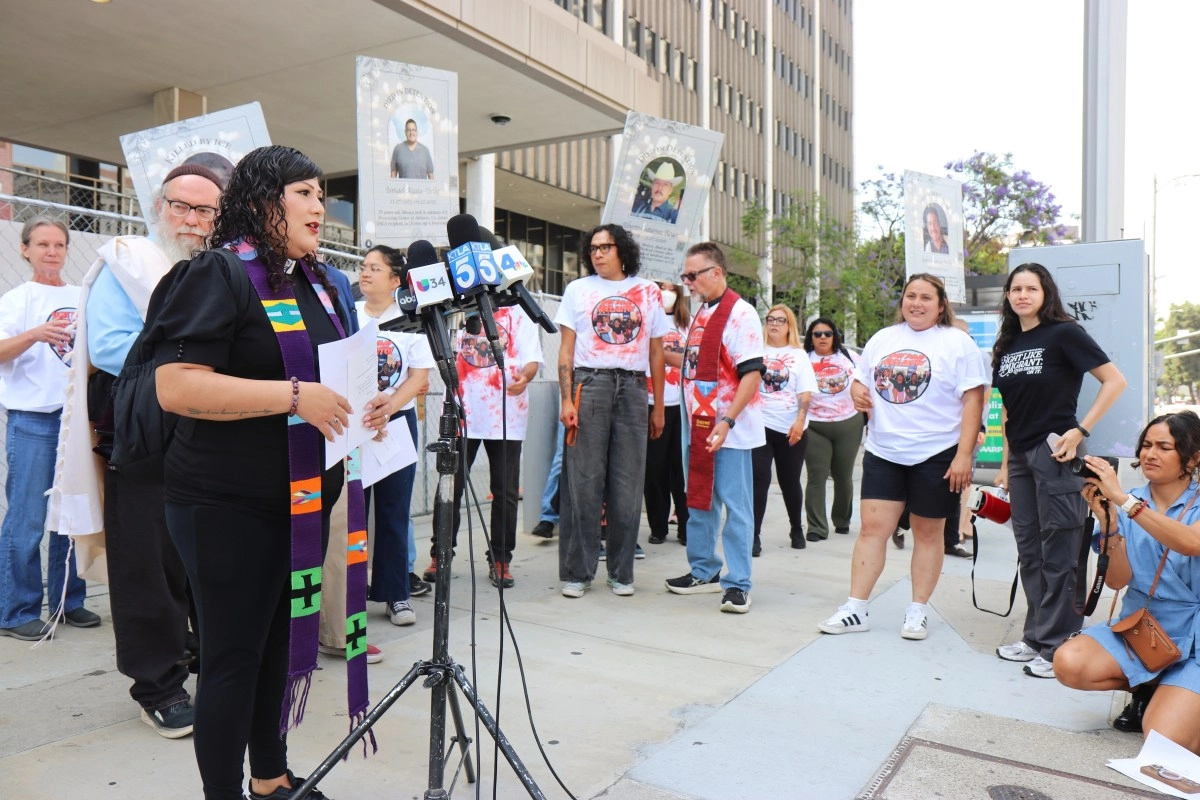

"Shut it down! Bring them home! Shut it down! Bring them home!"
Organizers and advocates of the immigrant community shouted Wednesday morning as they lay on the ground in front of the federal building in downtown Los Angeles in a “die-in” demonstration, that is, a protest in which participants lie down pretending to be dead.
Their faces, as well as their shirts, which bore the phrase “Close Adelanto,” had splashes of red paint symbolizing the blood and deaths that occurred at the Adelanto detention center, operated by GEO Group.
“We are here demanding justice for the lives that have been lost, for the cruelty of this administration, for the inhumanity of these death policies,” said the Rev. Tanya López, who is part of CLUE, Clergy and Laity United for Economic Justice.
Several representatives of groups such as Inland Coalition for Immigrant Justice (IC4IJ), Immigrant Advocates Legal Center (IMMDEF), Shut Down Adelanto, among others, were alerted by hunger strike participants about the retaliation to which they have been subjected for speaking publicly about the conditions in the detention center.
The hunger strike came on the heels of the release of the California Department of Justice's fifth report on California detention facilities, which found conditions at Adelanto's Desert View Annex and other immigration prisons to be substandard and inhumane. A specific number of participants in the hunger strike has not yet been verified, but organizers estimate that there are between 20 to 40 people who are participating in Adelanto.
According to Esmeralda Santos, IC4IJ organizer, detainees described on Tuesday how guards are punishing and harassing some of the participants who spoke with representatives Pete Aguilar, Judy Chu, and Jimmy Gómez during a visit this Monday, in which members of Congress were given a petition with 150 signatures from detainees, in which they denounce the lack of medical care, rotten food and dirty water, among others. problems.
“According to our knowledge, the zip ties and tear gas were just threats,” Santos said when describing what the detained people saw. “The people we were able to speak to told us that they were forced out of their bedrooms and that while they were on the phone with their loved ones, communication with them was cut off, so we haven't heard from them or had access to them since.”
According to those who participated on Wednesday, the protest action represents the human cost of the detention. That day, protesters lay on the ground for 19 minutes, symbolizing the passage of time and the number of lives lost in custody, underscoring the deadly consequences of current detention policies and conditions.
In a statement shared with the media, testimonies from four people detained in Adelanto are included. In it, they indicate that the reprisals have included the solitary confinement of people, the entry of guards into the units with tactical equipment and security closures that affect sectors of the facilities. People located on the west side of the detention center have also reported intermittent power outages and lack of access to water.
“We are being treated like animals,” says one person; His name and that of others have been redacted for security reasons. “People who have taken leadership positions in organizing this hunger strike are being attacked.”
“I have personally been insulted, called disabled, and called an idiot,” another statement read. “Staff make degrading comments and humiliate people, and we have been told we deserve this treatment.”
In recent weeks, similar demonstrations among people detained at other facilities run by GEO Group, such as Delaney Hall in Newark, New Jersey, have emerged in the same way.
Álvaro Huerta, director of litigation and advocacy at the Immigrant Defenders Legal Center, says that while they fight their lawsuit against Adelanto, filed in January, conditions inside the detention center continue to worsen.
"We know that retaliation has been going on for a while. What is particularly concerning is that their use of solitary confinement is used to make them lose hope and punish them for speaking out," Huerta said outside the federal building. “What you can imagine is terrible for the mental health of the people who are already there, detained far from their families and their lawyers.”
IC4IJ organizers said they know of two men who have been moved from their cells and placed in solitary confinement after Monday's visit. At the news conference outside the Adelanto detention center on Monday, congressional representatives described testimony of worms in food and of a man who was developing a painful cyst on the back of his head and has yet to receive medical attention.
Shut Down Adelanto organizers said Wednesday that they delivered a letter to federal prosecutors condemning the internal conditions at the detention center and including the demands of those on strike. They say that what the community can do to support those who are striking is to call their representatives in Congress and demand change. At the same time, they comment that they can support detained people simply by sharing information about what is happening.
“We will not forget their lives, their light and their love,” López said. “Here we are and we will not leave them alone, we sue accounting and demand that they let them out.”
At press time, La Opinión contacted GEO Group regarding the detainees' and activists' complaints, but did not receive a response.