

Why 1980 is a key year to understand the migration crisis that connects Central America and the United States.
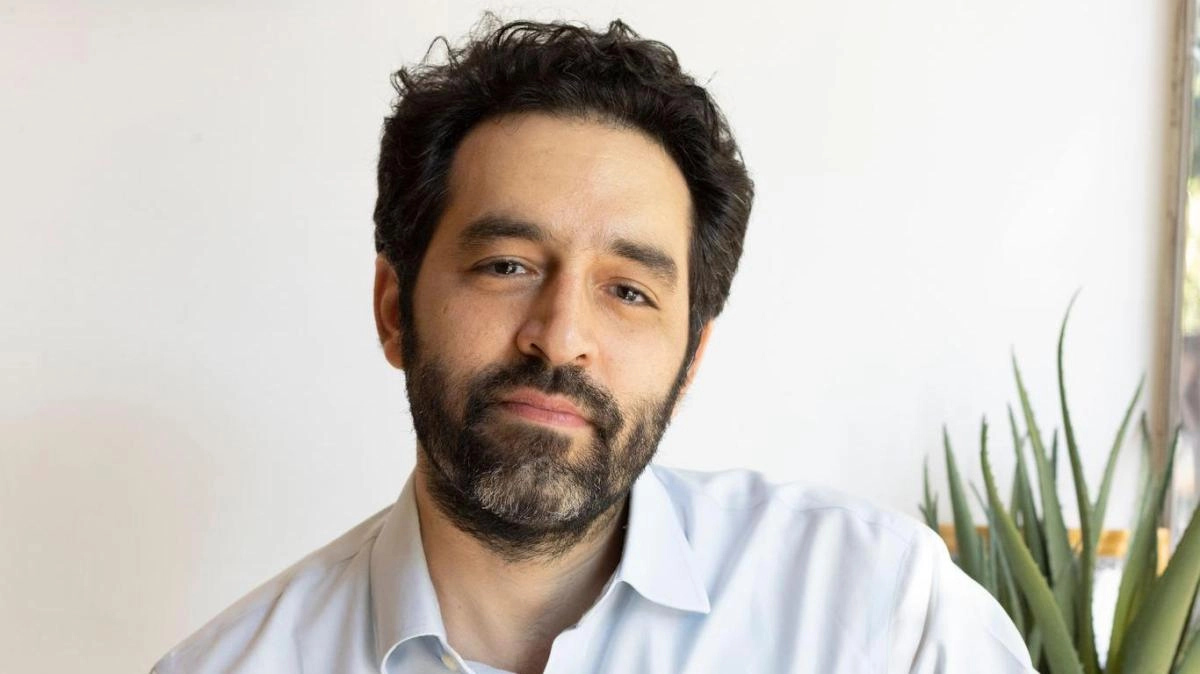
Jonathan Blitzer is a journalist for The New Yorker and author of the book "Everyone Who's Gone Is Here"

Donald Trump's immigration strategy moved from the border to the interior of the United States. It entered its main cities and no longer targets newcomers, but rather those who have been in the country for several decades.
For Jonathan Blitzer, that is one of the distinctive features of President Trump's second term.
The New Yorker journalist defines Trump's current immigration policy as a "complete attack on the legal and democratic institutions of this country, which turn the US into a laboratory of authoritarianism."
After more than a decade covering the immigration crisis at the southern border, Blitzer published “Everyone Who Is Gone Is Here,” his first book to make the prestigious list of the ten best books of 2024 by The New York Times.
In it, they review the origins of the great waves of migration from Central America, highlight the policies deployed by the different US governments and question whether the debate has been limited to the border.
“That is one of the main errors about immigration policy in the United States,” he says in an interview with BBC Mundo from New York.
Jonathan Blitzer spoke with BBC Mundo within the framework of the Centroamérica Cuenta Festival, which is held from May 18 to 23 in Panama.
In your book you review US immigration policy towards Latin America from real life stories. What have personal cases taught you about the topic?
My learning was having come to understand the historical, political and legal nuances of the complex dynamics that people who have had to migrate to the United States go through.
The intention of this book has been to transmit the power of those personal experiences and open a window so that readers can understand their historical dimension.
On many occasions, American readers are unaware of the close relationship between the United States and the Central American countries regarding the “migration crisis” on the border.
Does it seem wrong to call it a “migration crisis”? What does that concept hide?
It seems to me that the idea of a migration crisis has been loaded with cynicism in certain politicians in the United States, who try to take advantage of this perception of chaos and crisis on the border, to bash all migrants and suggest that this country should not help people who are in need.
I think that the idea of a migration crisis is not enough to describe what is happening. What we are seeing is a humanitarian crisis because these are people who are arriving at the border with certain needs and the US system does not know how to respond to that human reality.
You identify the origin of this problem in the 1980s. Why do you place it in that era?
The 1980s are very significant for two main reasons. The first is that in that year the US government created the Refugee Act of 1980 (Refugee Act), which for the first time formalized the rights of refugees and those seeking asylum at the border. It was a great advance in several ways.
But, at the same time, that legal system that sought to protect migrants was mixed with politics in the middle of the Cold War because the allies of the US government in Central America were precisely the governments that were repressing people in countries like El Salvador or Guatemala, who caused thousands of people to flee their country.
But when they arrived at the United States border, taking advantage of the creation of this new law that was supposed to provide legal protections, they faced the harsh reality that the country would not accept these asylum applications.
Because accepting them means recognizing that the United States' allies in Central America were abusing their own population.
The irony was that the United States during the Cold War tried to contain the policies of those countries so that they did not reach the country, but the consequence was that thousands of people had to flee and began to migrate to the United States.
So, from the first moment, we could see a direct conflict between law and politics, given that the United States government had a very specific role in the persecution of these people.
Therefore, for me, to understand the present you need to go to 1980.
What points of contact do you find between that first moment and the present?
To begin with, the debate in the United States on migration has been reduced to a political dialogue on the border issue. For me, that is one of the main flaws about immigration policy in the United States.
We have replaced a broad conversation about immigration with a political debate about the border and have become trapped in a vicious cycle that we have not been able to break out of to address deeper issues.
On the other hand, we are now at a time when politicians from both parties are saying that the issue is that the right to asylum should not exist, which shows an increasingly significant decline in this right.
It seems to me that the legal immigration system has always been a secondary status compared to the rest of the laws in this country and now we are seeing it in its most extreme forms.
When we talk about migration we quickly associate it with the southern border, illegal migrants and the poorest sectors. But it also affects legal migrants, those who enter through an airport and professionals with a work permit. Is that new?
That is racism and it has always existed in the United States. But what we are seeing now, for the first time, is a government that discards the most basic principles of the law, persecuting anyone for the language they speak.
The fact that there are now people who have their work visa and are being arrested by the government, that is democratic harassment. It is a complete attack on the legal and democratic institutions in this country, which turn the US into a laboratory for authoritarianism.
What differences do you find between Trump's immigration policy and his first term?
The first difference is the idea that now there is no form of protection for migrants. If in the first Trump administration, the advice that lawyers used to give their clients was that the important thing was to initiate a legal process, now that has changed.
There are people who are being detained by the agency that administers the country's legal immigration system at the moment they appear before a judge in court to receive their permanent residence. That's new.
The mere idea that they are being arrested when they are following the law is something totally new and is something that we did not see in any way in the first Trump administration.
What implications does this have for the United States?
What we are seeing is that this government is ignoring the law and democracy and, for me, this is one of the most serious things there is. It is something undemocratic, something that has existed before, but in the worst moments in the country's history.
Masked federal agents represent a direct attack on this country's most basic democratic principles.
There is no other democratic country in the world where there are federal agents wearing masks, driving cars without license plates, arresting people without any explanation and without a court order.
Federal agencies like Immigration and Customs Enforcement (ICE) or the Border Patrol have always existed on the margins of the law, but now we are seeing an even more aggressive policy. For this reason, I believe that the significant change is the aggressiveness and total assault on the migrant population.
What other elements do you identify?
The second element is experience. The members of the first Trump administration had no experience in government and now they have learned a lot, which is why they are able to carry out their agenda, because they know how to manipulate the bureaucratic institutions of the government.
Do you think they have gained experience or replaced career officials with officials ideologically aligned with Trump in key positions?
On the one hand, the first Trump administration had many people who worked for the government bureaucracy and resisted the more extreme agenda of the first Trump administration. That's what Trump calls the Deep State, the idea that there were people within the state who were undermining the government's agenda.
But also, those who come from that first mandate have learned to do it.
In addition, other changes with the first Trump administration are that the initiatives to harass and intimidate migrants, which previously headed to the border, now target the interior of the country, which generates even more profound consequences.
So, if before the wall was the figure that represented Trump's immigration policy, now it is that of an ICE agent in one of the country's big cities?
Yes, while in the first Trump administration it was focused on the border, now there is no activity there, but they are arresting migrants who have been in the United States for decades.
These are arrests that can be committed with the siege of the population living in the interior of the country.
In Trump's own terms, do you think his immigration policy has been successful?
The question is good, because it is important to evaluate how they themselves think about their own politics. I believe so, that the government itself considers that what it has done so far has been a great success.
But it is a complicated question to answer, because a key element is the political apparatus around the president which, in a certain sense, is based on lies, on maintaining the illusion of the threat of migrants.
Still, I think there has been a very strong reaction against what Trump has done, even in communities that were originally in favor of the idea of mass deportations.
Why do you think this happens?
Because in those communities they are now seeing that this is really affecting their own communities, it is affecting their family members, it is affecting their neighbors.
Trump enjoyed significant support from the population to advance his immigration agenda and now it is clear that there is a lot of disapproval of what he is doing, based on the polls.
How do you see Stephen Miller, Trump's National Security Advisor?
It is complicated, because he is the main architect of this country's immigration policy and he has exceeded his role, due to his ideological and radical vision.
We are now at a time when the press is speculating about Miller's decline. I don't believe this, because I think he knows when it's best for him to disappear and when it's best for him to come back in.
Trump ordered the removal of Kristi Noem from the position of Secretary of Homeland Security, following the murders of two US citizens at the hands of ICE and the Minnesota Border Patrol. Was it a way of recognizing an excess?
I believe that, more than anything, Noem's resignation had to do with her corruption. Until Miller leaves the government, I don't think anything will change.
I was not referring so much to a change in policy but rather a change in message, if his dismissal can be read as a red flag.
You're right, I'm being a little cynical by saying it doesn't mean anything. It may be interesting to highlight his impeachment because Trump is a man who does not find those limits. So, this time he did find them.
Although it is undeniable that it was a turning point for Trump for several reasons. First of all, because it is tragic and senseless murder, period. But also because it was a white American citizen.
On the other hand, Trump wants to classify drug trafficking gangs as terrorists. The president of Brazil spoke about this issue last week with Trump at the White House. Do you think that raising the cartels to the level of a terrorist threat opens the door to US intervention in Latin America?
This has had a direct consequence in Venezuela, but also in Mexico.
According to my sources, at the beginning of 2025 there was a strong interest in the government to promote high-impact action in Mexican territory, within the framework of the fight against fentanyl. However, Trump noted that such an operation was unfeasible.
In parallel, the consequences began to be seen in the Caribbean, with attacks on boats at sea, in what was interpreted as part of a broader strategy of pressure on the Venezuelan environment and the regime of Nicolás Maduro.
In this context, foreign policy and immigration policy ended up connecting. The common axis is the classification of certain criminal groups as terrorist organizations, a definition that, in legal terms, expands the margin of action of the Executive and reduces the checks and balances of Congress.
Do you think immigration policy can affect Trump in the upcoming midterm elections or, for his voters, is it only the economy that matters?
The truth is that I don't know.
It's true that immigration policy has never been a priority for average Trump voters. But, what we are seeing from the arrests and abuses of federal immigration agents is affecting the entire country, the entire society.
I can think that a parent of a child seeing the image of masked officers killing people in cold blood on the street of an American city might lead them to think about whether Trump is doing things right. But if this influences the vote, I don't know.
That is why it is so important that Democrats know how to take advantage of discontent with Trump. To do that, they must know how to talk about the issue, not only about Trump's abuses, but also about the importance of the values of this country and connecting the value of immigration and democratic institutions, although I don't think the Democrats will be able to handle this.