

Bad Bunny becomes a key figure in times of crisis
The Puerto Rican rapper has said he doesn't want ICE agents at his concerts
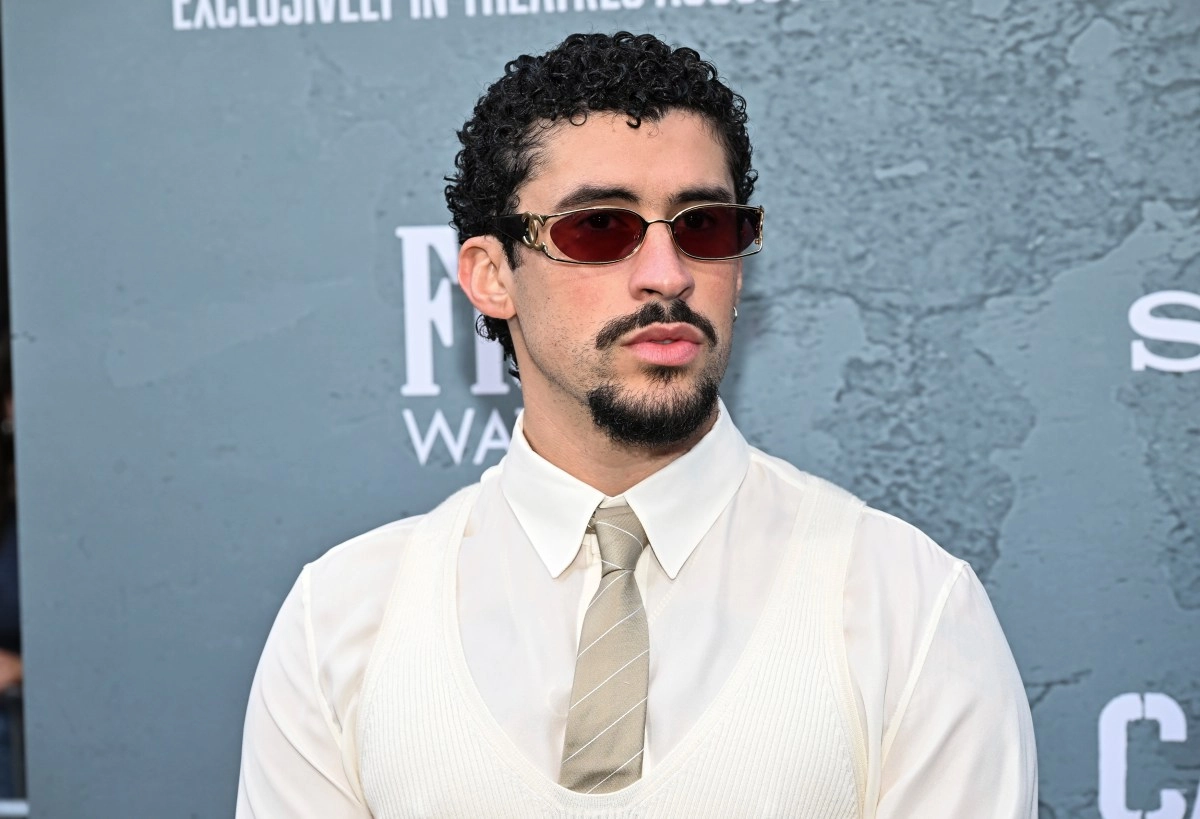

As Latinos face increasing discrimination, with even citizens being targeted for arrest by masked federal immigration agents, Puerto Rican singer and rapper Bad Bunny is considered by some to be a voice of cultural resistance.
His announcement that he will perform at the Super Bowl halftime show in February 2026 has sparked outrage among conservatives, especially since he challenged the public to “learn Spanish by then.” But Homeland Security Secretary Kristi Noem has also declared that Immigration and Customs Enforcement (ICE) agents will be everywhere at the event.
During the videoconference “Bad Bunny: Redefining the Latino Narrative in Times of Crisis,” organized by American Community Media (ACoM), entertainment experts spoke about the singer and how he has become a key figure in these times of anti-immigrant persecution.
Where does Latino identity stand today, amid a growing climate of discrimination and crisis?
Antonio Mejias-Rentas, veteran entertainment journalist and former journalist for La Opinion and Boyle Heights Beat, stated that Bad Bunny is not the first nor the only artist to record only in Spanish.
In fact, he mentioned that most artists in that genre, both rap and reggaeton, have always recorded their music in Spanish.
“Given the current political climate, we were looking at the use of Spanish as a tool of resistance, and as you know, it's one of the ways that the Supreme Court has said that it's okay for ICE agents to identify undocumented immigrants by their language use.”
She said the fact that Bad Bunny is so successful, and has accomplished so much in his short career, makes it more evident, but he's not different, just more obvious.
Frances Muntaner-Negron, a professor at Columbia University and author of Boricua Pop: Puerto Ricans and the Latinization of American Culture, said that we should see Bad Bunny's success as part of a longer story.
“I see a lot of coverage that points to him as unique or a genius, or this kind of approach,but I don't think it helps much to understand why we're in this situation."
He said that it should also be explained by the demographic changes in the United States, which transmit it, but also due to the migration of Spanish speakers to other parts of the world and technological advances, which are very important.
"If we compare the conditions in which the salsa stars of the 70s worked with the conditions in which Bunny works, there are many differences. One is the ability of an artist to communicate with an audience without much intermediation, and they have more decision-making capacity than previous generations."
He said that by putting all this together and relating it, we can begin to think: how is it possible that from that long history of fighting to be heard and have more voice, someone like Bad Bonny emerged from a neighborhood like Puerto Rico?
"It doesn't have as many millions of inhabitants as other places. Its infrastructure also isn't as developed as other places, but it has a long history of Caribbean music that people can draw from, and a group of people exposed to the world in a particular way that makes it very current.” Julio Ricardo Varela, editor of The Latino Newsletter, said Bad Bunny is tapping into all these predictions that Latinos would eventually become a powerful number, as well as this notion that Puerto Rico will always be part of the cultural landscape. All these factors are coming together, and now we have this genius artist who probably started with music that none of the people you know even know exists. However, he said the backlash against him has been very strong, but he loves that all these themes we've been talking about are finally reaching the mainstream. Muntaner-Negron said we haven't had the same Bad Bunny the whole time but at least three. He's the cultural nationalist who's been able to amplify how he feels. a lot of people in Puerto Rico with mass tourism, the cost of living, and not wanting to be kicked out of the neighborhood.”
But also the Bad Bunny who talks about the forced migration that is happening in many parts of the world, and he is not sure that he was fully aware of it.
“If we observe his trajectory closely, we see that there has also been a groping. For example, one of the things that bothers the right the most, and I see it on all social media, is that he wore a dress for a photoshoot, and they don’t want these things to be seen by children.”
Then he also said there is the Bad Bunny who represents very traditional Puerto Rican masculinity.
Varela mentioned that Bad Bunny is a product of where Latinos are demographically and that we’ve finally reached the pinnacle of American pop culture capitalism, at the Super Bowl.
“The NFL needs to diversify its audience, and it’s a global sports league that plays in Mexico, Europe, and elsewhere, and it wants to make money. Let’s be honest. And who’s one of the biggest revenue generators in the music industry, with billions of streams?”
He emphasized that the reality is that we can say whatever we want about what Bad Bunny represents, but the decision to invite him to the Super Bowl comes down to 29 mostly white owners who want to make billions of dollars and partner with the biggest global music brand out there.
“They need global audiences to fill their coffers because they want to be a global sports league on par with the Premier League or the World Cup, and anyone who thinks there’s good intentions.”
He stressed that although it may sound very simplistic, he doesn't see many court orders when billionaires want to make money, and that speaks to a very deep problem.
Muntaner-Negro said that Shakira and Jennifer Lopez have already sung something in Spanish in various genres, but now we are facing a much more intense context with what Bad Bunny said that he will only sing in Spanish, at the same time that the state is in the midst of a campaign to expel Latinos from the country.
“This has made people not wait until halftime to file complaints with the FCC (Federal Communications Commission), to try to discredit what they perceive as an affront.”
Varela commented that in an interview with journalist Susie Esposito, Bad Bunny said that he doesn’t want ICE at his concerts because he needs his fans to be safe.
“It’s not that there aren’t ICE agents in Puerto Rico. There are many actions that are happening in Puerto Rico that nobody talks about,” he said.
And he heard journalists not call out Bad Bunny, a symbol of resistance to the enforcement of US laws against immigrants.
“No, I’m not saying he isn’t, but there’s much more to it than that.”
Mejias considered that Bad Bunny does not represent the cause of immigrants in any way.
“He represents more national identity, Puerto Rican identity and sovereignty Puerto Rican, not necessarily immigration”