

Byron Donalds begins to stand out in the race to govern Florida
With Donald Trump's support, Republican Byron Donalds begins to lead the race to determine the next governor of Florida
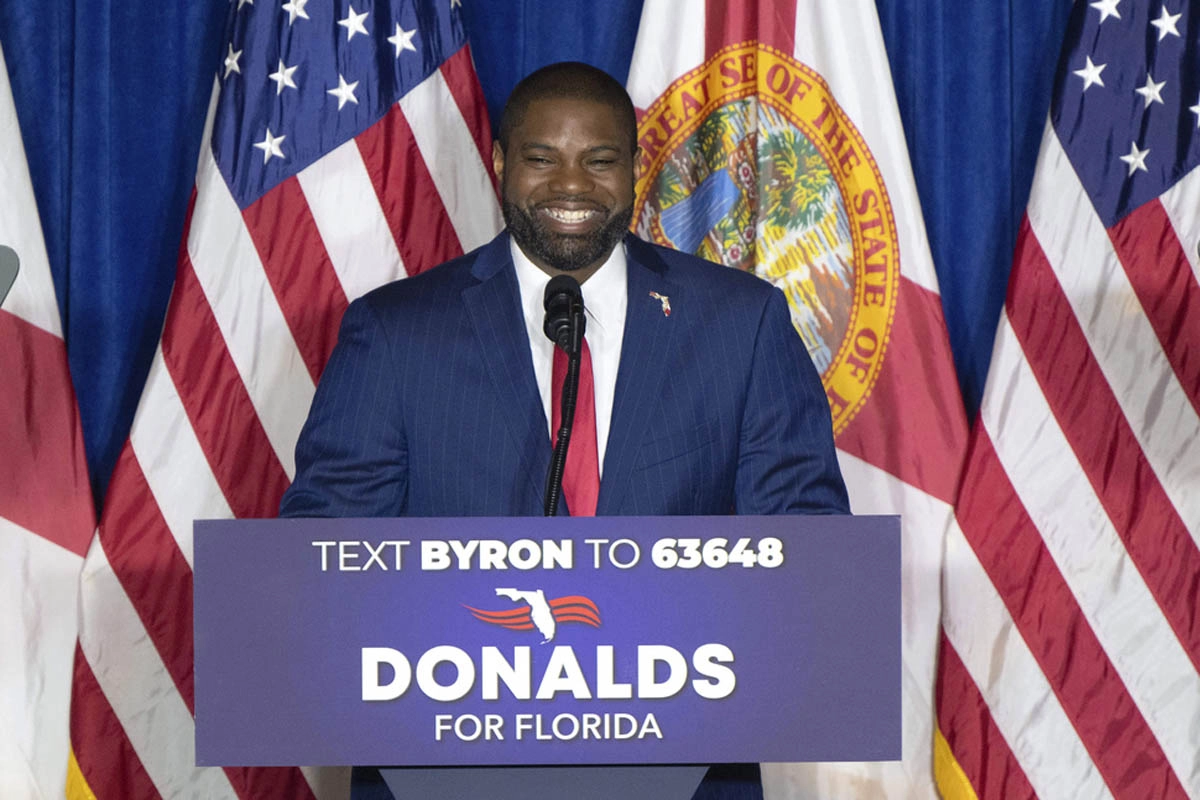

Since President Donald Trump endorsed Byron Lowell Donalds, representative for Florida's 19th congressional district in the House of Representatives, as a candidate for the Republican presidential nomination, his popularity has strengthened among citizens.
According to the results of a poll conducted by Emerson College, the A conservative from Brooklyn is beginning to emerge as a frontrunner in the race to govern Florida, as he has the support of 46.4% of the 465 likely voters heading into the Republican primaries. Behind the 47-year-old African American are Jay Collins, Florida's lieutenant governor; James Fishback, a prominent investor; and Paul Renner, former Speaker of the Florida House of Representatives, with 4.1%, 3.8%, and 2.7% support, respectively.
However, with four months to go before the primaries, 39% of likely conservative voters are still undecided.
Another point in Donalds' favor is that he also has the support of 54% of Republican voters over 60 years old.
Although at one point the possibility of adding Jill Casey DeSantis, wife of Florida Governor Ron DeSantis, to the race as a potential candidate was considered, an investigation related to the Hope Florida initiative run by the former television host regarding alleged misuse of funds ultimately extinguished her political aspirations.
If at the last minute the Ohio native were to decide to run against Byron Donalds, the results of the Emerson College poll would not They support him, since in a hypothetical direct confrontation between the two, the public leans towards the African American politician, with 43.5% support compared to 6.7% who would side with DeSantis.
The poll also measured the support shown towards the Democratic candidates, projecting David Jolly, a former Republican congressman who opted to change sides in April of last year, as the favorite.
The 53-year-old politician has 20.7% of the support from the 362 likely voters in the Democratic primaries.
Further behind is Jerry Demings, mayor of Orange County, with 10.1% support.
In a possible scenario with Byron Donalds facing David Jolly directly, 44.2% of those surveyed would vote for the Republican; while 39% would support the Democrat.