

Donroe Doctrine: How Trump views Latin America, according to his national security strategy
The new security guidelines show Washington's interest in curbing illegal immigration and containing the advance of drug trafficking
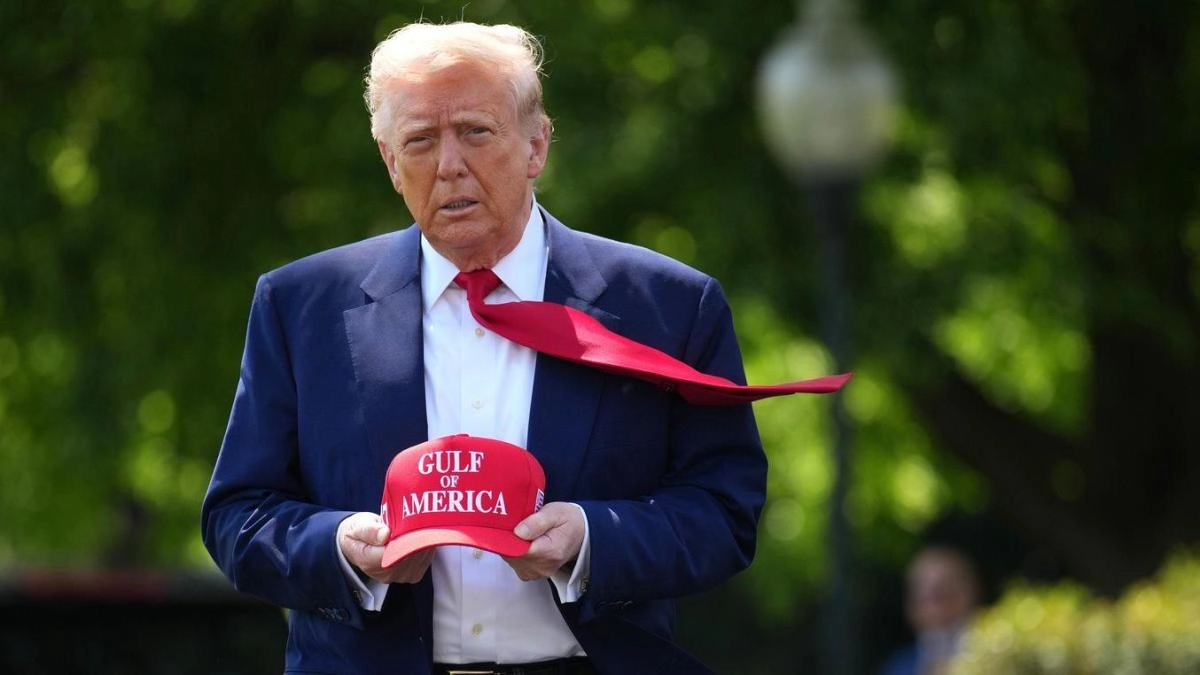

Both the recent "total and complete" blockade of all sanctioned oil tankers entering and leaving Venezuela and the unusual financial bailout of Argentina in October demonstrate the importance of Latin America to Donald Trump.
The new National Security Strategy reaffirms the United States' decision United to expand their military presence and influence in the region. Published by the White House on December 4, the document outlines the current administration's worldview.
“My administration has acted with historic urgency and speed to restore American strength at home and abroad,” reads the letter signed by the president that precedes the 29-page document.
According to the new security guidelines, Trump is looking to Latin America with the aim of curbing illegal immigration, containing the advance of drug trafficking, and improving relations with its ideological allies and trading partners.
To achieve this, he proposes a return to President James Monroe's “America for the Americans” foreign policy, with which the U.S. declared in 1823 its intention to protect the region from the advance of powers from outside the continent.
“After years of neglect, the United States will reaffirm and implement the Monroe Doctrine to restore American preeminence in the Western Hemisphere,” states the new document that calls for this approach. “Trump’s corollary to the Monroe Doctrine.”
This approach earned the nickname “Donroe Doctrine,” a combination of Donald and Monroe. The term appeared on the front page of the New York Post in January and was quickly adopted by American analysts and international media.
So, are we witnessing a new Monroe Doctrine in the region? What are Trump’s concerns and interests in Latin America? How will he expand his influence on the continent?
From Monroe to Trump
For the United States to consolidate its global power, Trump understands that it must first reaffirm its influence in the region.
“The United States must be preeminent in the Western Hemisphere as a condition for our security and prosperity, a condition that allows us to assert ourselves with confidence wherever and whenever we need to in the region,” the document states.
For Will Freeman, a Latin American Studies researcher at the influential US think tank, the Council on Foreign Relations, Trump is seeking to give “a new twist to an old idea.”
“It’s a kind of ideological justification for US intervention or a hardline approach in the region, which focuses explicitly on immigration,” Freeman tells BBC Mundo.
“But the document also mentions drug cartels and hostile foreign incursions, which sounds like the Monroe Doctrine in its original version,” he adds.
The idea of ??a strategy inspired by the old Monroe Doctrine is not new. As early as 1904, President Theodore Roosevelt (1901-1909) established his own “Roosevelt Corollary” to that 19th-century doctrine. At that time, Roosevelt argued that the United States should intervene in the countries of the region if they were unable to meet their financial obligations or safeguard their democracies, as Freeman explains. In any case, what we know so far about the so-called “Trump Corollary” is rather vague. Therefore, the analyst recommends not taking it as a strategic plan but as a statement of principles.
“Trump doesn't follow a foreign policy consistent enough to call it a doctrine. Nor does he make any statements that help us understand how the measures he is taking relate to his more ambitious goals,” he says.
Interests in the Region
For Trump, Latin American countries are the source of many of the problems facing the United States, but at the same time, they can be the key to solving them.
The document presents “illegal and destabilizing migration” as one of the main problems originating in Latin America, since half of the immigrants living in the United States come from the region, mainly from Mexico.
“It is the part of the world that interests him most for his domestic policy objectives,” says Freeman.
He also mentions the danger of drug cartels, considering that almost all the cocaine consumed in the United States comes from three countries. of the region: Colombia, Peru, and Bolivia.
In that sense, for Bernabe Malacalza, author of the book “The Crusades of the 21st Century,” which deals with the relationship between the United States and China, the new national security architecture is based on the fact that the U.S. considers the region as “part of its internal security border.”
“Latin America has become a priority for the United States. It has acquired a place it didn't have before, which is explained by the increased prominence of hemispheric security,” says the professor from Torcuato Di Tella University.
The document also mentions the need to limit hostile foreign incursions, in a clear reference to China, although it doesn't name it.
In trade matters, Trump seeks to improve his agreements with his partners in the region under the “America First” policy. The document proposes the use of “tariffs and reciprocal trade agreements as powerful tools,” something the Trump administration has already implemented with numerous countries in the region, with mixed results. In the case of Mexico, the White House knows that American companies are also affected by trade disputes. “That’s why Trump is seeking to consolidate agreements geared toward nearshoring [a company’s strategy to transfer part of its production to nearby countries], because he understands that the region is part of the reconfiguration of value chains,” Malacalza points out. Trump not only wants American companies to grow, but also wants allied countries to strengthen their national economies in order to intensify trade relations. According to the document, “a stronger and more sophisticated Western Hemisphere economy becomes an increasingly attractive market for American trade and investment.” “The countries of the region have a disproportionate impact on these internal matters that…” “Trump cares a lot about them, and his political base cares about them too,” Freeman summarizes.
Retaliation and Rewards
The mammoth aircraft carrier USS Gerald Ford, in the Caribbean since November, not only puts pressure on the Venezuelan government, but also reflects the new US security guidelines.
According to the document, the White House seeks to deploy a “more appropriate [military] presence” and “targeted deployments” to control land borders and maritime routes.
The United States even authorizes “the use of lethal force to replace the failed law enforcement-only strategy of recent decades,” the document states.
“Force is the best deterrent,” the White House adds, in what is a foreign policy that leaves the option of retaliation open.
This administration has said it seeks to revive the idea of ??“Peace Through Strength,” the old motto from President Ronald Reagan, which is based on relying on military power as a guarantor of stability.
For Malacalza,The security policy toward Latin America “does not establish a regional or hemispheric architecture, but rather seeks to align countries with the United States and, ultimately, with Trump.” On the other hand, the United States is offering a series of rewards to its allies. “We will reward and encourage governments, political parties, and movements in the region that broadly align themselves with our principles and strategy,” the new strategy states. According to the document, US policy should focus on supporting regional leaders and allies “capable of promoting reasonable stability in the region,” who help curb illegal migration and neutralize cartels. This policy of rewards was seen in October when Trump announced a $20 billion bailout for Argentina, and the following month when agreements were signed with Argentina, Ecuador, El Salvador, and Guatemala to reduce export tariffs. In any case, for the analysts consulted by the BBC The so-called “Donroe Doctrine” views the region primarily as a place of threats rather than opportunities. “They are much more concerned with preventing dangerous threats from Latin America from reaching the United States, as they will say, than with taking advantage of the opportunities the region offers,” Freeman summarizes. Click here to read more stories from BBC News Mundo. Subscribe here to our new newsletter to receive a selection of our best content of the week every Friday. You can also follow us on YouTube, Instagram, TikTok, X, Facebook, and our WhatsApp channel. And remember that you can receive notifications in our app. Download the latest version and activate them.
In any case, for the analysts consulted by BBC Mundo, the so-called “Donroe doctrine” understands the region primarily as a place of threats rather than opportunities.
“They are much more concerned with preventing dangerous threats from Latin America from reaching the United States, as they will say, than with taking advantage of the opportunities the region offers,” Freeman summarizes.